Core Skills Analysis
Art
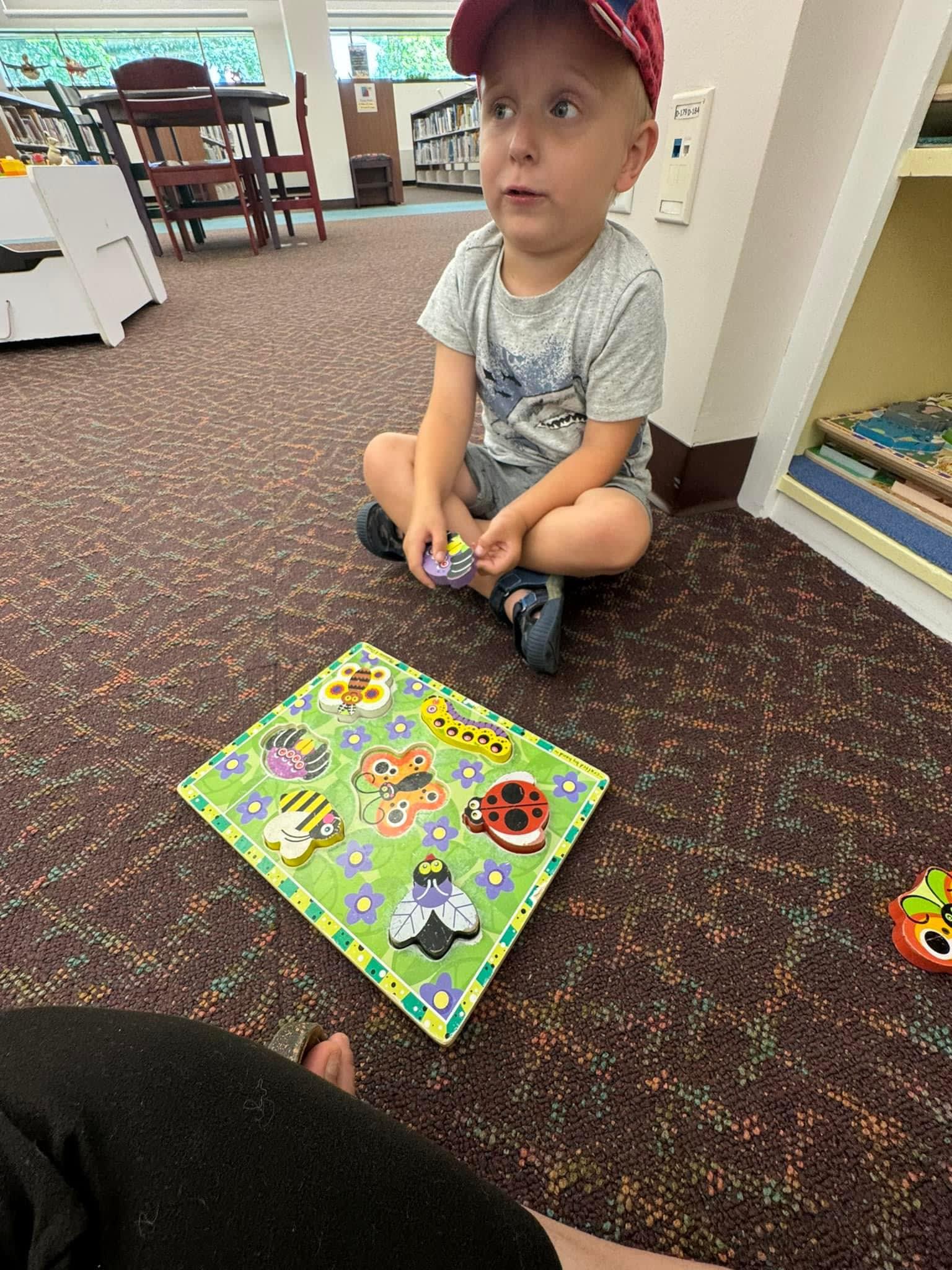
- Engaged in visual recognition of colors and shapes by identifying various insects on the puzzle.
- Demonstrated creativity and imagination by expressing laughter while playfully misplacing the pieces.
- Developed fine motor skills through grasping and placing puzzle pieces accurately.
Math
- Practiced spatial awareness by matching puzzle pieces to their corresponding spots.
- Enhanced counting skills through the process of identifying and sorting the total number of pieces.
- Developed problem-solving abilities when figuring out where each piece fits best.
Physical Education
- Improved hand-eye coordination while manipulating and placing puzzle pieces.
- Engaged in floor-based activities that promote gross motor skills through sitting and reaching.
- Increased physical dexterity by turning and orienting pieces correctly.
Science
- Gained knowledge about different insects by identifying and naming them during the activity.
- Developed observational skills by noticing details and characteristics of the puzzle pieces.
- Encouraged curiosity about nature and biology through interaction with insect themes.
Tips
For further exploration and improvement, consider introducing new puzzles that incorporate different themes or complexities, such as numbers or letters. You can also encourage collaborative play with peers, fostering social skills alongside cognitive development. Engaging in storytelling related to the insects can deepen understanding and create connections to the real world.
Book Recommendations
- The Very Hungry Caterpillar by Eric Carle: A classic story that introduces children to various insects and the life cycle of a caterpillar.
- Bug Safari: A Lifetime of Insect Adventures by Diana Murray: An engaging exploration of bugs and their habitats, perfect for young children.
- Ladybug Girl and the Bug Squad by David Soman and Jacky Davis: A delightful story that features a little girl embracing her love for bugs, ideal for encouraging interest in insects.