Core Skills Analysis
Science
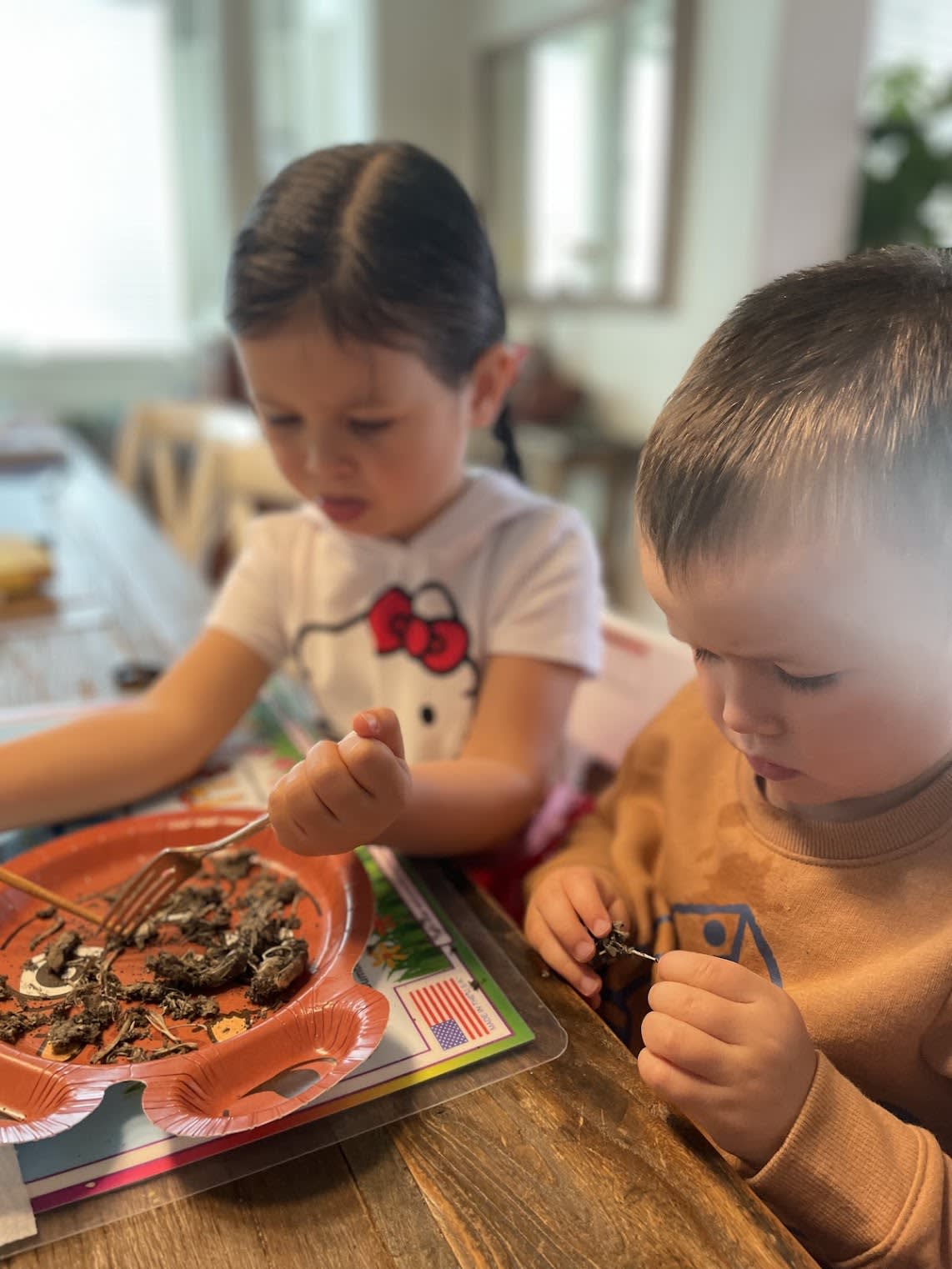
- Understanding of the food chain and ecosystems through observation of owl pellets.
- Practical experience with dissection, fostering fine motor skills and hand-eye coordination.
- Development of observational skills by identifying bones and materials within the pellets.
- Increased curiosity about wildlife and their diets, prompting further questions about owls and other predators.
Critical Thinking
- Encouraged exploration and questioning as the student identifies different elements within the pellet.
- Analysis of findings, leading to predictions on what animals the owls might have eaten.
- Application of problem-solving skills to carefully extract and categorize the materials.
- Promotion of independent thought as the student forms hypotheses based on their observations.
Art
- Creative engagement in arranging and possibly illustrating findings from the dissection.
- Use of materials to create a visual representation of the owl's diet.
- Encouragement of expression through drawing or crafting based on insights gained from the activity.
- Integration of tactile experiences that stimulate creativity and imagination.
Tips
To enhance Naomi's learning experience, consider incorporating related activities such as observing local wildlife or visiting a nature center. Engage her in discussions about the role of predators in ecosystems and encourage her to document her observations in a journal. Additionally, integrating storytelling elements from Minecraft could inspire her creativity further by connecting her interests with nature exploration.
Book Recommendations
- Owl Moon by Jane Yolen: A beautifully illustrated story about a child's outing with their father to see owls, perfect for introducing wildlife observation.
- The Owl Who Was Afraid of the Dark by Jill Tomlinson: A charming story that teaches children about owls and their nocturnal nature, fostering curiosity about animals.
- What Is an Owl? by Dawn Sirett: A beginner's guide to understanding owls, their characteristics, and their habitats, making it an engaging resource for young learners.
Learning Standards
- NGSS K-ESS3-1: Use and share observations of local weather conditions to describe patterns over time.
- NGSS K-LS1-1: Use observations to describe patterns of what plants and animals (including humans) need to survive.
- CCSS.ELA-Literacy.W.K.7: Participate in shared research and writing projects.