Core Skills Analysis
Science
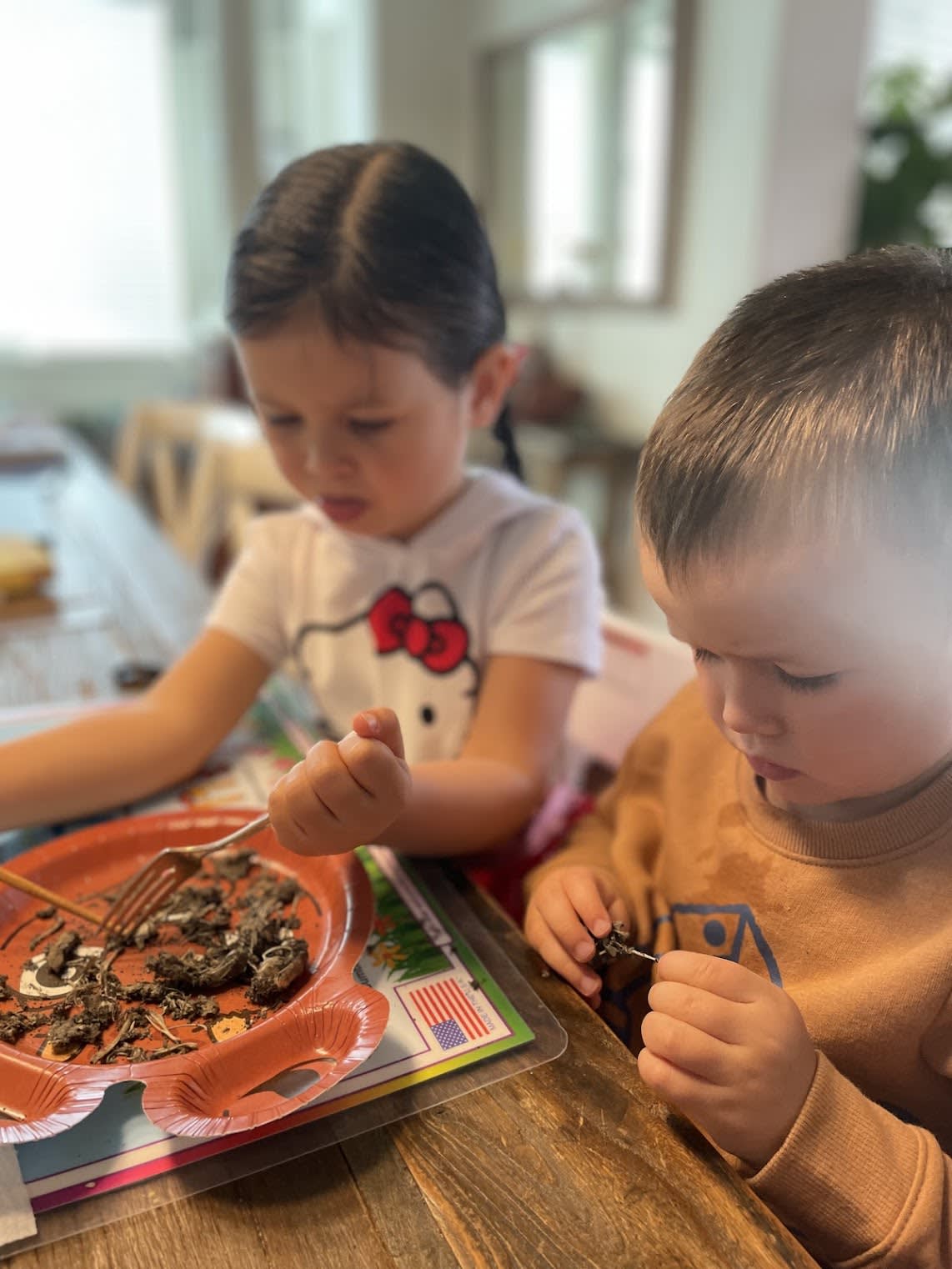
- Engaged in hands-on exploration of owl pellets, learning about the diet of owls and their role in the ecosystem.
- Identified different animal bones and materials found in the owl pellet, fostering an understanding of animal anatomy.
- Gained knowledge about decomposition and the food chain through examining the remains of prey.
- Developed observational skills by closely inspecting and analyzing the contents of the pellet.
Critical Thinking
- Asked questions about the materials found in the owl pellet, promoting inquiry and curiosity.
- Used a fork and hands to separate and analyze different elements, demonstrating problem-solving skills.
- Connected findings to broader ecological concepts, such as predator-prey relationships.
- Learned to draw conclusions based on direct evidence from the dissection, enhancing reasoning skills.
Tips
To further enhance Naomi's learning experience, consider introducing additional activities related to wildlife and ecosystems, such as nature walks to observe local wildlife or simple experiments with real or simulated habitats. Using resources from the game Minecraft, you can create a virtual environment where she can learn about different animal behaviors and ecosystems. Engage her in discussions about the importance of food chains and conservation efforts, encouraging her to ask questions and express her opinions.
Book Recommendations
- Owls: Whoo Are You? by Wendy Frazier: A fun introduction to owls with interactive questions and colorful illustrations.
- The Owl Who Was Afraid of the Dark by Jill Tomlinson: A charming story about a young owl overcoming its fear of the dark, perfect for young readers.
- Owl Pellets: A Dissection Activity by Cheryl D. Hudson: An engaging book designed for young children to learn about owl pellets and wildlife dissection activities.
Learning Standards
- BC Science Curriculum: Demonstrates an understanding of the structure and function of living things (Science 1-3-1).
- BC Critical Thinking Skills Framework: Encouraging inquiry, reasoning, and decision-making processes (Critical Thinking 1-2-1).