Core Skills Analysis
Science
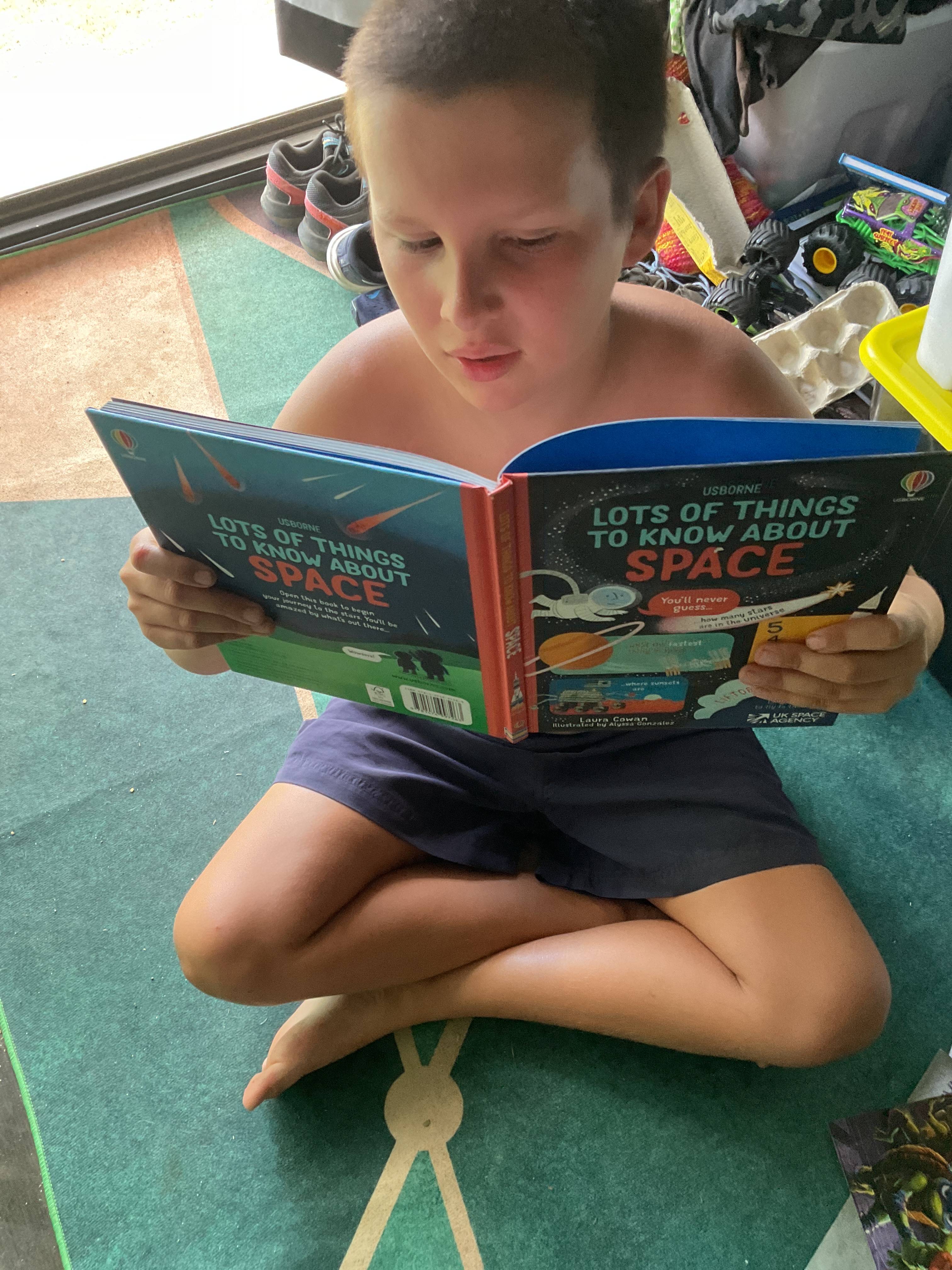
- Xavier has engaged with fundamental concepts of astronomy, such as planets, stars, and galaxies, fostering curiosity about the universe.
- He has likely learned about the solar system's structure, including orbits and the characteristics of different celestial bodies.
- By exploring illustrations and facts, he is probably developing observational skills and understanding scientific classification.
- The book may have introduced him to current space exploration missions, encouraging interest in technology and innovation related to space science.
English
- Xavier is improving his reading skills through engagement with informational text, enhancing his vocabulary with terms specific to space.
- Analyzing the layout of the book, he learns to interpret visual aids and diagrams, which support the text and explain complex ideas.
- The book encourages critical thinking by posing questions about space, pushing him to make inferences based on written content.
- Reading aloud can enhance his fluency and comprehension skills, fostering better engagement with the material.
Art
- Through the book's illustrations and diagrams, Xavier can appreciate the artistic aspect of space representation.
- Understanding how art can convey information about science, he might be inspired to create his own space-themed artwork.
- The vibrant colors and designs may enhance his aesthetic awareness and influence his personal taste in art.
- He can explore the relationship between art and science, understanding how artists visualize concepts that are often abstract.
Social Studies
- The book may introduce historical milestones in space exploration, such as significant missions or the contributions of various countries.
- Xavier might learn about the impact of space exploration on society, including technological advancements and international cooperation.
- Discussion about space agencies and their roles promotes an understanding of global dynamics and cultural perspectives in science.
- Exploring the impact of space on human existence can lead to discussions about resource exploration and environmental considerations.
Math
- Concepts such as distances between planets or the size of celestial bodies can introduce Xavier to practical applications of math.
- He may encounter basic geometry through understanding shapes and sizes in the context of orbits and satellite paths.
- Engaging with scientific data and statistics about space can help him develop skills in interpreting graphs and charts.
- If the book includes equations or measurements related to gravity or speed, he may begin to grasp these fundamental mathematical ideas.
History
- Xavier can learn about the timeline of space exploration, from early telescopes to modern spacecraft.
- Understanding the role of historical figures in the advancement of space science provides context and relevance to his learning.
- Exploring past missions allows him to appreciate the evolution of technology and human ingenuity.
- He might connect his learning to broader historical themes, such as the Cold War and the Space Race.
Music
- While reading about space, Xavier could discover how music is used in space missions, such as wake-up calls for astronauts.
- He can explore compositions inspired by space, thereby connecting artistic expression with scientific themes.
- The rhythmic qualities of certain educational songs about space could facilitate a deeper understanding of terms and concepts.
- He may engage with soundscapes of space or consider how music communicates emotions associated with the exploration of the unknown.
Physical Education
- Reading about astronauts and their physical training introduces the importance of fitness and conditioning in unusual environments.
- Understanding concepts like gravity and movement in space may spark interest in physical science and exercise.
- He might connect physical education with broader themes of health and well-being crucial for astronauts.
- Exploring the effects of space travel on the human body can foster curiosity about biology and health science.
Foreign Language
- If the book contains any multilingual content or translations, Xavier may gain exposure to terminology in other languages.
- Learning vocabulary related to space science can enhance his language skills by contextualizing new words and phrases.
- He might express interest in how space concepts are communicated in different cultures, expanding his global awareness.
- Discussing space topics in another language can serve as a fun method for language practice.
Tips
To further enhance Xavier's learning experience, consider organizing hands-on activities such as building a model solar system, which would combine art and science. Encourage him to create a space-themed project like a poster or presentation, integrating research and artistic skills. Also, explore virtual planetarium tours to deepen his understanding of astronomy and enhance engagement with the cosmos. Additional discussions about current space missions, historical contexts, and the technologies used could further enrich his educational journey.
Book Recommendations
- There's No Place Like Space: All About Our Solar System by Tish Rabe: An engaging introduction to the solar system featuring beloved characters from Dr. Seuss.
- Astrophysics for Young People in a Hurry by Neil deGrasse Tyson: A teen-friendly version of the popular astrophysics book, explaining complex concepts in an accessible way.
- The Darkest Dark by Chris Hadfield: A beautifully illustrated story about overcoming fear and the wonders of space, inspired by astronaut Chris Hadfield's life.
Learning Standards
- Australian Curriculum: Science ACHASSK187 - Understand how the universe is structured.
- Australian Curriculum: English ACELY1687 - Develop reading comprehension skills through diverse types of texts.
- Autism Level 2: Engagement in reading activities to increase knowledge.
- ADHD: Structured learning environments to enhance focus and retention of information.