Core Skills Analysis
English
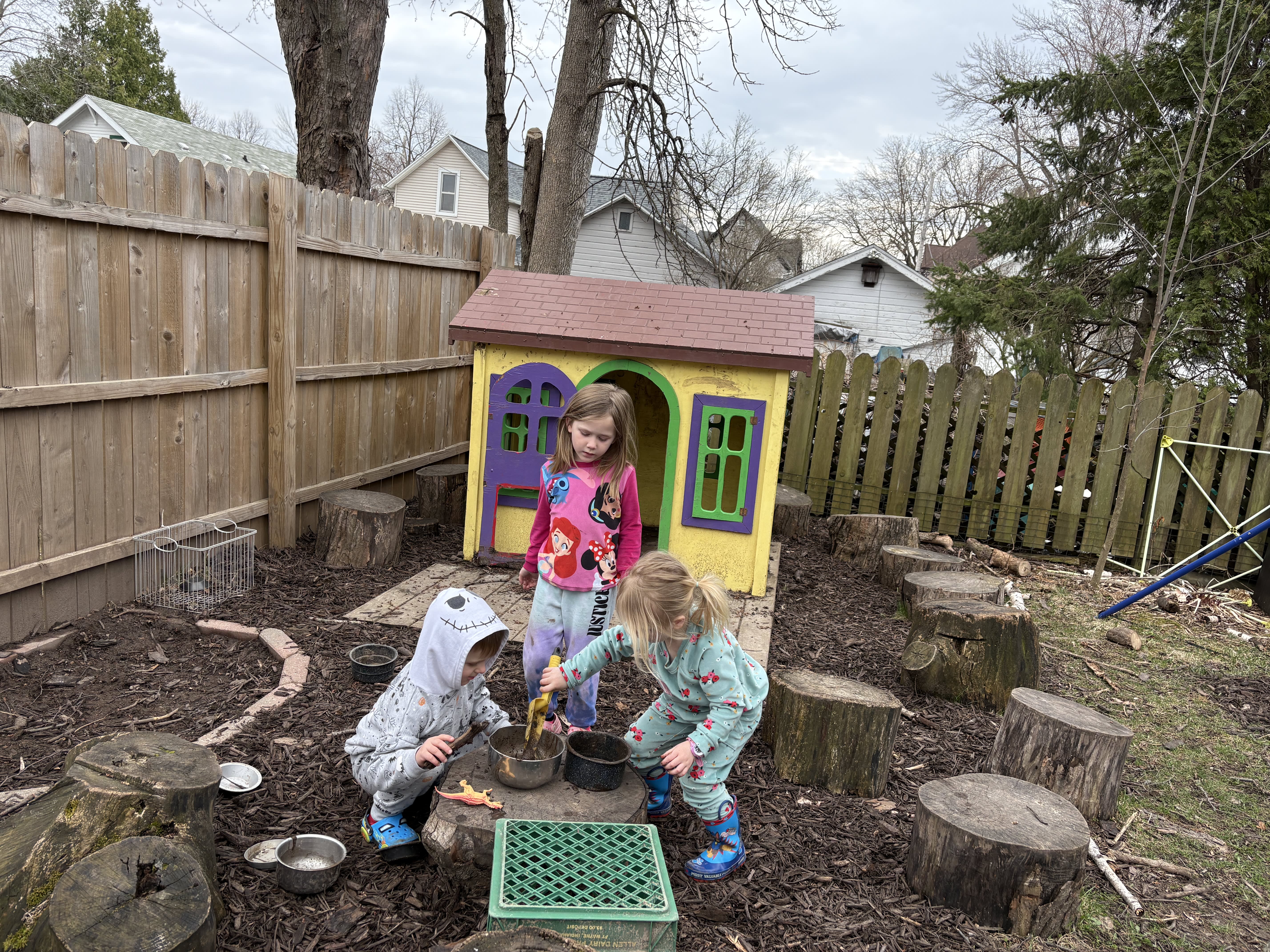
- AJ demonstrated receptive language skills by observing and understanding the ongoing pretend cooking activity, showing comprehension of shared play context and emerging vocabulary related to cooking and food preparation.
- Participation in a shared imaginative play scenario provided opportunities to develop narrative skills by mentally sequencing actions and anticipating next steps in the “soup” making process.
- AJ's body language and intention to stir or contribute indicate early pragmatic language skills, such as turn-taking and nonverbal communication cues supporting collaborative conversation.
- The activity models symbolic use of language where objects and actions stand for real-life cooking processes, supporting semantic development linked to pretend play.
Approaches to Learning
- AJ exhibited focused attention and active engagement indicated by his quiet concentration and poised readiness to participate in the play activity.
- He demonstrated social flexibility by positioning himself to learn from and potentially contribute to the cooperative task, showing willingness to collaborate and share ideas.
- This experience taps into curiosity through exploration of materials (mud, bowls, sticks) and experimenting with pretend cooking, encouraging cognitive persistence and inventive thinking.
- AJ’s observation and intent to act reflect emerging self-regulation skills and patience, foundational for mastering social interactions and problem-solving in play.
Tips
To deepen AJ's learning from this shared pretend play activity, encourage language development through storytelling by prompting him to describe the "soup" ingredients and cooking steps using new vocabulary. Introduce role-play extensions such as creating a menu or inviting others to order from their mud kitchen to foster both language and social communication. Support approaches to learning by setting up varied materials to engage curiosity and experimentation, such as different natural textures or safe kitchen tools for mixing and pouring. Additionally, guide AJ in taking turns and cooperative decision-making in the pretend scenarios to strengthen self-regulation and social problem-solving.
Book Recommendations
- Whose Toes Are Those? by Cabrera & Reggi: A fun interactive board book that introduces children to body parts and simple descriptive language, connecting to AJ's attention to hands and actions.
- Pretend Soup and Other Real Recipes: A Cookbook for Preschoolers by Mollie Katzen: This cookbook encourages imaginative cooking and provides simple recipes perfect for playing and learning about food and measurement.
- The Mud Pie War by Judy Cox: A story about children’s outdoor play and creativity, linking well with the themes of pretend cooking with mud.
Learning Standards
- III. LANGUAGE & COMMUNICATION A.EL.1 - Listening and deriving meaning through observing others' communications during play.
- III. LANGUAGE & COMMUNICATION B.EL.2c - Using nonverbal communication and context to interact.
- IV. APPROACHES TO LEARNING A.EL.1 - Curiosity and risk-taking in new social learning experiences.
- IV. APPROACHES TO LEARNING A.EL.3 - Persistence and flexibility through engagement in shared play.
- II. SOCIAL AND EMOTIONAL C.EL.2 - Engaging in social interaction and play with others.
- II. SOCIAL AND EMOTIONAL B.EL.2 - Demonstrating self-awareness and cooperation.
Try This Next
- Create a simple illustrated recipe card worksheet where AJ and friends draw or write steps for their pretend cooking processes.
- Set up a sensory exploration chart for AJ to describe textures, smells, and sounds associated with different natural materials used in mud play.
Growth Beyond Academics
AJ’s quiet focus and readiness to participate show growing patience, self-awareness, and trust within peer collaboration. His thoughtful engagement in shared play points to increased social comfort and emerging confidence in group learning activities.