Core Skills Analysis
Art
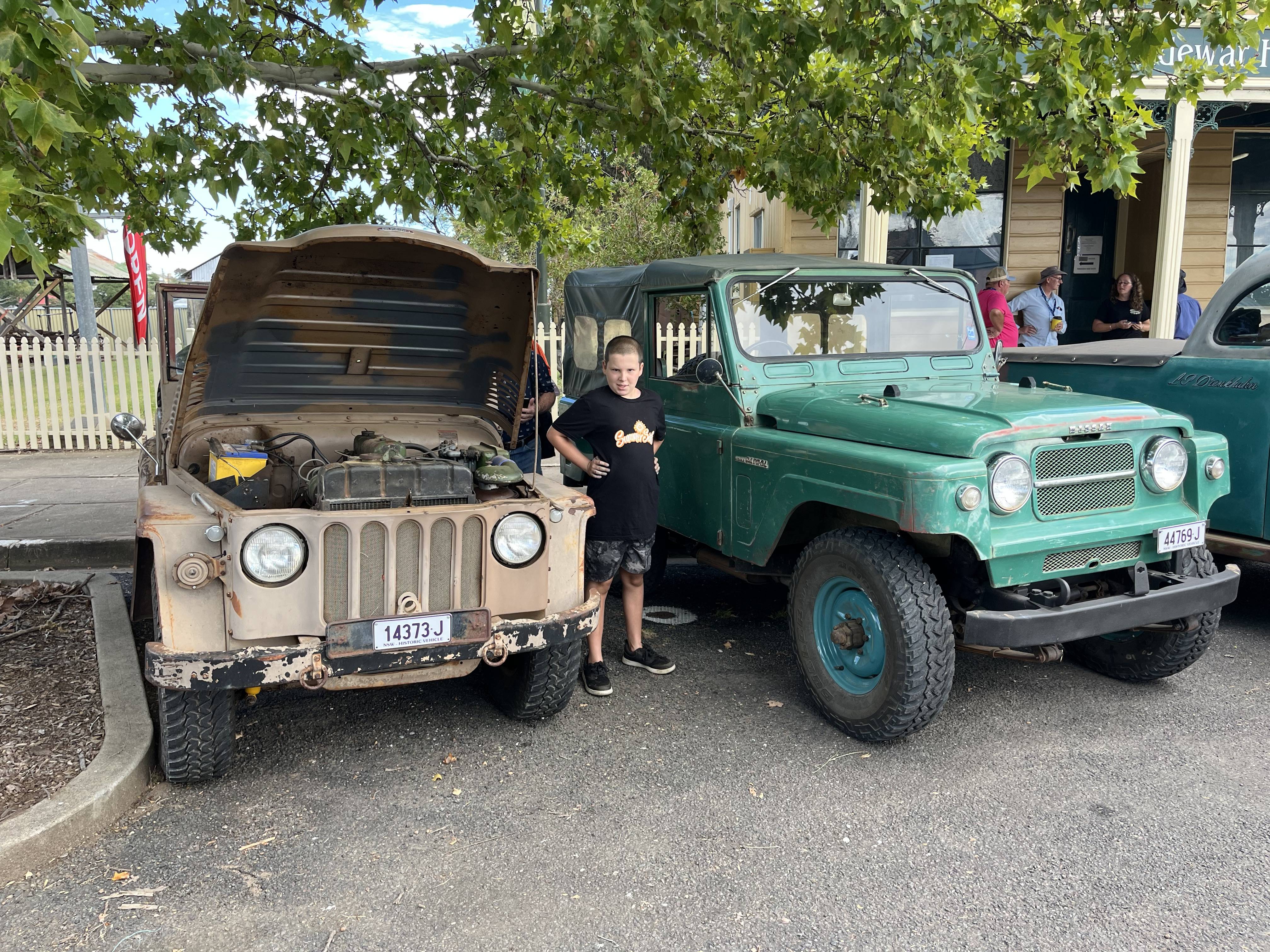
- Xavier observed the aesthetic details of antique cars, such as vintage design elements and paint textures.
- He learned to appreciate the craftsmanship and visual styling of different car models from past eras.
- The contrasting colors and wear patterns offered insight into how materials age and influence artistic appeal.
- He developed an understanding of the role of design in functionality and how visual elements reflect historical periods.
English
- Xavier expanded his vocabulary related to automobiles and mechanics through informal conversations and signage.
- He practiced descriptive language by mentally noting details about the cars' conditions and features.
- The car show environment provided social narrative cues about historic preservation and storytelling.
- Exposure to written labels and plaques likely encouraged reading comprehension of informational text.
Foreign Language
- Xavier encountered terms possibly reflective of cultural or language origins in car brand names or signage.
- He could explore translation exercises related to mechanical parts and car terminology.
- The setting offers context for practicing language skills linked to travel and transportation themes.
- Understanding symbolic language or branding may enhance cross-lingual recognition of technical vocabulary.
History
- Xavier learned about automotive history through the display of antique vehicles from different time periods.
- He observed technological evolution as seen in vehicle design and engine mechanisms over the decades.
- The experience offered a tangible connection to daily life and culture from past generations.
- He gained appreciation for historic preservation and how society values its mechanical heritage.
Math
- Xavier could observe geometric shapes and symmetry in car parts, enhancing spatial reasoning.
- He might compare vehicle dimensions or count parts like headlights, wheels, and grille slats.
- The concept of measurement and scale is implicit in understanding car sizes and proportions.
- He learned informal data analysis skills by noticing differences between models’ features quantitatively.
Music
- Although not directly observed, the ambiance of a car show may include music reflecting cultural or historical themes.
- Xavier can connect engine sounds to auditory learning of mechanical rhythms and patterns.
- He may develop an interest in the sound design aspect of vehicles, linking to acoustic science.
- Understanding the evolution of car horns and sounds provides a link between technology and auditory signals.
Physical Education
- Xavier engaged in walking and moving around the car show, which promotes physical activity.
- The outdoor setting helped develop stamina and gross motor coordination through exploration.
- Navigating around cars and crowds enhances spatial awareness and balance.
- Standing and interacting outdoors supports sensory integration and physical endurance.
Science
- Xavier observed basic mechanical engineering principles through visible components like engines and wheels.
- He gained insight into materials science by seeing metal corrosion and paint aging firsthand.
- The cars demonstrated energy transformation concepts relevant to engine operation and fuel use.
- He was introduced to the environmental science of car emissions and historical changes in automotive technology.
Social Studies
- Xavier explored social and cultural aspects of antique vehicles in community heritage.
- He learned about the roles of automobiles in economic and societal development over time.
- The event exposed him to community engagement and cultural preservation activities.
- He gained awareness of social values placed on innovation, history, and nostalgia in transportation.
Tips
To deepen Xavier’s learning from the antique car show, encourage creative projects such as drawing or modeling his favorite car to explore artistic details. Facilitate storytelling or report writing about one vehicle’s history to blend English and History skills. Introduce simple mechanical experiments like building a basic car model or exploring how engines work to foster Science understanding. Finally, organize a visit to a local museum or a virtual car history tour for enriched social studies and cultural context. This hands-on repetition reinforces concepts across subjects in engaging ways.
Book Recommendations
- The Secrets of Cars by Richard Hammond: An engaging introduction for kids to the science and history behind cars, including classic and modern vehicles.
- The Way Things Work Now by David Macaulay: A richly illustrated guide explaining machinery and engineering concepts in accessible language.
- Old Car Spotter's Guide by Gavin Farmer: A kid-friendly introduction to antique cars with facts and photos to help young enthusiasts identify classic models.
Learning Standards
- Australian Curriculum: Science understanding (ACSSU095) – Forces and motion in engineering contexts.
- NSW Curriculum: History (HT4-2) – Understanding change and continuity through technology.
- Autism Level 2: Supporting sensory engagement in community outings.
- ADHD: Encouraging active learning and movement in stimulating environments.
Try This Next
- Worksheet to label parts of an antique car and describe their functions.
- Writing prompt: Imagine you own one of these cars. Write a day in the life story from its perspective.
Growth Beyond Academics
Xavier’s participation in the car show suggests growing curiosity and confidence in exploring new environments. The interactive nature of the event likely fostered social engagement and independence, while observing details encouraged focus and patience. Overall, it was a positive experience promoting enthusiasm for learning through real-world contexts.