Core Skills Analysis
Art
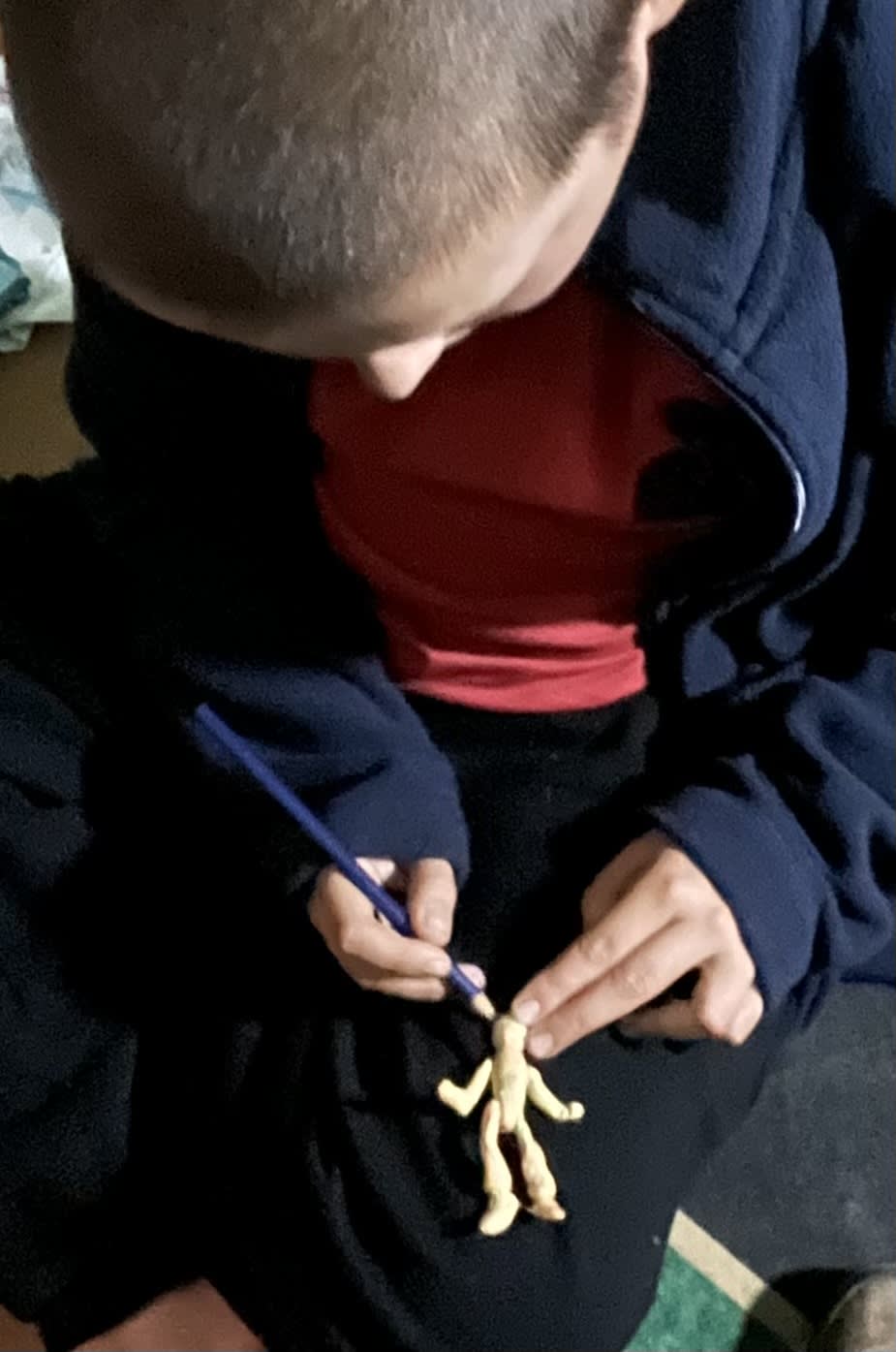
- Learned basic sculpture techniques by shaping and molding clay into human figures.
- Developed fine motor skills and hand-eye coordination while working with small, detailed clay figures.
- Explored creative expression through designing characters for a claymation project.
- Gained an understanding of the importance of texture and proportion in 3D art.
English
- Enhanced storytelling skills by conceptualizing characters for the claymation narrative.
- Practiced descriptive vocabulary related to physical features and emotions while designing figures.
- Improved sequencing understanding by preparing characters for a story-based animation.
- Expanded ability to communicate ideas visually and verbally about their artwork.
Foreign Language
- Potential to label clay figures in a second language to integrate vocabulary learning.
- Could describe the characters and actions in another language to practice speaking skills.
- Opportunity to translate character names or story elements during claymation creation.
- Encourages use of language for storytelling and narration outside the primary language.
History
- Opportunity to create historically accurate or inspired characters to explore time periods.
- Learned about cultural attire or symbolism by designing figures reflective of different eras.
- Engaged in research-based art by studying historical figures for claymation representation.
- Connected craftsmanship traditions like clay modeling with historical art practices.
Math
- Applied measurement skills by estimating proportions of clay figures’ limbs and body.
- Practiced spatial awareness when arranging figures and planning scenes for animation.
- Developed problem-solving skills in balancing the clay models to stand or pose.
- Explored basic geometry concepts by shaping forms and understanding 3D structures.
Music
- Potential to integrate sound and rhythm when animating figures to music.
- Learned about timing and pacing that ties closely with musical beats during animation.
- Explored emotional expression that links both music and character movements.
- Encouraged listening skills if coordinating voiceovers or soundtrack for the claymation.
Physical Education
- Developed fine motor skills and dexterity through detailed clay modeling.
- Practiced hand strength and precision necessary for small-scale figure creation.
- Enhanced bilateral coordination by using both hands simultaneously to sculpt and hold clay.
- Potential to understand anatomy and range of motion through figure posing.
Science
- Explored physical properties of clay, including its malleability and drying process.
- Learned cause and effect by altering clay shapes and observing results.
- Understood basics of physics related to balance and structure of figures.
- Connected material science concepts with real-world applications in art.
Social Studies
- Engaged in cultural expression by creating characters that could represent social roles.
- Learned about storytelling’s role in societies by preparing figures that tell a narrative.
- Explored community values or interaction through the development of character traits.
- Enhanced empathy and perspective-taking by imagining different personas.
Tips
To deepen Xavier's learning experience, encourage him to write biographies or backstories for his claymation characters, integrating language arts and creative writing. Incorporate lessons on the physics of movement to improve the animation's realism, perhaps by experimenting with joint articulation. Introduce storytelling frameworks, such as the hero's journey, to structure the claymation narrative for a stronger story arc. Additionally, Xavier can explore cultural or historical themes through his characters, enriching his social studies and history knowledge while connecting emotionally with the stories he creates.
Book Recommendations
- Animate Clay: The Beginner's Guide to Claymation by Fern Smith: A practical guide for young artists to learn the basics of claymation, including modeling, animation techniques, and storytelling.
- The Art of Stop-Motion Animation by Ken A. Priebe: This book covers the principles and techniques of stop-motion animation with insightful tips perfect for beginners.
- Storytelling with Clay: Creative Sculpture for Kids by Anna Young: Encourages children to tell stories through their sculptures, highlighting connection between art and narrative.
Learning Standards
- Australian Curriculum: ACAVAM115 - Experiment with techniques and processes to create visual arts works.
- NSW Curriculum: Creative Arts Stage 3 - Develop skills in shaping and joining materials for 3D artworks.
- Autism Level 2: Supports development of fine motor coordination and creative expression.
- ADHD: Encourages sustained attention, sequencing, and hands-on engagement to support executive functioning.
Try This Next
- Worksheet: Design your own clay character profile including name, traits, and backstory.
- Writing Prompt: Describe a day in the life of your claymation character and create a short script for an animation scene.
Growth Beyond Academics
Xavier demonstrates focused concentration and patience during detailed modeling, revealing growing perseverance and fine motor confidence. The creative process allows him to express individuality and imagination, potentially boosting his self-esteem and emotional articulation through art.