Core Skills Analysis
Art
- The baking process encouraged visual presentation skills by shaping and arranging cookie pieces on a tray, which is a form of edible composition.
- Asha used color and texture awareness when working with the peanut butter dough and noticing the difference between raw batter and finished cookies.
- The activity involved hands-on creativity, since using available ingredients to make something appealing is similar to improvisational art.
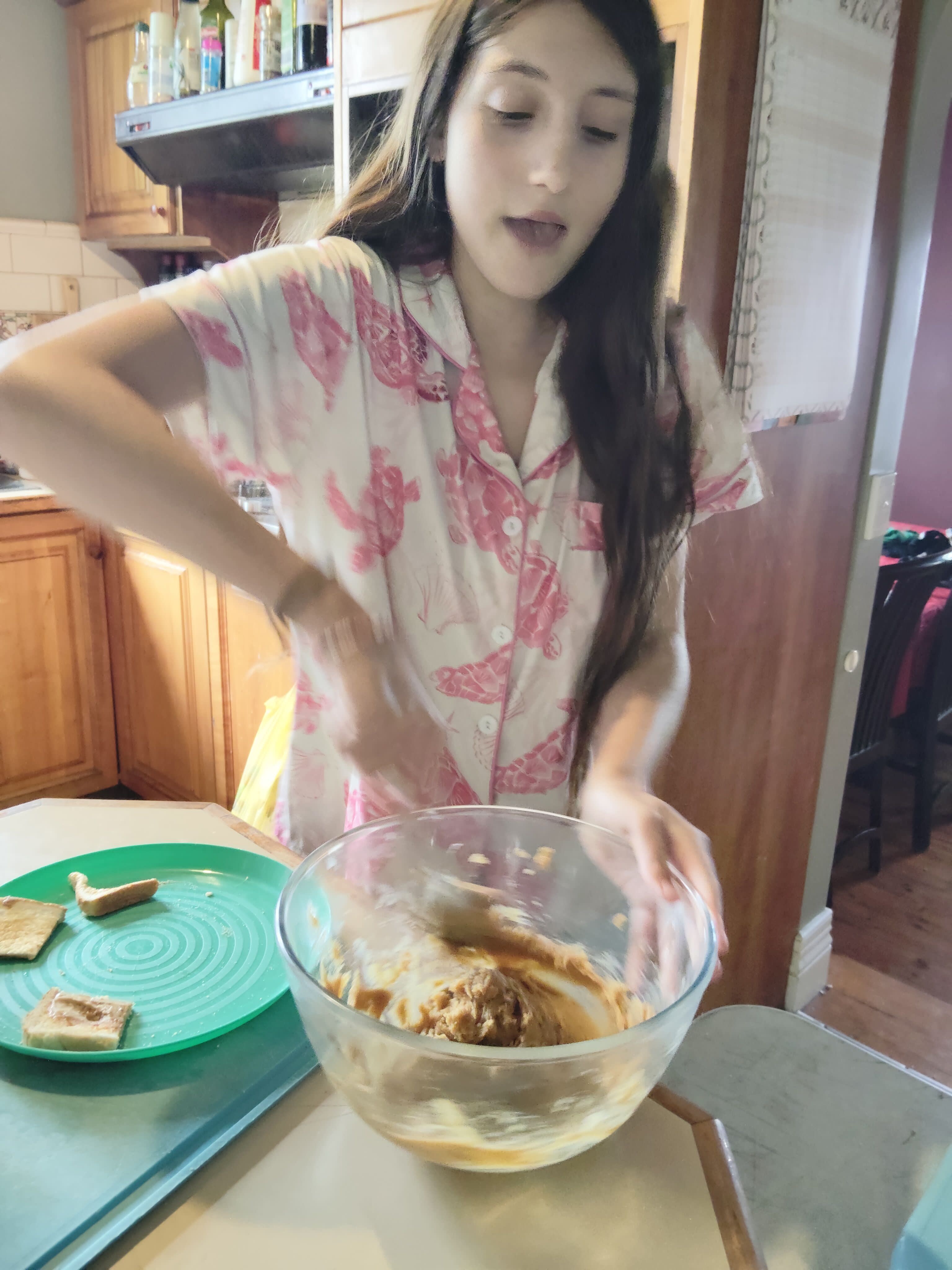
- The photo shows active movement and focus, suggesting engagement with a process-based, tactile creative task rather than a finished art product.
English
- Asha used ChatGPT to figure out what she could make, which shows practical reading comprehension and interpreting written or conversational instructions.
- The activity likely involved following a recipe, building skills in sequencing, imperative verbs, and procedural language.
- Naming ingredients and kitchen actions supports vocabulary development around cooking, measurement, and food preparation.
- This kind of task also strengthens communication skills because she had to identify what ingredients she had and match them to a possible recipe.
Foreign Language
- If the recipe or ingredient names were read in another language, the activity would support cross-language recognition of food vocabulary, though this is not directly shown.
- Cooking is a strong context for learning cognates and universal terms such as butter, sugar, and cookie-related vocabulary.
- Using an AI tool to search for what can be made with ingredients can expose a learner to translated recipe terms or bilingual comparisons.
- Even without a specific second language visible, the task offers natural opportunities to practice simple kitchen words in another language later.
History
- Making cookies connects to the history of home baking and family food traditions, which often pass recipes through generations.
- Peanut butter cookies are part of modern domestic food culture, linking the activity to everyday historical eating habits.
- Using what is available in the house reflects a long-standing historical pattern of resourceful cooking during times of limited ingredients.
- The activity can open discussion about how recipes change over time as ingredients, appliances, and household routines evolve.
Math
- Baking cookies involves measuring ingredients, which reinforces fractions, volume, and proportional reasoning.
- Asha likely had to think about quantities and possibly adjust a recipe to match the ingredients available.
- Cookie placement on the tray gives practice with spacing, counting, and estimating how many pieces fit in a batch.
- Timing the bake introduces time concepts such as minutes, intervals, and following a sequence accurately.
Music
- Kitchen routines often have a rhythm, and stirring, scooping, and placing cookies can develop an awareness of repeated patterns.
- The activity may have involved timing and pacing, which connects to musical beat and steady tempo.
- Using ChatGPT to plan the recipe could be compared to following a score: one step leads to the next in order.
- The focused, repetitive motions shown in the photo can support rhythmic coordination even though no instruments are involved.
Physical Education
- Mixing dough and working at the counter builds fine motor control, hand strength, and bilateral coordination.
- The activity required standing, reaching, stirring, and transferring cookies, which supports practical body movement and coordination.
- Scooping and arranging pieces on the tray promote hand-eye coordination and controlled movement.
- The image shows active engagement, suggesting the learner was physically involved in the task rather than passively observing.
Science
- Baking cookies demonstrates a food science process where heat changes the texture, structure, and appearance of the dough.
- Asha could observe how ingredients blend, thicken, or spread, which builds understanding of physical and chemical change.
- The activity involves cause and effect: ingredient ratios and oven temperature affect the final cookie outcome.
- Using existing ingredients to make a recipe encourages experimentation and hypothesis testing about what will work together.
Social Studies
- The activity reflects household decision-making and resource management by using ingredients already available at home.
- Cooking for others is a social practice that can build responsibility, cooperation, and care for family or community.
- Sharing cookies connects to traditions of hospitality, gift-giving, and communal food culture.
- Using an AI tool to help plan the recipe also introduces a modern social skill: using technology to solve everyday problems.
Tips
To extend this learning, invite Asha to compare the ingredients she had with the ingredients a recipe usually calls for, then talk about substitutions and why some work better than others. You could also have her double or halve the recipe to practice math with fractions and ratios, and ask her to describe the process in her own words as a short procedural writing activity. For a science connection, encourage her to predict what will happen if the dough is chilled, flattened more, or baked a little longer, then observe the results. Finally, make it more experiential by tasting the cookies together and discussing texture, sweetness, and shape so she can connect sensory observations to cooking decisions.
Book Recommendations
- If You Give a Mouse a Cookie by Laura Numeroff: A classic read-aloud that connects to snacks, sequence, and cause-and-effect thinking.
- Betty Crocker Kids Cook! by Betty Crocker: A child-friendly cooking book with approachable recipes and practical kitchen skills.
- The Way to Cook by Julia Child: A well-known cooking reference that can inspire discussion about ingredients, technique, and food preparation.
Try This Next
- Recipe Sequencing Worksheet: put the cookie-making steps in order from first to last.
- Prediction Chart: guess how the cookies will change before and after baking, then record observations.
- Writing Prompt: describe how ChatGPT helped choose a recipe using at least 3 action words.
- Math Challenge: if the recipe makes 12 cookies, how many cookies would 2 or 3 batches make?