Core Skills Analysis
Social Studies
- The tea party activity introduced the idea of social customs and how people behave in shared celebrations, helping the student practice respectful group participation.
- Learning tea etiquette supports understanding of manners, turn-taking, and how traditions guide behavior in different social settings.
- The mention of different types of tea parties gives a glimpse into cultural variety and how events can have different purposes, styles, and expectations.
- Playing party games helped the student experience cooperation, following group rules, and being a considerate guest in a planned social event.
History
- Exploring different types of tea parties connects the student to historical traditions of social gatherings and the ways people have celebrated together over time.
- Tea etiquette offers an entry point into older customs that were often important in formal home life and community culture.
- The activity likely helped the student see that celebrations are shaped by history and that traditions can be passed down through generations.
- A Mother’s Day tea party links a modern family celebration with long-standing practices of sharing special meals and honoring loved ones.
Art
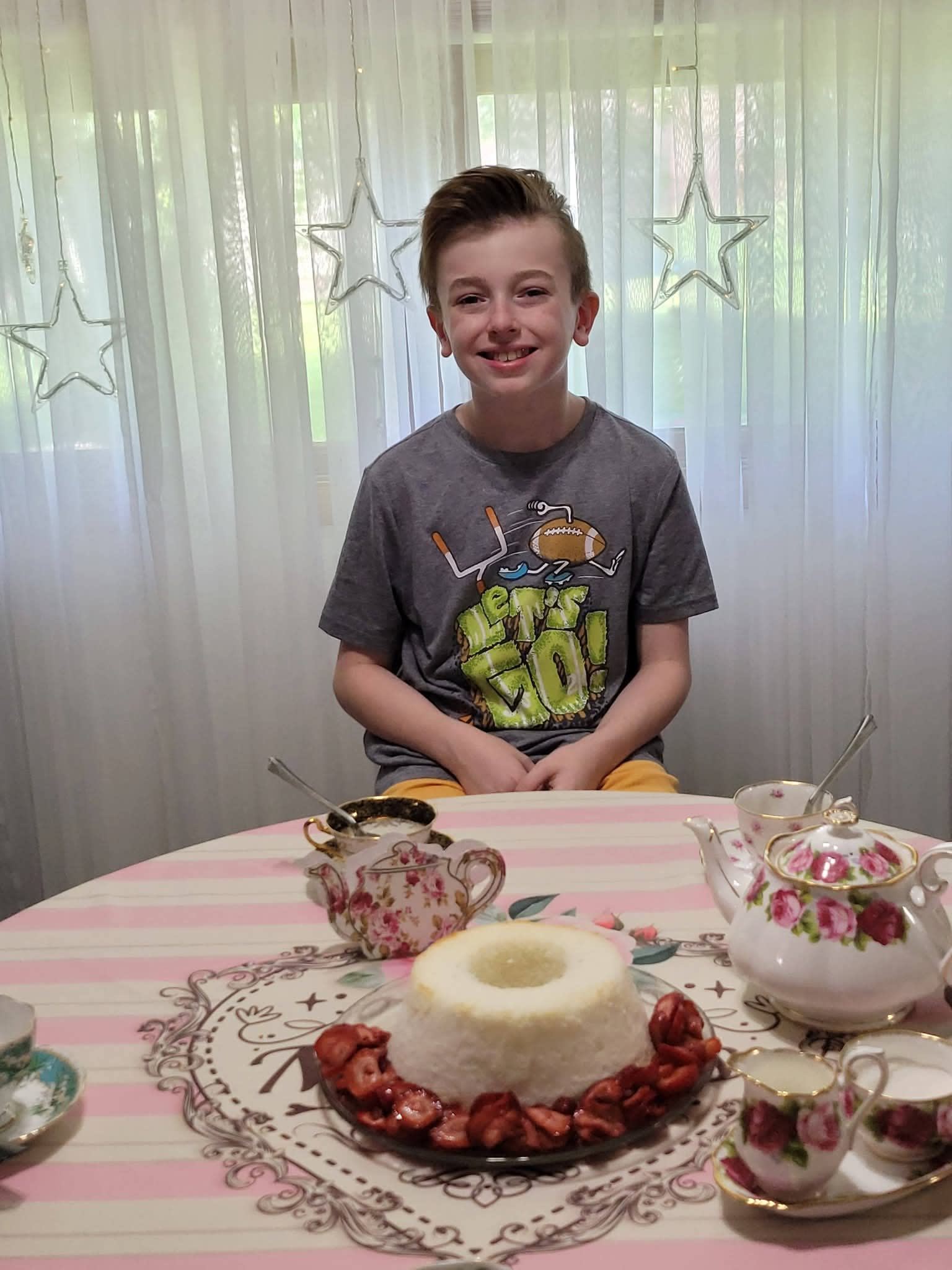
- The beautifully arranged tea setting, with floral teacups, teapot, and table display, shows attention to visual presentation and decorative design.
- The student experienced how color, pattern, and matching tableware can create a specific mood for an event.
- Setting up a tea party involves aesthetic choices, which can build appreciation for style, symmetry, and themed decoration.
- The overall presentation suggests an opportunity to notice how art can be used in everyday life to make celebrations feel special and intentional.
English
- Talking about tea etiquette gave the student practice with new vocabulary related to manners, hosting, and beverages.
- Learning about different types of tea parties likely involved listening to explanations, comparing ideas, and remembering details.
- Party games can strengthen language skills by encouraging the student to follow spoken directions and respond appropriately in a social context.
- The student may also have practiced conversational skills such as greeting, thanking, and politely participating in an event.
Tips
To extend this lesson, invite the student to compare several tea party styles by creating a simple chart showing who attends, what is served, and what etiquette rules are used. You could also read a short story or informational text about tea traditions and discuss how customs reflect time, place, and purpose. For a hands-on extension, let the student help plan a miniature tea party menu, design place cards, or arrange a table setting, which reinforces both social awareness and visual design. Finally, encourage a reflective writing or drawing activity: have the student describe their favorite part of the tea party or illustrate what makes a good guest, helping them connect manners, memory, and self-expression.
Book Recommendations
- Tea with Milk by Allen Say: A beautifully illustrated story about family, identity, and the comforting ritual of tea.
- A Chair for My Mother by Vera B. Williams: A warm story about family, saving, and sharing special moments together after a celebration.
- Fancy Nancy Tea Party Time! by Jane O'Connor: A lively story that introduces the fun of planning and hosting a tea party with style and manners.
Try This Next
- Create a tea party etiquette worksheet with prompts like: What do guests do first? How do you thank the host?
- Write or draw a 'My Perfect Tea Party' plan including decorations, food, guests, and rules.
- Quiz question set: Which tea party detail was most formal? What is one polite phrase used at a tea party?
- Design a comparison page showing two different kinds of tea parties and how they are alike or different.