Core Skills Analysis
Science
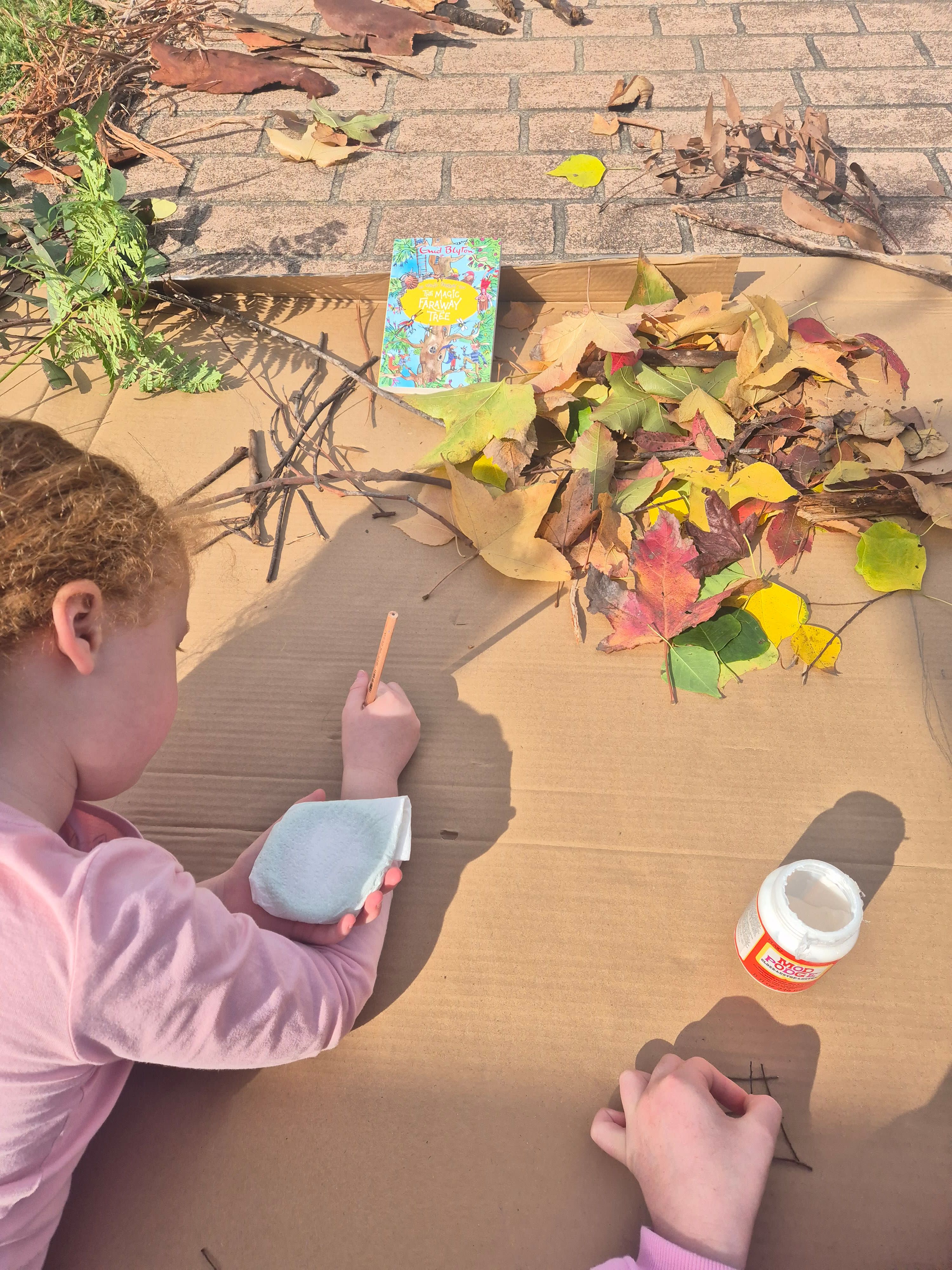
- The children observed and collected natural materials from the bush, building awareness of plant parts such as leaves, twigs, bark, flowers, and mushrooms.
- They noticed seasonal changes through the variety of leaf colors and shapes, which can support learning about plant life cycles and autumn-like changes in nature.
- Using recycled materials alongside natural items introduced the idea of combining natural and human-made materials in a design, which connects to basic environmental science and sustainability.
- The activity encouraged hands-on exploration and classification as the children sorted materials for specific features like texture, color, size, and usefulness in the tree model.
Art & Design
- The children transformed found objects into a creative model inspired by The Magic Faraway Tree, showing imaginative interpretation of a story in three-dimensional form.
- They experimented with composition by arranging bark, leaves, doors, windows, flowers, and mushrooms to make the scene visually interesting and story-like.
- The use of varied natural textures and bright leaf colors strengthened sensory awareness and design choices related to contrast, balance, and detail.
- Adding recycled materials to the design showed creative problem-solving and the ability to repurpose everyday items in an artistic project.
Literacy
- The activity was rooted in a named story, which supports text-to-project connection and helps children translate a literary idea into a physical creation.
- Recreating the Magic Faraway Tree encourages recall of story elements, such as the tree, doors, windows, and magical features, which builds comprehension.
- The child who was drawing and writing nearby was likely using marks to represent ideas, a foundational literacy skill tied to labeling or planning the project.
- Story-based making helps children retell and discuss narrative details, strengthening vocabulary connected to setting, characters, and descriptive language.
Mathematics
- The children likely compared and sorted materials by size, shape, and length when choosing sticks, twigs, leaves, and flowers for the model.
- Arranging objects on the cardboard involved spatial reasoning, including position, placement, and how to fit pieces into the available space.
- Repeated shapes and design features such as doors, windows, and mushrooms can support recognition of patterns and simple geometry.
- The project also invited estimating quantities, such as deciding how many leaves or sticks were needed to make the tree look complete.
Tips
To extend this learning, invite the children to label their creation with story words such as bark, leaves, doors, windows, and mushrooms, then retell the model as a short oral story or dictated sentence. You could also compare the collected natural materials by grouping them by color, texture, or size, which turns the project into a simple science-and-math sorting activity. For a richer art experience, encourage them to sketch the finished tree from observation and add captions explaining which materials came from nature and which were recycled. Finally, take a nature walk and look for more objects that could fit the world of the story, helping the children connect literature, outdoor exploration, and creative building in one meaningful project.
Book Recommendations
- The Magic Faraway Tree by Enid Blyton: A classic adventure story that inspired the children’s imaginative tree-building project.
- Leaf Man by Lois Ehlert: A nature-themed picture book that celebrates leaves, shapes, and creative art from found materials.
- We’re Going on a Leaf Hunt by Steve Metzger: A playful story that connects outdoor exploration, seasonal leaves, and movement through nature.
Try This Next
- Create a sorting worksheet: classify collected items by leaf, stick, bark, flower, and recycled material.
- Ask the child to draw and label the tree model, then write one sentence describing each part.
- Make a simple quiz: Which materials came from nature? Which came from recycling?
- Build a “story map” showing where each part of the tree was placed on the cardboard scene.