Core Skills Analysis
Science
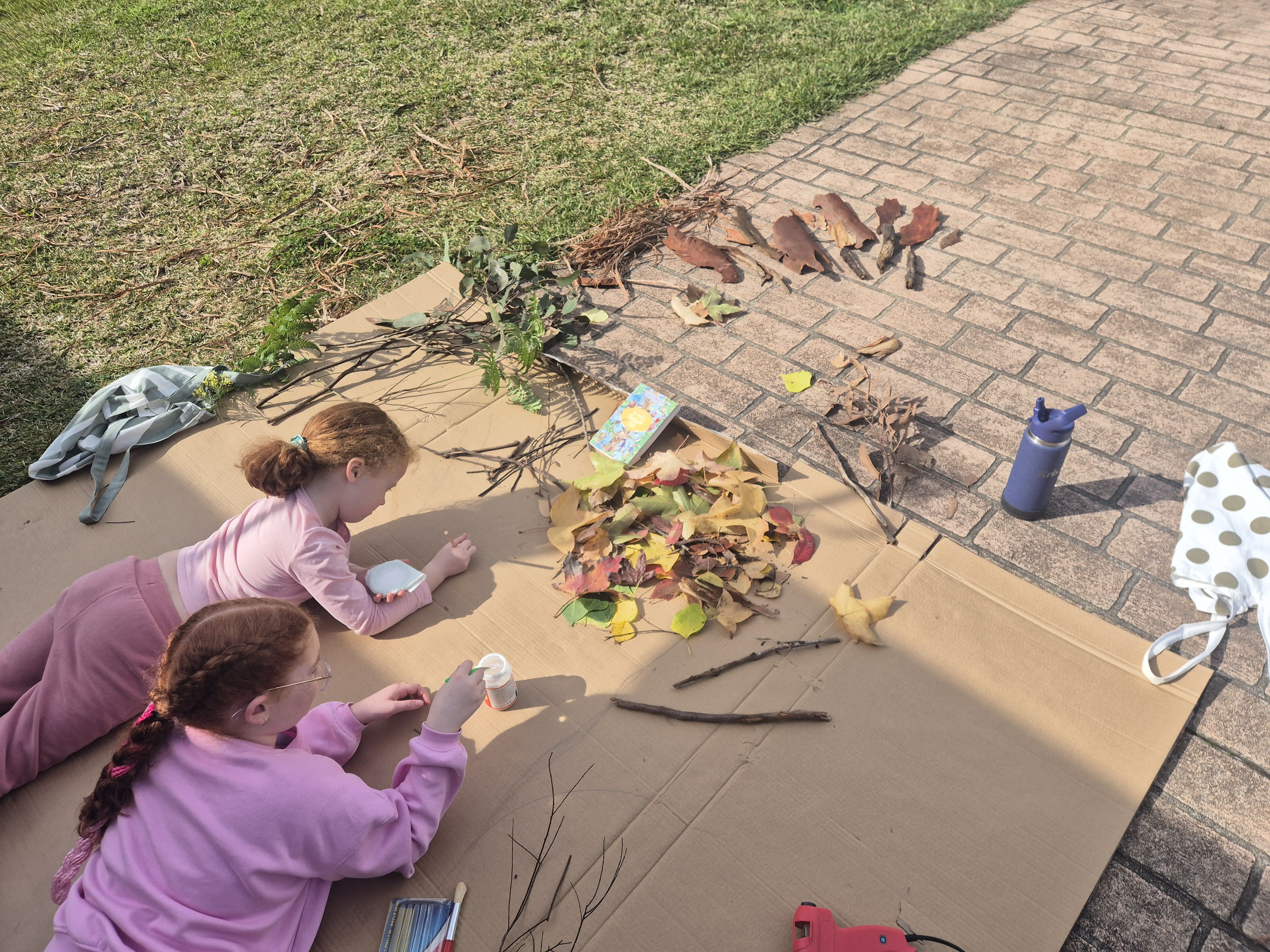
- The children observed and collected natural materials like sticks, twigs, leaves, flowers, and bark, building early classification skills by noticing differences in texture, shape, color, and size.
- They explored the natural environment in a hands-on way, learning that plants shed parts like leaves and bark that can be repurposed in creative projects.
- By using recycled materials alongside bush findings, they connected natural objects with human-made materials, a simple introduction to sustainability and mixed-material design.
- The activity encouraged careful observation of living and nonliving elements in nature, which supports curiosity about ecosystems and how materials come from the environment.
Language Arts
- Recreating The Magic Faraway Tree shows strong text-to-project connection, meaning the children are translating a story into a physical model.
- They identified key story details such as bark, leaves, windows, doors, flowers, and mushrooms, which supports recall of important descriptive elements from the book.
- The activity builds vocabulary through nature words and story-themed words, helping children connect new terms to real objects and images.
- The children’s design choices suggest imaginative retelling, an early form of narrative comprehension and creative expression.
Math
- Sorting and arranging natural materials by type likely involved comparison, a foundational math skill involving attributes such as length, quantity, and shape.
- Placing items into the scene required spatial reasoning, including position, balance, and relative placement on the cardboard base.
- The children likely made informal decisions about how many leaves, twigs, or decorations were needed, supporting early counting and estimating.
- Using repeated shapes and arranging objects into a structure introduces patterning and design symmetry in a natural, low-pressure way.
Art and Design
- The children used found materials to create a scene inspired by a story, showing creativity through collage, sculpture, and assemblage techniques.
- They experimented with layering and composition by placing natural items on cardboard to build a three-dimensional environment.
- The addition of recycled materials suggests purposeful design thinking, where children selected items to represent specific parts of the tree world.
- The activity supports fine motor development as they picked up, placed, and arranged small objects with care.
Tips
To extend this activity, invite the children to compare their collected materials by making a simple nature sorting chart with categories such as leaf shape, twig length, or color. You could also read The Magic Faraway Tree again and ask them to point out which story details they included in their model and which details they might add next time, strengthening both comprehension and planning. For a richer science connection, take a short follow-up walk to look for more examples of bark, seeds, or fungi-like shapes and discuss how natural materials change over time after they fall from plants. Finally, encourage the children to write or dictate a short caption or story about their finished scene, which helps them connect imaginative play, vocabulary, and narrative sequencing into one meaningful learning experience.
Book Recommendations
- The Magic Faraway Tree by Enid Blyton: A classic fantasy story that directly inspired the children’s nature-based recreation and imaginative design.
- The Very Hungry Caterpillar by Eric Carle: A beloved picture book that connects well to nature observation, plant life, and creative collage-style art.
- Leaf Man by Lois Ehlert: A visually rich story about using leaves and natural materials to create imaginative pictures and characters.
Try This Next
- Nature sorting worksheet: categorize sticks, leaves, bark, and flowers by color, size, or texture.
- Story recall quiz: Which materials did we use for doors, windows, flowers, and mushrooms?
- Drawing prompt: Sketch the finished Faraway Tree and label each part with nature words.
- Write-or-tell extension: Describe what might live inside the tree and what happens there.