Core Skills Analysis
Music History
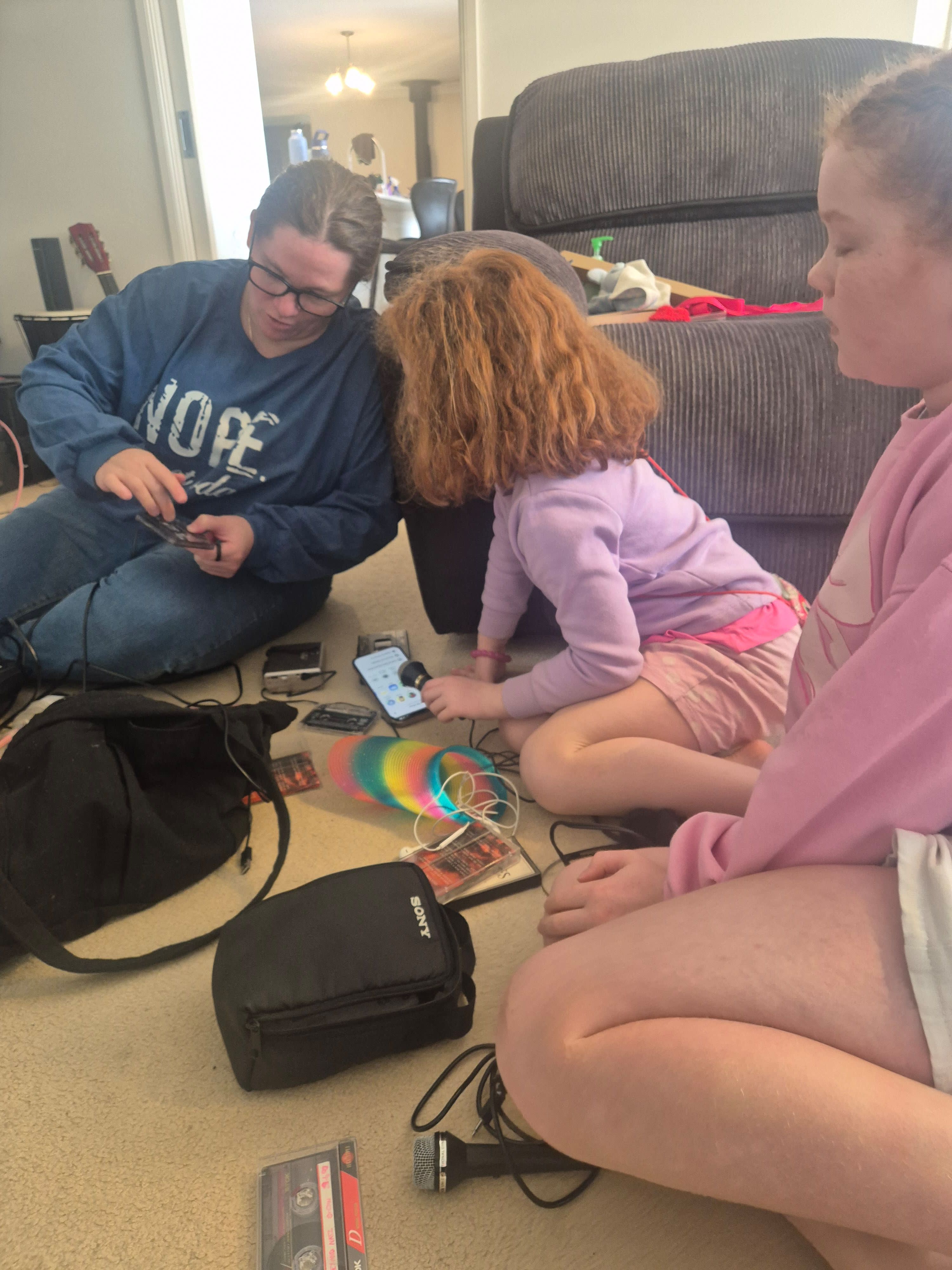
- The girls explored how music listening technology has changed over time, moving from record players and cassette players to Discman/CD players, Walkman, iPods, the first iPhone, and Spotify.
- They learned that each music format belongs to a different era, showing how people’s ways of accessing songs have evolved with technology.
- By comparing the devices side by side, they built an early understanding of chronology and how inventions build on earlier ideas.
- Audrey’s question about how music gets written onto different music pieces shows curiosity about the behind-the-scenes process of recording and distribution.
Science and Technology
- The activity introduced the idea that music can be stored and played back in different physical and digital forms, which connects to basic concepts of data storage and sound transmission.
- Listening to the same type of content on different devices helped the girls observe that technology changes the medium, even when the music itself stays the same.
- Recording themselves on a cassette and listening back gave them a hands-on experience with feedback loops and playback, a simple but powerful tech concept.
- Their attention during the activity suggests active engagement and likely excitement about discovering how devices work.
Language Arts
- Audrey’s question about how music is written onto the different music pieces shows strong inquiry skills and the ability to form a research question.
- The girls likely practiced listening closely, comparing details, and using descriptive language as they discussed what they heard and saw.
- Recording their own voices and hearing them back supports speaking and listening development, especially self-awareness in oral communication.
- The activity encourages vocabulary growth around formats, devices, recording, playback, and music history.
Social Studies
- The activity connected music technology to changes across time, helping the girls understand that daily-life tools have a history and reflect broader cultural change.
- By looking at older and newer devices together, they got a visual timeline of how families and communities have experienced music in different generations.
- The experience likely helped them see that technology shapes how people share entertainment and memories.
- Their shared exploration with Aunty Jess supports learning through family and community relationships, which is an important part of social learning.
Tips
To deepen this learning, you could build a simple music technology timeline and place each device in order so the girls can retell the story of how listening has changed over time. Next, invite them to compare one analog format and one digital format by noticing what is the same and what is different about how the music is stored, played, and heard. Since Audrey is curious about how music is written onto different music pieces, a great extension would be a gentle research or demonstration lesson on sound recording—using drawings, labels, or a short video to explain grooves, tape, discs, and digital files in age-appropriate language. You could also make the experience personal by having them interview a family member about the first music player they remember using, then create a “music memories” page with pictures, labels, and favorite songs from each era.
Book Recommendations
- The Story of Music by Ben Hoare: A child-friendly introduction to how music is made, heard, and understood across time.
- The Way Things Work Now by David Macaulay: A clear, visual guide to how everyday technologies work, including concepts that connect to recording and playback.
- Ada Twist, Scientist by Andrea Beaty: A story that celebrates curiosity, asking questions, and investigating how things work.
Try This Next
- Make a cut-and-paste timeline worksheet with each music device in order from oldest to newest.
- Ask Audrey to draw or label how she thinks music goes from a song to a cassette, CD, or phone.
- Create a compare-and-contrast chart: analog vs. digital, with pictures and simple words.
- Write 3 interview questions to ask a grown-up about the first music player they used.