Core Skills Analysis
History
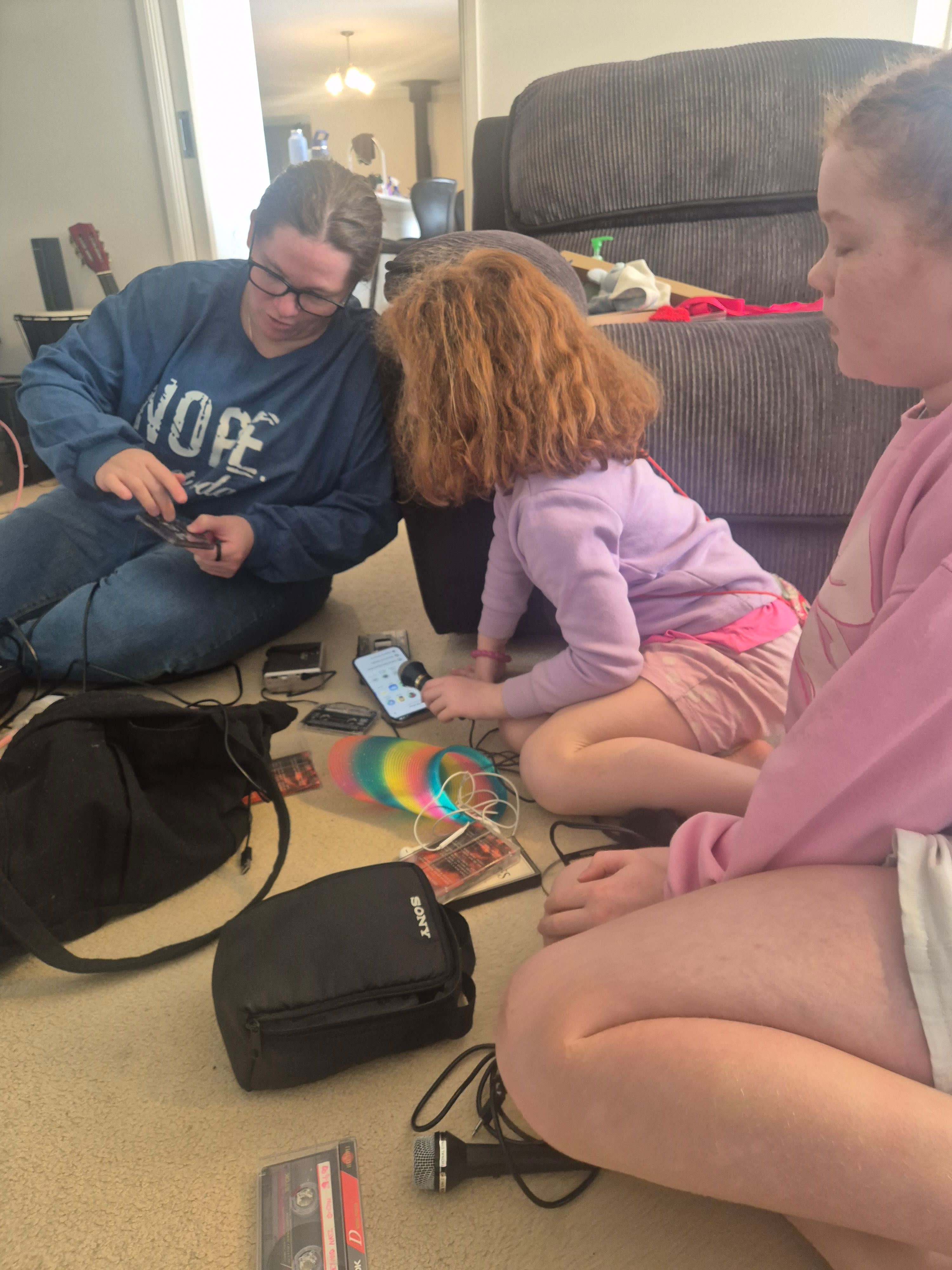
- The girls explored the evolution of music playback devices across different eras, helping them see how technology changed over time.
- They compared older formats like records, cassettes, and Walkmans with newer digital options like iPods, the first iPhone, and Spotify.
- By moving through the devices in order, they learned a simple timeline of how people listened to music before streaming existed.
- The activity connected personal experience with historical change, making the history of everyday technology easier to understand and remember.
Science & Technology
- They observed how different devices use different technologies to store and play sound, from physical tape and discs to digital files and streaming.
- Listening to the same music on multiple devices showed how sound can be encoded and reproduced in different ways.
- Recording themselves on a cassette gave them a hands-on look at analog audio capture and playback.
- The activity introduced basic ideas about media formats, signal storage, and how technology has become smaller, faster, and more portable over time.
Music
- The girls practiced active listening by hearing music through a variety of sound sources and noticing that the playback experience can change by device.
- They connected music to media history, learning that the way people hear songs is shaped by the technology available.
- Recording and listening back to their own voices helped them understand sound as something that can be captured and revisited.
- The activity encouraged curiosity about music not only as art, but also as something affected by format, quality, and access.
Language Arts
- Following Aunty Jess’s presentation likely required listening carefully and processing sequence, comparison, and explanation.
- The girls were exposed to vocabulary linked to technology and music formats, such as record player, cassette, Discman, Walkman, iPod, and Spotify.
- Recording themselves and hearing the playback supports oral language development, since children can listen to their own speech and reflect on it.
- The activity also supports descriptive language as they could talk about what sounds different, what feels old-fashioned, and what seems modern.
Tips
To deepen this learning, you could create a simple “music technology timeline” together and have the girls place each device in order from oldest to newest, then talk about what problem each new invention solved. A listening comparison activity would also be fun: let them describe how the music feels on each format using words like loud, clear, fuzzy, portable, or convenient. For a creative extension, invite them to draw one device from the past and one from today, then label the parts they can see and discuss how each one works. You could also make it a family interview project by asking older relatives which music device they remember best and what they liked about it, turning the lesson into a shared history conversation.
Book Recommendations
- The Way Things Work Now by David Macaulay: A richly illustrated look at how everyday machines and technologies work, great for connecting old and new music devices to broader invention concepts.
- From Tape to iPod by Ruth Spiro: A kid-friendly look at how music recording and listening technology changed over time, making the history of audio formats easy to understand.
- Who Was Steve Jobs? by Pam Pollack and Meg Belviso: An accessible biography that helps children learn about one of the people behind the rise of the iPhone and modern digital music access.
Try This Next
- Create a cut-and-paste timeline worksheet: match each device name to a picture and put them in chronological order.
- Ask the girls to write or tell three differences between a cassette and Spotify after listening to music on both formats.
- Drawing prompt: sketch the inside of a cassette player or record player and label the parts they notice.
- Quiz idea: Which device came first? Which one is most portable? Which one lets you record and play back sound?