Core Skills Analysis
Mathematics
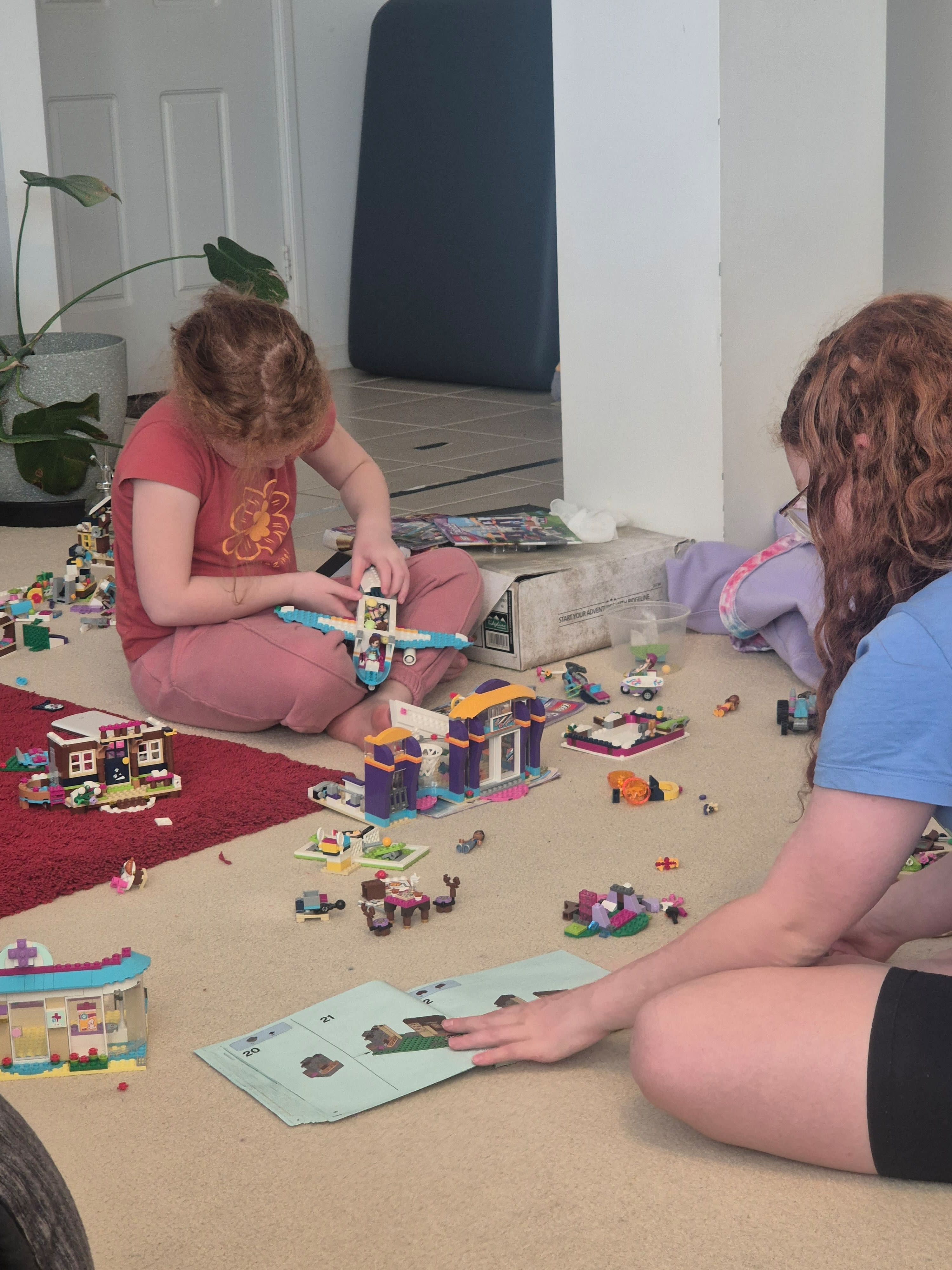
- The kids practiced spatial reasoning by matching bricks and shapes to the pictured model in the instruction booklet.
- They used counting skills naturally while selecting the correct number and type of pieces for each step.
- Building the LEGO sets required understanding patterns, symmetry, and how parts fit together in a sequence.
- Working for several hours suggests sustained attention to multi-step problem solving, an important foundation for later math tasks.
Science
- The activity supported engineering thinking as the children tested how structures stay connected and stable.
- They explored cause and effect by seeing how changing one piece can affect the whole build.
- The photo shows experimentation and persistence, which are key habits in scientific inquiry.
- Handling different pieces and mechanisms helped build an early understanding of how simple systems are assembled.
Language Arts
- Following the LEGO instructions developed visual reading skills, including interpreting diagrams and step-by-step directions.
- The children likely used vocabulary related to colors, shapes, positions, and actions while building together.
- Shared building often encourages conversation, explanation, and turn-taking, which strengthen communication skills.
- Assembling themed sets can inspire storytelling and imaginative narration about the characters or structures they build.
Social-Emotional Learning
- Spending several hours building suggests strong engagement and intrinsic motivation.
- The children appear focused and calm, which shows self-regulation and concentration during a long activity.
- Collaborative play with multiple builders can build patience, cooperation, and respectful sharing of materials.
- Completing set-based builds can boost confidence and pride through visible, tangible accomplishments.
Tips
To extend this LEGO play, invite the children to compare the finished model to the instruction pages and describe what changed at each step, which strengthens sequencing and comprehension. You could also challenge them to estimate how many pieces were used in one section, then count together to check their thinking. Add a creative storytelling layer by asking them to name the builds, invent a setting for the characters, or write a short caption about what is happening in the scene. For a hands-on engineering extension, have them modify one set using a small “design challenge,” such as making a structure taller, wider, or able to hold a minifigure, then discuss what worked and why.
Book Recommendations
- The LEGO Ideas Book by Daniel Lipkowitz: A highly visual guide full of build ideas that encourages creativity, problem-solving, and open-ended design beyond the instructions.
- Iggy Peck, Architect by Andrea Beaty: A playful story about a child who loves building, perfect for connecting construction play with creativity and persistence.
- Rosie Revere, Engineer by Andrea Beaty: An encouraging picture book that celebrates trying, revising, and learning through building and experimentation.
Try This Next
- Draw-and-label worksheet: sketch the favorite LEGO build and label 5 parts using shape or color words.
- Build challenge card: redesign one model using only 10 extra pieces, then explain what changed and why.
- Quick quiz prompts: What step came first? Which piece was hardest to find? How did you know the model was finished?