Core Skills Analysis
Math
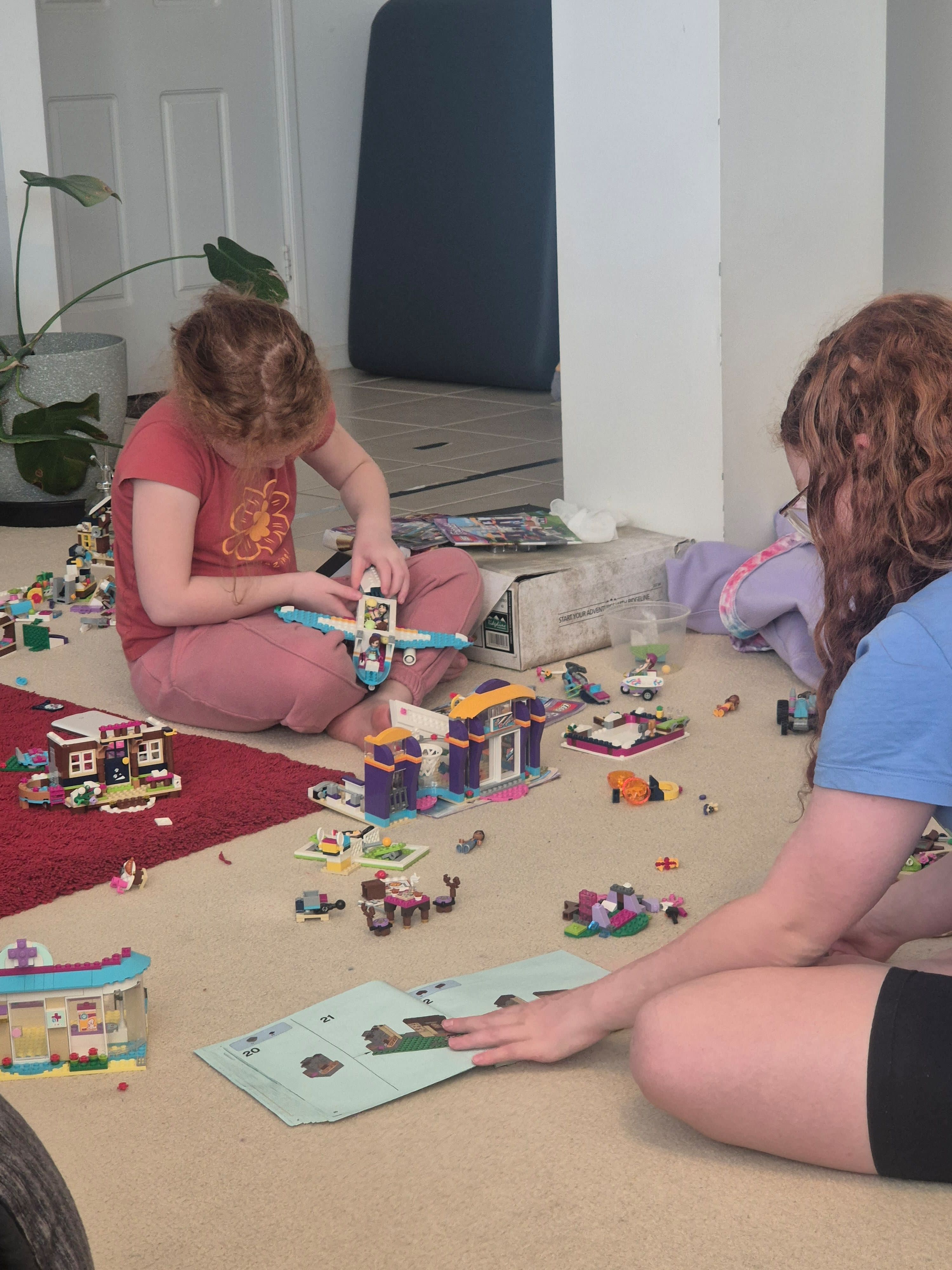
- The kids practiced spatial reasoning by matching LEGO pieces and shapes to the pictured steps in the instruction booklet.
- They likely used counting and one-to-one correspondence when selecting the correct number of parts for each build step.
- Building for several hours supported pattern recognition as they repeated brick arrangements and symmetry across the models.
- They used measurement-like thinking by comparing length, height, and balance to make pieces fit securely.
Science
- The activity gave hands-on experience with engineering concepts such as stability, support, and structure.
- They experimented with cause and effect by seeing how one brick placement changed the strength or shape of the build.
- The children practiced problem-solving like mini design testing when pieces did not fit immediately and adjustments were needed.
- Sustained building encouraged observation of how parts connect, which is a foundation for understanding mechanisms and systems.
Language Arts
- The instruction booklet supported visual reading comprehension by helping the children interpret diagrams and sequence steps.
- They likely developed vocabulary through build-related words such as assemble, connect, base, and piece.
- The shared activity encouraged communication, turn-taking, and explaining ideas while working alongside others.
- Independent and collaborative building both support narrative thinking, as children imagine stories and roles for the finished sets and figures.
Social-Emotional Learning
- Spending several hours building suggests strong engagement, focus, and persistence on a self-chosen activity.
- The children practiced patience and frustration tolerance when aligning pieces or revising a section that did not work.
- Working near one another likely supported cooperation, shared attention, and respecting each other’s space and materials.
- The visible concentration in the photo suggests deep involvement, which can reflect confidence and enjoyment in completing challenging tasks.
Tips
Keep extending the LEGO play by turning it into a mini learning unit. Ask the children to compare two finished builds and describe how they are similar and different, which strengthens observation and language. Invite them to count pieces, estimate how many they will need for a new section, or sort bricks by color and size to add a simple math layer. You could also have them create a “blueprint” drawing before building, then test whether the model matches the plan, introducing early design thinking and revision. For a creative challenge, ask them to invent a story for the completed sets and act it out with the minifigures, blending imaginative play with speaking and sequencing skills.
Book Recommendations
- The LEGO Ideas Book by Daniel Lipkowitz: A popular idea book filled with LEGO building inspiration, showing many ways to create and redesign with bricks.
- Iggy Peck, Architect by Andrea Beaty: A fun picture book about a child who loves building, problem-solving, and creative construction.
- Rosie Revere, Engineer by Andrea Beaty: An encouraging story about trying, failing, and improving designs through persistence and ingenuity.
Try This Next
- Make a LEGO build checklist: count pieces, match colors, and check off each completed step.
- Draw the finished model from two angles, then label parts using building vocabulary.
- Ask 3 quiz questions: Which piece came next? What made the model stable? How did you fix a mistake?
- Write a short story starring the LEGO figures and their completed world.