Core Skills Analysis
Math
- Georgia practiced doubling a recipe, which builds early multiplication and proportional reasoning in a real-life context.
- She likely had to keep track of ingredient amounts carefully, strengthening attention to detail and number sense.
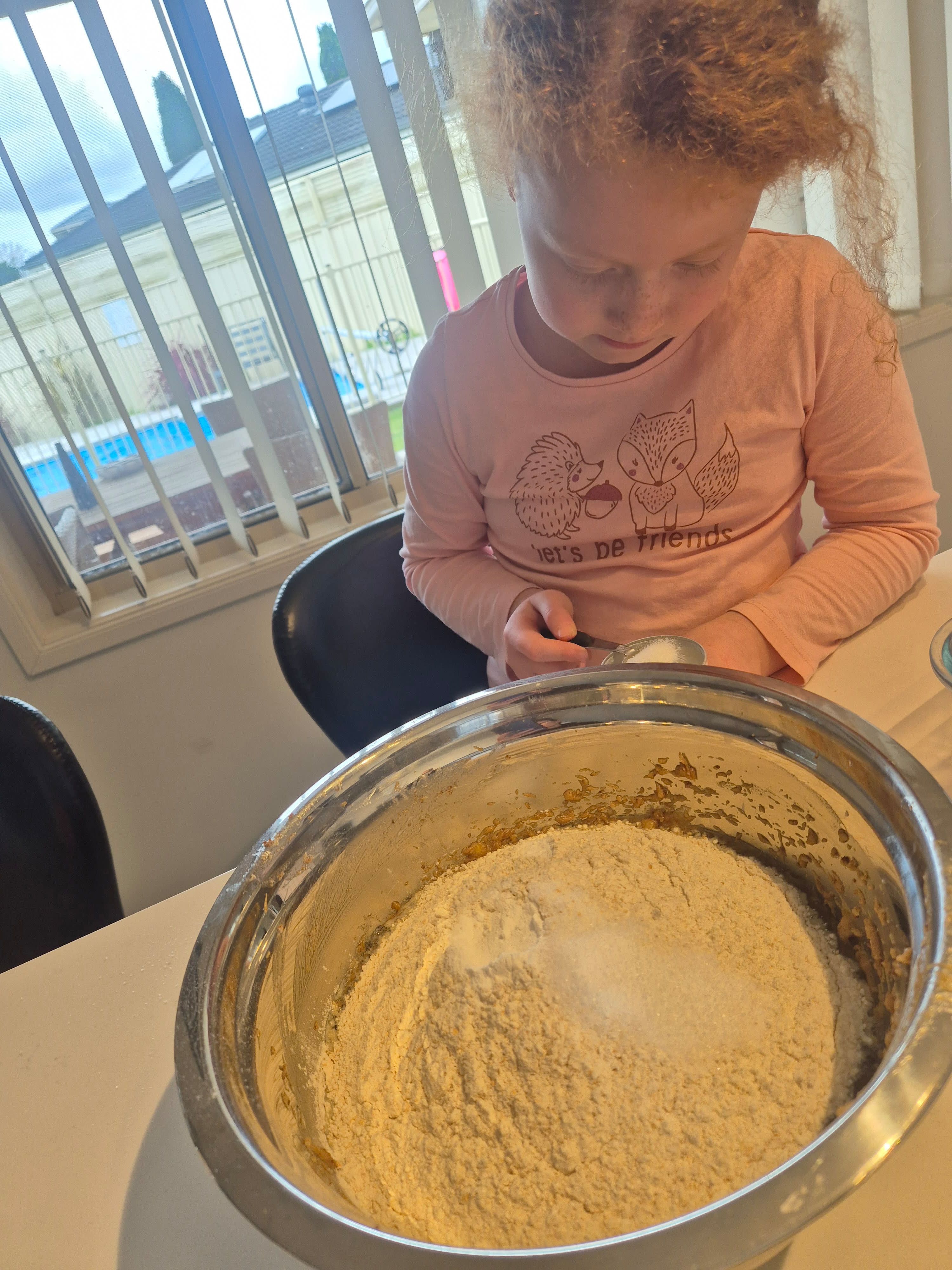
- Measuring out larger quantities for 2 cakes reinforces the idea that numbers change consistently when a recipe is scaled up.
- Following the same recipe pattern twice helps connect arithmetic to practical problem-solving.
Science
- Baking a banana cake introduced a simple food science process: combining ingredients and using heat to transform them into a new food.
- Doubling ingredients may have changed texture or consistency, giving her a chance to notice how ingredient ratios affect results.
- The activity supports cause-and-effect thinking, especially when comparing how the batter behaves before and after baking.
- Working with bananas also connects to the idea that foods can be used in different forms, such as mashed fruit in baking.
Language Arts
- Helping make a cake for weekend visitors supports purposeful communication and understanding a shared goal.
- Following a recipe encourages reading directions in order and paying attention to sequence words like first, then, and finally.
- The activity offers natural vocabulary development around ingredients, cooking actions, and measurement terms.
- Explaining how she doubled the recipe would help build oral language and retelling skills.
Social-Emotional Learning
- Georgia contributed to preparing something for visitors, which supports generosity and hospitality.
- Taking part in a shared household task can build confidence and a sense of responsibility.
- The focused posture in the photo suggests concentration and careful effort during the task.
- Helping with a family activity can strengthen belonging and pride in contributing.
Tips
To extend this learning, invite Georgia to compare a single batch and a double batch using simple measuring cups or toy ingredients, so she can talk through what changes and what stays the same. You could also ask her to help read the recipe aloud and identify each step in order, which strengthens sequencing and comprehension. For a hands-on challenge, let her estimate how many spoonfuls or cups will be needed before measuring, then check her prediction together. After the cake is baked, discuss what happened to the batter in the oven and what clues showed it was finished, turning the experience into a mini science lesson about transformation.
Book Recommendations
- If You Give a Moose a Muffin by Laura Numeroff: A playful story that connects to baking, ingredients, and following a sequence of events.
- Blueberries for Sal by Robert McCloskey: A classic food-centered story that naturally supports counting, sharing, and seasonal cooking connections.
- The Berenstain Bears and Too Much Junk Food by Stan and Jan Berenstain: A familiar family story that opens conversation about food, choices, and home routines.
Try This Next
- Recipe doubling worksheet: write 3 ingredient amounts from the banana cake recipe and show the doubled amounts.
- Draw-and-label activity: sketch the mixing bowl, ingredients, and finished cake, then label each step in order.
- Simple quiz: Which ingredient amounts changed when the recipe was doubled? Which stayed the same in the method?
- Writing prompt: Explain to a helper how to make 2 banana cakes instead of 1.