Core Skills Analysis
Practical Life Skills
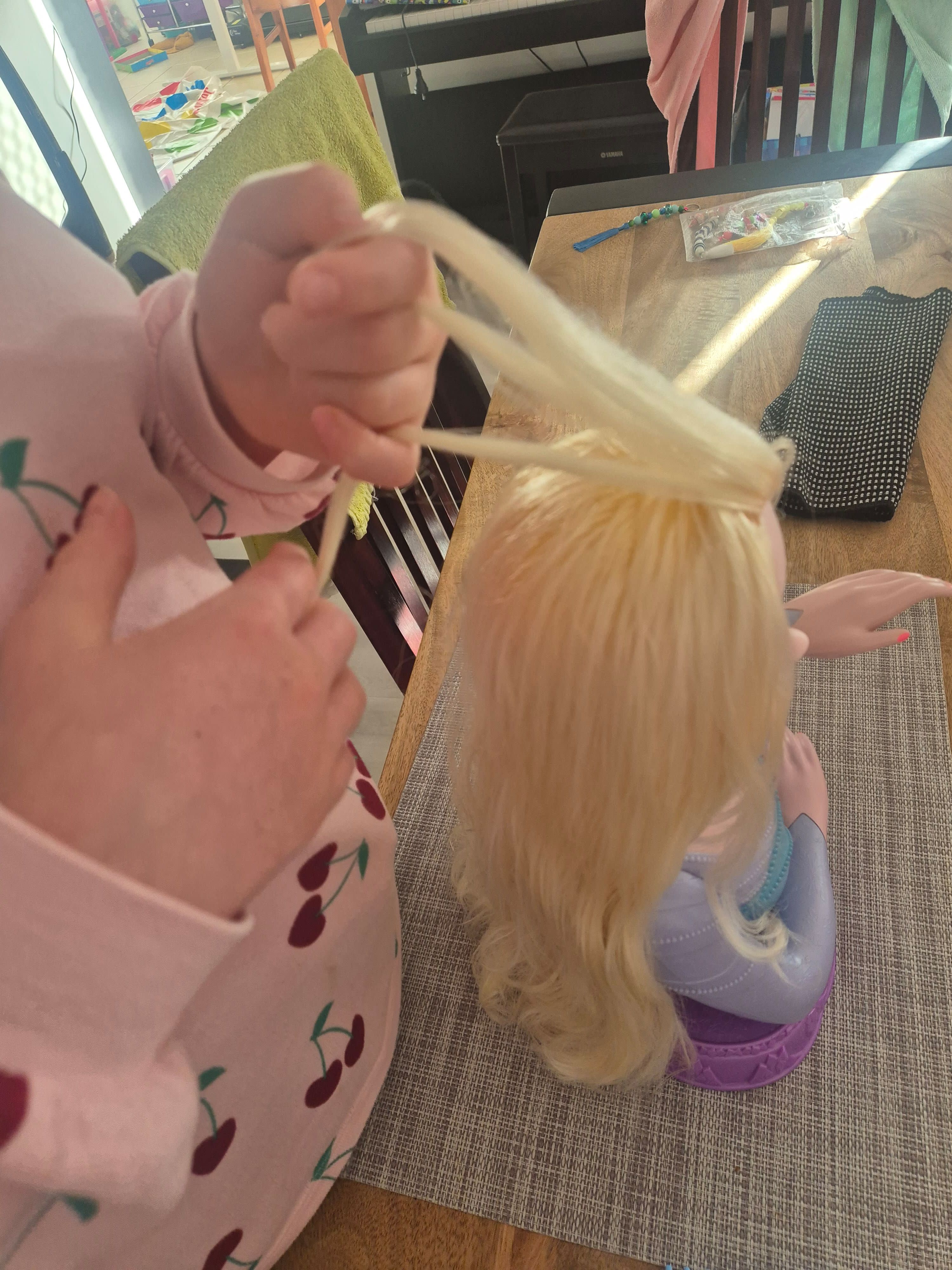
- Audrey practiced a full hair-care routine, including washing, brushing, braiding, and cutting, which shows early understanding of personal grooming sequences.
- She worked on the idea that hair care is an everyday responsibility, building independence and self-care habits she can eventually transfer to her own routine.
- Using a doll to practice allowed her to rehearse safe, repeatable actions before applying them to herself, a strong way to build confidence through imitation.
- The activity suggests growing coordination and patience, since hair styling requires careful hand movements and staying engaged through multiple steps.
Fine Motor Skills
- Braiding hair develops precise finger control because Audrey had to separate sections, cross strands, and maintain tension while working.
- Brushing and washing the doll’s hair strengthened hand strength and controlled pressure, both important for grooming tasks and tool use.
- Giving the doll a haircut required careful scissor-like decision-making and hand-eye coordination, even if the action was simple or guided.
- Managing the hair tie and strands shows practice with bilateral coordination, as one hand often holds while the other manipulates the hair.
Early Science
- By washing and brushing hair, Audrey explored cause-and-effect: water and brushing change the feel, look, and manageability of hair.
- She observed how hair can become tangled, smooth, damp, or styled differently, which introduces basic ideas about materials and physical change.
- The haircut portion introduces the concept that hair grows, can be trimmed, and changes shape without being permanently damaged when cut appropriately.
- This activity can support early body-awareness science by helping her notice that hair is part of personal care and needs regular maintenance.
Language and Communication
- The activity naturally encourages vocabulary such as braid, brush, wash, haircut, style, and hair care, expanding descriptive language in a meaningful context.
- If Audrey talked through the process, she practiced sequencing language like first, next, then, and last, which supports organized speaking.
- Pretend salon play often involves role language and social dialogue, helping children explain what they are doing and respond to instructions or preferences.
- Naming actions and tools during the routine can strengthen comprehension and expressive language through hands-on learning.
Tips
To extend this learning, you could turn Audrey’s doll-hair work into a simple “hair care routine” chart with pictures showing wash, brush, braid, and dry so she can practice the steps in order and later use it for her own hair. A small mirror can make the activity more personal by letting her compare the doll’s styling to her own, which may help her learn where to start brushing or how to manage tangles gently. You could also invite her to choose between a few styles for the doll and explain her choice, building confidence, vocabulary, and decision-making. For a creative extension, set up a pretend hair salon with combs, clips, ribbons, and a timer so she can practice patience, turn-taking, and the idea that grooming is a calm, step-by-step routine.
Book Recommendations
- Llama Llama Red Pajama by Anna Dewdney: A well-loved picture book that supports routine, self-care, and gentle emotional reassurance.
- Hair Love by Matthew A. Cherry: A warm story about learning to care for hair with patience, love, and confidence.
- Corduroy by Don Freeman: A classic story that connects well with doll or toy care, imaginative play, and nurturing routines.
Try This Next
- Create a picture sequencing worksheet: wash, brush, braid, haircut, style.
- Ask Audrey to name the tools she used and sort them into "wash," "brush," and "style" categories.
- Draw-and-label task: draw the doll before and after the haircut and hairstyle.
- Simple reflection prompt: "What was easiest? What was trickiest? What do you want to learn next about your own hair?"