Core Skills Analysis
Language Arts
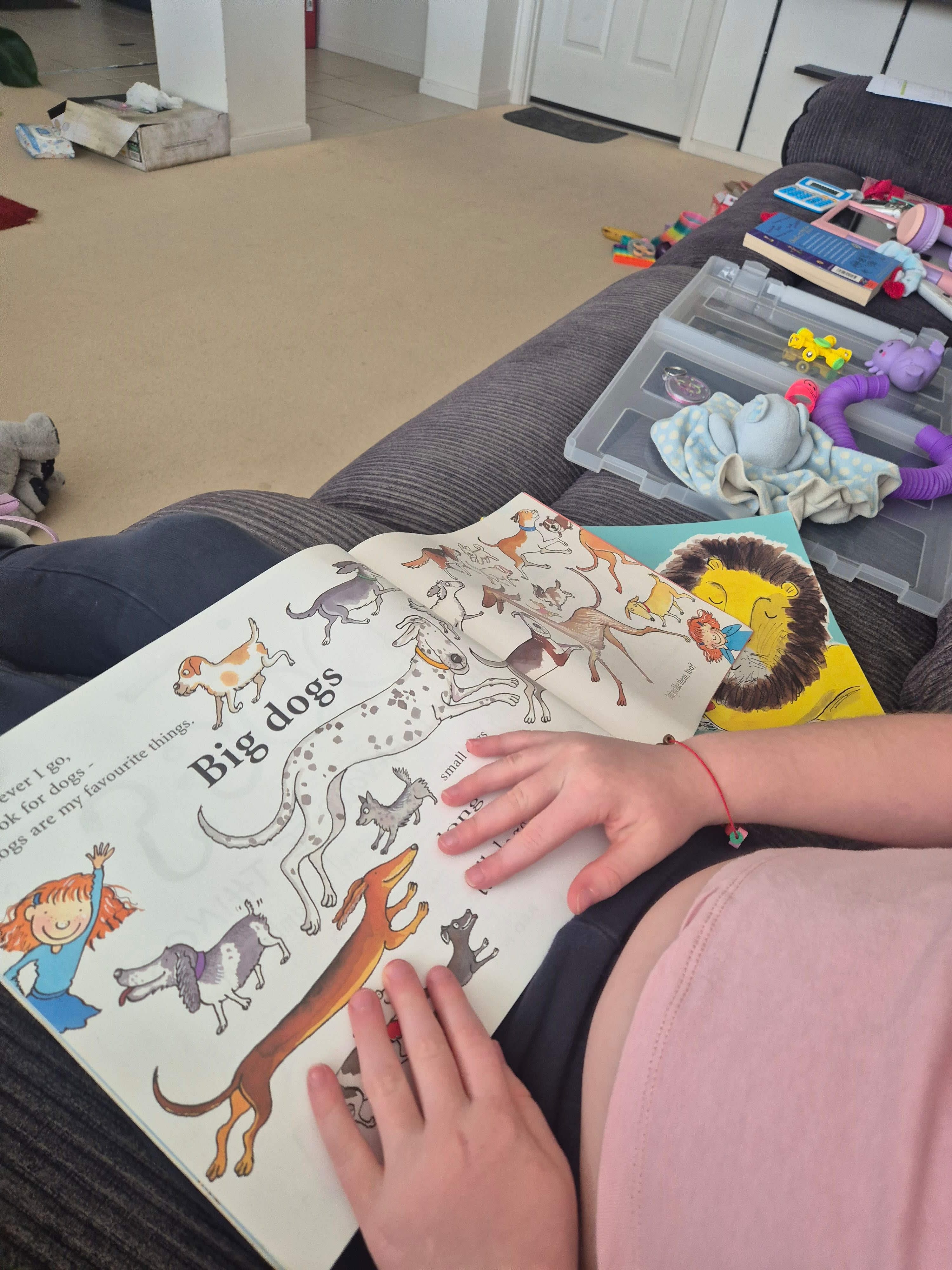
- The child practiced early reading skills by following text in a picture book and connecting written words with the illustrations on the page.
- Reading aloud supports phonics, word recognition, and print awareness, especially as the child tracks words while focusing on the dog-themed images.
- The activity helps build vocabulary around animal names, sizes, and descriptive language, such as comparing different kinds of dogs and noticing visual details.
- Interactive reading also encourages listening, speaking, and comprehension skills as the child engages with the story and processes meaning from both text and pictures.
Science
- The book about dogs introduces the child to living things and basic animal characteristics, which supports early life science learning.
- By looking at multiple dog breeds, the child can begin noticing similarities and differences in size, shape, color, and body features.
- This activity encourages observation skills, an important scientific practice, as the child examines how dogs are portrayed in images.
- Reading about dogs can also spark curiosity about animal care, behavior, and habitats, laying the groundwork for later biology learning.
Social-Emotional Learning
- Reading aloud in a relaxed home setting suggests comfort and engagement, which supports a positive association with books and learning.
- The child appears attentive and involved, showing developing focus and self-regulation during a seated reading activity.
- Sharing a book aloud can strengthen connection and communication with a caregiver, supporting language confidence and emotional security.
- The dog theme may invite personal interest and enjoyment, which can increase motivation and persistence in reading activities.
Tips
To extend this activity, keep building on the child’s interest in dogs by pausing to talk about the pictures: ask which dog looks biggest, smallest, fluffiest, or fastest, and encourage the child to point to details in the illustrations. You could also make a simple compare-and-contrast game using two different dogs from the book, helping the child describe what is the same and what is different. For a hands-on follow-up, invite the child to draw their favorite dog from the story and label its features together. If the child is ready, connect reading to real life by discussing what dogs need to stay healthy, such as food, water, exercise, and care, turning the book into an early science conversation about animals and responsibility.
Book Recommendations
- Big Dog . . . Little Dog by P.D. Eastman: A classic beginner book that uses simple language and playful dog illustrations to support early reading.
- Go, Dog. Go! by P.D. Eastman: A lively early-reader favorite that builds vocabulary, repetition, and visual storytelling with many dogs on the move.
- The Poky Little Puppy by Janette Sebring Lowrey: A beloved picture book about puppies that encourages listening, sequencing, and discussion about animal behavior.
Try This Next
- Draw-and-label activity: sketch a dog from the book and write 3 describing words beside it.
- Sorting question: which dogs in the pictures are big, medium, or small?
- Comprehension prompt: tell what happened first, next, and last in the reading.
- Mini-quiz: name 3 things real dogs need to stay healthy.