Core Skills Analysis
Math
- The fair setup gave the children a practical reason to count tickets, prizes, and game turns, connecting numbers to a real event.
- Designing stalls likely involved simple budgeting and quantity planning, such as deciding how many materials or prizes each activity needed.
- Games like cup game and targets naturally support early measurement ideas, including distance, aim, scorekeeping, and comparing results.
- Taking turns at each stall reinforced sequencing and time awareness, since the children had to move through the fair in an orderly way over the weekend.
Language Arts
- Making tickets and drawing backgrounds helped the children use print and visual text for a real purpose, an early form of functional writing.
- The fortune teller stall encouraged spoken language, question-and-answer exchanges, and imaginative storytelling.
- Organizing stalls and explaining games required clear communication, helping children practice giving directions and describing rules.
- The fair theme likely supported creative vocabulary development, including words connected to games, prizes, visitors, and performance.
Arts and Design
- Drawing backgrounds and decorating stalls involved visual planning, color choice, and creative presentation.
- Face painting, illusion mirrors, and themed stalls show experimentation with appearance, perspective, and visual effect.
- The children used props and displays to build an immersive environment, which is an important part of set design and spatial creativity.
- Creating a fair required combining art with function, since each stall had to look appealing and also work as a usable activity space.
Social-Emotional Learning
- Building the fair together encouraged cooperation, shared responsibility, and teamwork across multiple roles.
- Taking turns visiting each stall strengthened patience, self-regulation, and respect for group rules.
- Organizing prizes and playing each game gave the children a chance to experience both giving and receiving, which supports empathy and social awareness.
- The extended weekend format suggests sustained engagement and pride in their work, showing persistence and investment in a shared project.
Science and Engineering
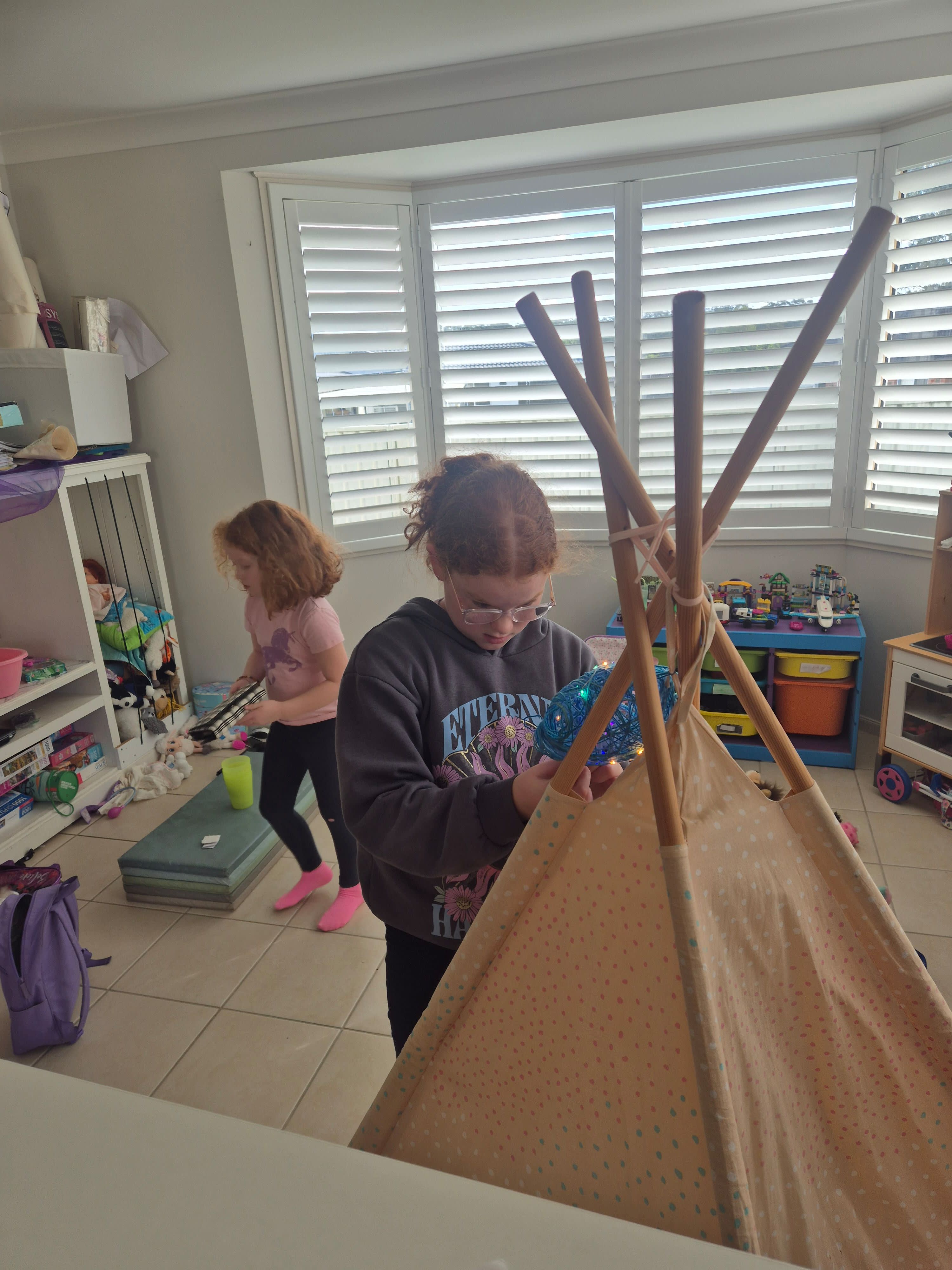
- Constructing stalls and the teepee-like structure involved hands-on engineering, including balance, support, and stability.
- Illusion mirrors introduced observation and visual perception, helping children notice how images can change depending on the surface or angle.
- Targets and juggling connect to motion, coordination, and cause-and-effect, since success depends on timing, force, and control.
- The fair setup likely required problem-solving about how to arrange materials so that each station was functional and inviting.
Tips
This fair project is a wonderful blend of creativity, planning, and social learning. To extend it, you could have the children rotate jobs and reflect on what each role required, such as ticket seller, game host, prize organizer, or visitor. You might also add a simple score sheet or tally chart so they can practice recording results and comparing which stall was most popular. Another rich extension would be to write a short fair program or sign for each booth, helping them add labels, directions, and persuasive language to their artwork. Finally, invite them to redesign one stall for next time—what would make it more exciting, clearer, or easier to play? That kind of revision builds both confidence and problem-solving skills.
Book Recommendations
- Mr. Bear's Fair by Deborah Duncan: A cheerful story about a bear preparing for and enjoying a fair, connecting well to the children’s pretend fair setup and booth activities.
- The Night Before the Big Fair by Natasha Wing: A playful rhyming story about the excitement and preparation leading up to a fair, matching the planning and anticipation in this activity.
- If You Give a Mouse a Cookie by Laura Numeroff: A familiar, engaging story that supports sequencing, cause and effect, and playful discussion about actions and outcomes.
Try This Next
- Create a fair map worksheet where children label each stall and draw a path from one game to the next.
- Write 5 simple quiz questions about the fair: Which stall needed tickets? Which game used aim? Which activity used art?
- Make a tally chart to record how many times each stall was visited and compare the results.
- Draw a new stall for the fair and write 2 rules or directions for how to play it.