Core Skills Analysis
Math
- Georgia practiced measuring ingredients by reading the instructions and figuring out how much to use, which builds early number sense and practical measurement skills.
- She likely worked with quantities and comparisons while following a recipe, connecting math to a real-life task with visible results.
- Using a recipe to make cupcakes introduced sequencing and order, since measuring in the correct steps affects the final outcome.
- The activity supported problem-solving as she had to interpret the instructions rather than simply copy a demonstrated step.
Science
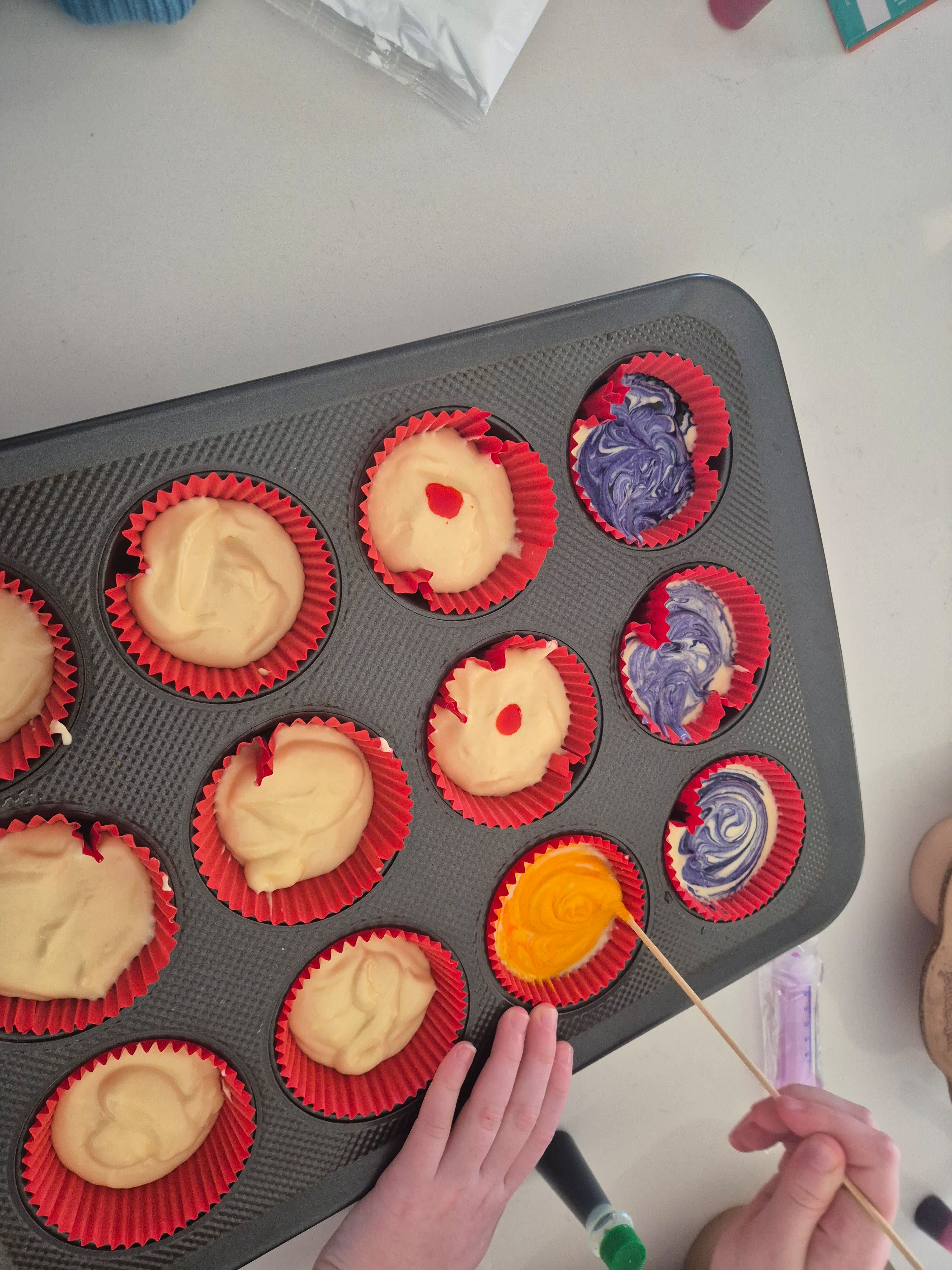
- Mixing different colours into the cupcake batter showed how materials can combine to create new patterns, supporting basic observation of color blending and change.
- She saw that stirring affects the distribution of colour, which connects to cause-and-effect in a simple hands-on experiment.
- The baking process introduced the idea that ingredients change when heated, even though the image mainly shows the decorating and mixing stage.
- Exploring swirls and patterns encouraged careful noticing of texture, color contrast, and how movement changes appearance.
Language Arts
- Georgia was asked to read instructions, which builds reading comprehension and the ability to follow procedural text.
- Interpreting the recipe required understanding action words and step-by-step directions, an important literacy skill in everyday reading.
- The activity may have encouraged vocabulary growth around cooking terms such as measure, mix, and decorate.
- Reading for a purpose can strengthen confidence, because the text directly supports a meaningful and successful outcome.
Art
- Adding different colours to make patterns gave Georgia a chance to experiment with design, symmetry, and visual contrast.
- The marbled swirls show creative expression and attention to how colours interact on a small surface.
- Working with cupcakes as a canvas helped develop fine motor control and visual planning.
- The activity blends art with food-making, showing that creativity can be applied in practical, edible forms.
Tips
To extend this activity, invite Georgia to help compare ingredient amounts before baking another batch, such as noticing which measure is larger or smaller and discussing how that changes the recipe. You could also turn the colour-mixing into a mini science challenge by predicting what happens when two colours are swirled lightly versus mixed more fully. For literacy, have her read one step aloud, then explain it back in her own words to reinforce comprehension and sequencing. To deepen creativity, let her design a cupcake pattern plan on paper first, then recreate it with icing or food colouring so she can connect planning, following directions, and artistic choice.
Book Recommendations
- How to Bake a Cake by Julia Gillard: A simple, engaging baking-themed picture book that connects well to following recipe steps and kitchen learning.
- Eating the Alphabet by Lois Ehlert: A colorful book that connects food, vocabulary, and visual exploration through bright illustrations.
- The Very Hungry Caterpillar by Eric Carle: A classic story that connects to food, sequencing, and counting in an accessible way for young learners.
Try This Next
- Create a simple recipe-comprehension quiz: What comes first, next, and last?
- Draw or color a cupcake design plan before making the next batch.
- Compare measuring tools with a worksheet: teaspoon, tablespoon, cup.
- Write a short 'How We Made Our Cupcakes' sequence using 3-5 steps.