Core Skills Analysis
Math
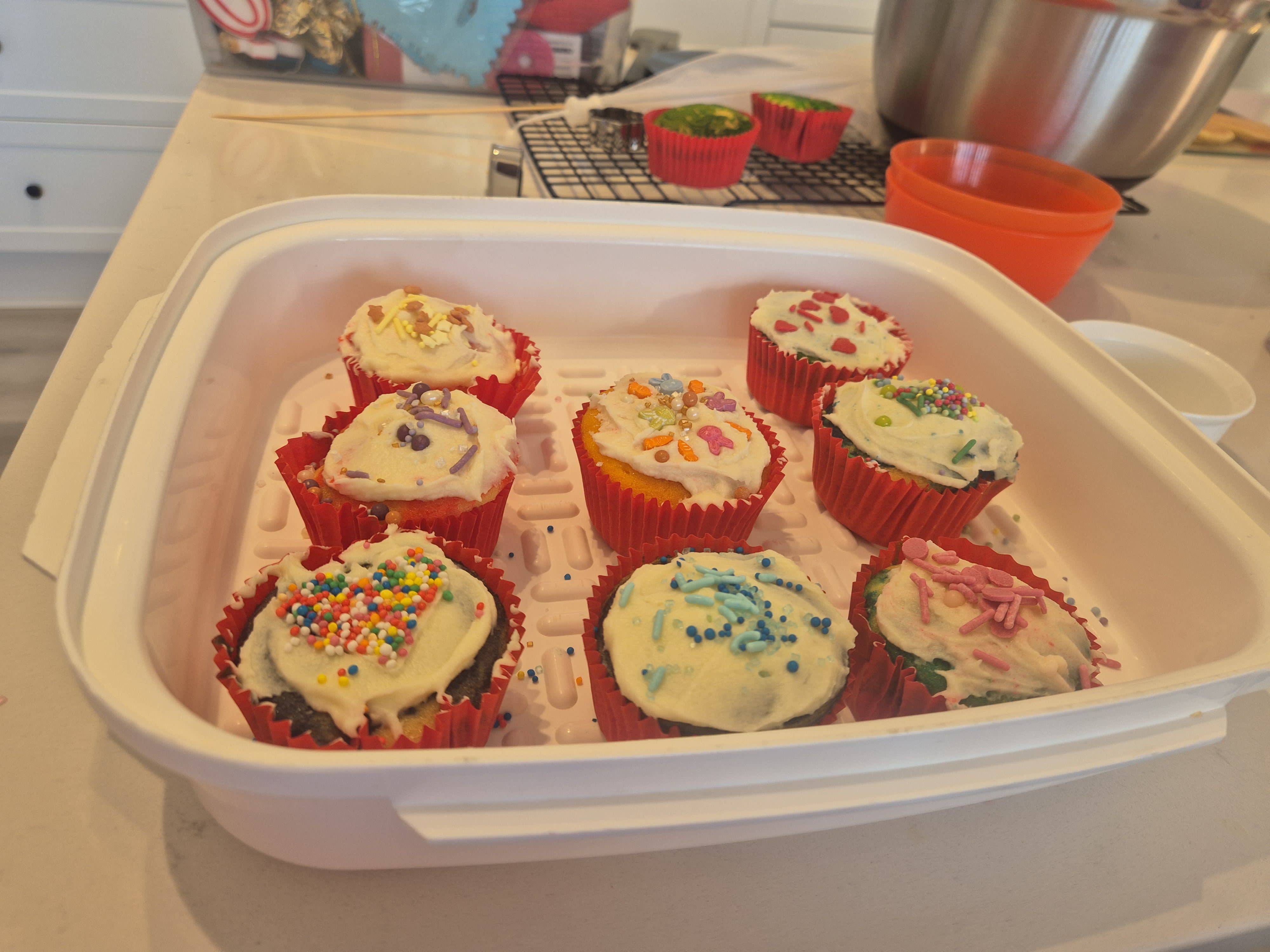
- Audrey practiced division by dividing the icing equally among 18 cupcakes, which supports fair-share thinking and understanding of equal parts.
- The activity involved estimating and distributing a limited amount of frosting, helping build early fraction and portioning skills.
- Color-coordinating and theming each cupcake required comparing amounts and making consistent decisions across multiple items.
- Taking her time suggests she was working with care and attention to accuracy, which is important for checking that each cupcake received a similar amount.
Science
- Baking cupcakes introduced basic food science concepts, including how ingredients change when heated in the oven.
- Adding different colors to the batter showed how materials can be mixed and transformed, creating visible changes in appearance.
- Decorating after baking reinforced the idea that the cupcake and frosting have different textures and properties.
- The process likely helped Audrey observe cause and effect, such as how frosting holds sprinkles and how color choices affect the final look.
Art & Design
- Audrey used color coordination and themed decorating to create visually organized cupcakes, showing an understanding of design choices.
- The different sprinkle patterns demonstrate pattern-making and composition skills, with each cupcake becoming a small individual artwork.
- Matching colors to themes encouraged planning and intentional creativity rather than random decoration.
- Her careful pace suggests she values detail and presentation, which supports fine-motor control and aesthetic awareness.
Life Skills
- The activity gave Audrey practice following a multi-step process from baking to decorating, which builds sequencing skills.
- Dividing the icing equally among 18 cupcakes supports responsibility, self-monitoring, and task completion.
- Working slowly and carefully shows developing patience and persistence during a structured hands-on job.
- The cupcake project also encouraged kitchen confidence, because she participated in a real-world food preparation task.
Tips
To extend this activity, you could ask Audrey to compare how much icing each cupcake received and talk about why equal portions matter in recipes and sharing. She could also sort the cupcakes by color, pattern, or theme and explain her design choices, which strengthens language and visual reasoning. For a math connection, have her count the cupcakes in groups of 2, 3, 6, or 9 to explore multiplication and repeated addition in a natural way. You might also try a follow-up decorating challenge where she plans a new color theme on paper first, then creates it on cupcakes or muffin-cup templates, combining planning, creativity, and careful execution.
Book Recommendations
- If You Give a Mouse a Cookie by Laura Numeroff: A playful story that connects well to baking and kitchen routines, with lots of sequencing and cause-and-effect opportunities.
- The Little Red Hen by Paul Galdone: A classic tale about doing the steps of a task with care and effort, which fits nicely with hands-on baking projects.
- Betty Bunny Wants Everything by Michael Bower: A fun story that can lead into discussions about sharing, portions, and making thoughtful choices.
Try This Next
- Make a cupcake decorating worksheet: draw 18 cupcakes and have Audrey shade or label how the icing was divided.
- Ask quiz questions like: "How many cupcakes were decorated?" and "What does equal sharing mean?"
- Create a pattern challenge: design three different sprinkle patterns and name each theme.
- Writing prompt: "Describe my favorite cupcake design and how I made it."