Core Skills Analysis
Language Arts
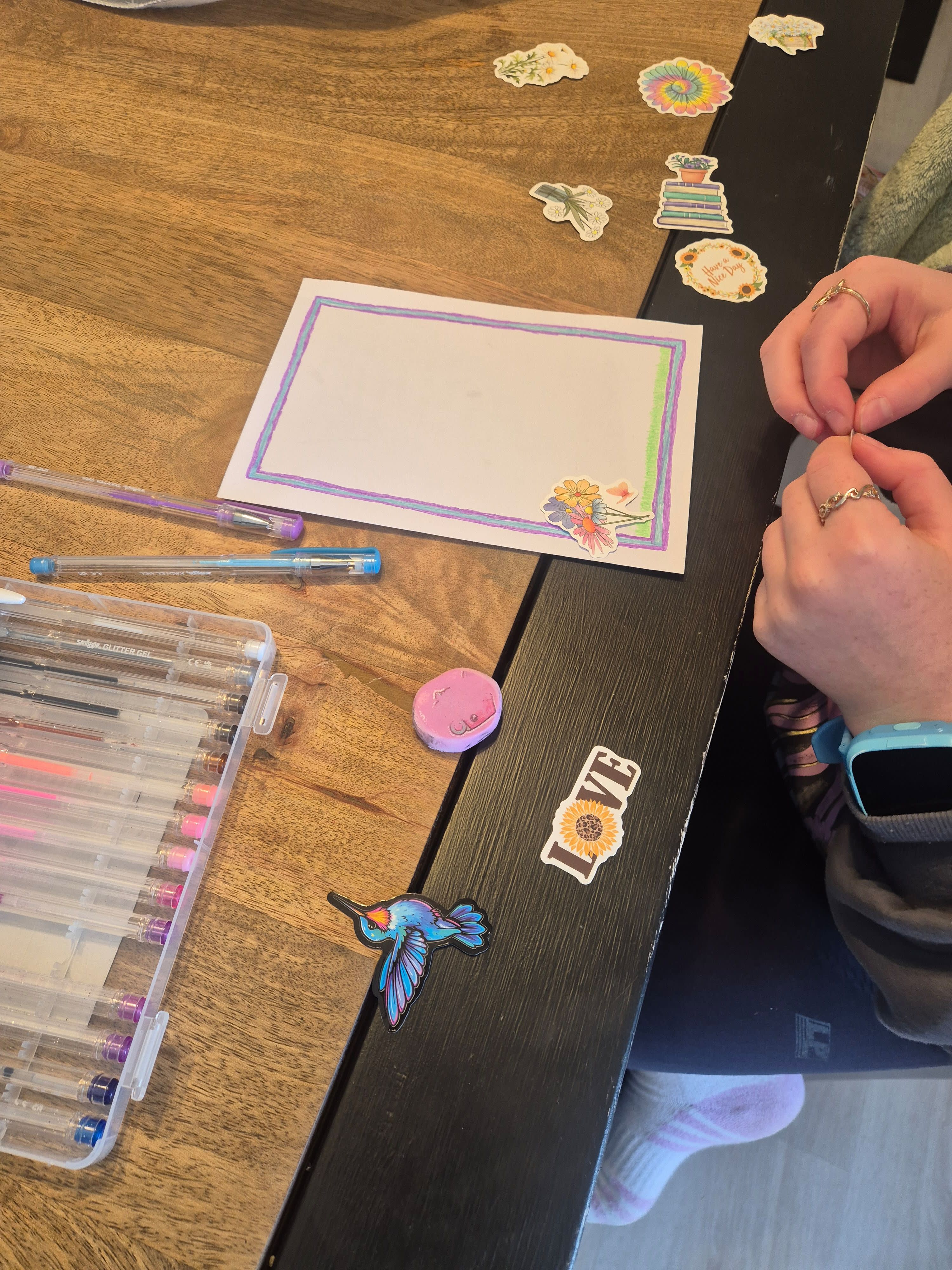
- Practiced the structure and purpose of a personal letter by preparing a decorated page intended for written communication with a pen pal.
- Developed awareness of audience: a penpal letter requires choosing words, details, and questions that help another person learn about the writer.
- Strengthened handwriting and written-expression practice through use of pens and a large bordered writing space.
- Encountered authentic communication skills such as greeting someone, sharing information, asking questions, and ending a letter politely.
Visual Arts
- Explored color choices by creating a layered purple, blue, and green border around the writing area.
- Practiced visual composition by leaving a central space for text and arranging floral, butterfly, book, and plant stickers around the page.
- Used decorative elements to communicate a cheerful, personal style rather than treating the page as plain writing paper.
- Built confidence with mixed-media design by combining drawing tools, colorful pens, and stickers.
Social-Emotional Learning
- Practiced relationship-building through the thoughtful act of preparing a personal message for another person.
- Had an opportunity to express personal interests and feelings in a safe, creative format.
- Developed perspective-taking by considering what a pen pal might enjoy reading or responding to.
- Engaged in a patient, focused activity that supports care, kindness, and sustained attention.
Fine-Motor and Executive Skills
- Strengthened hand control through drawing borders, writing with narrow-tipped pens, and placing small stickers accurately.
- Practiced visual planning by organizing the page before adding written content and decorations.
- Developed decision-making skills while selecting colors, arranging images, and choosing which tools to use.
- Worked on task persistence by completing a multi-step project involving preparation, decoration, writing, and review.
Tips
Tips: Turn the decorated page into a complete letter-writing lesson by first brainstorming three things to share and three questions to ask, then modeling the parts of a letter—date, greeting, body, closing, and signature. Invite the student to draft on scrap paper, revise for clarity and kindness, and copy the final version onto the decorated page. Add a geography connection by locating the pen pal’s city or country on a map, and build communication habits by keeping a simple log of when letters are sent and received. After a reply arrives, compare the two letters and discuss how questions help a conversation continue.
Book Recommendations
- The Jolly Postman, or Other People's Letters by Janet and Allan Ahlberg: A playful picture book told through letters, cards, and envelopes that introduces different purposes and formats for written communication.
- A Letter to Amy by Ezra Jack Keats: A warm story about Peter writing an invitation and thinking carefully about friendship, inclusion, and communication.
- Dear Mr. Blueberry by Simon James: A humorous correspondence between a child and a teacher that demonstrates how letters can share observations, questions, and imaginative ideas.
Try This Next
- Letter-planning worksheet: fill in a greeting, three facts, two questions, and a friendly closing.
- Revision checklist: capital letters, punctuation, complete sentences, clear handwriting, and the recipient’s name.
- Map activity: mark the pen pal’s location and write or draw one fact about that place.
- Design challenge: create a second letter page using a repeating pattern, a symmetrical border, or a nature-themed collage.