Core Skills Analysis
Language Arts
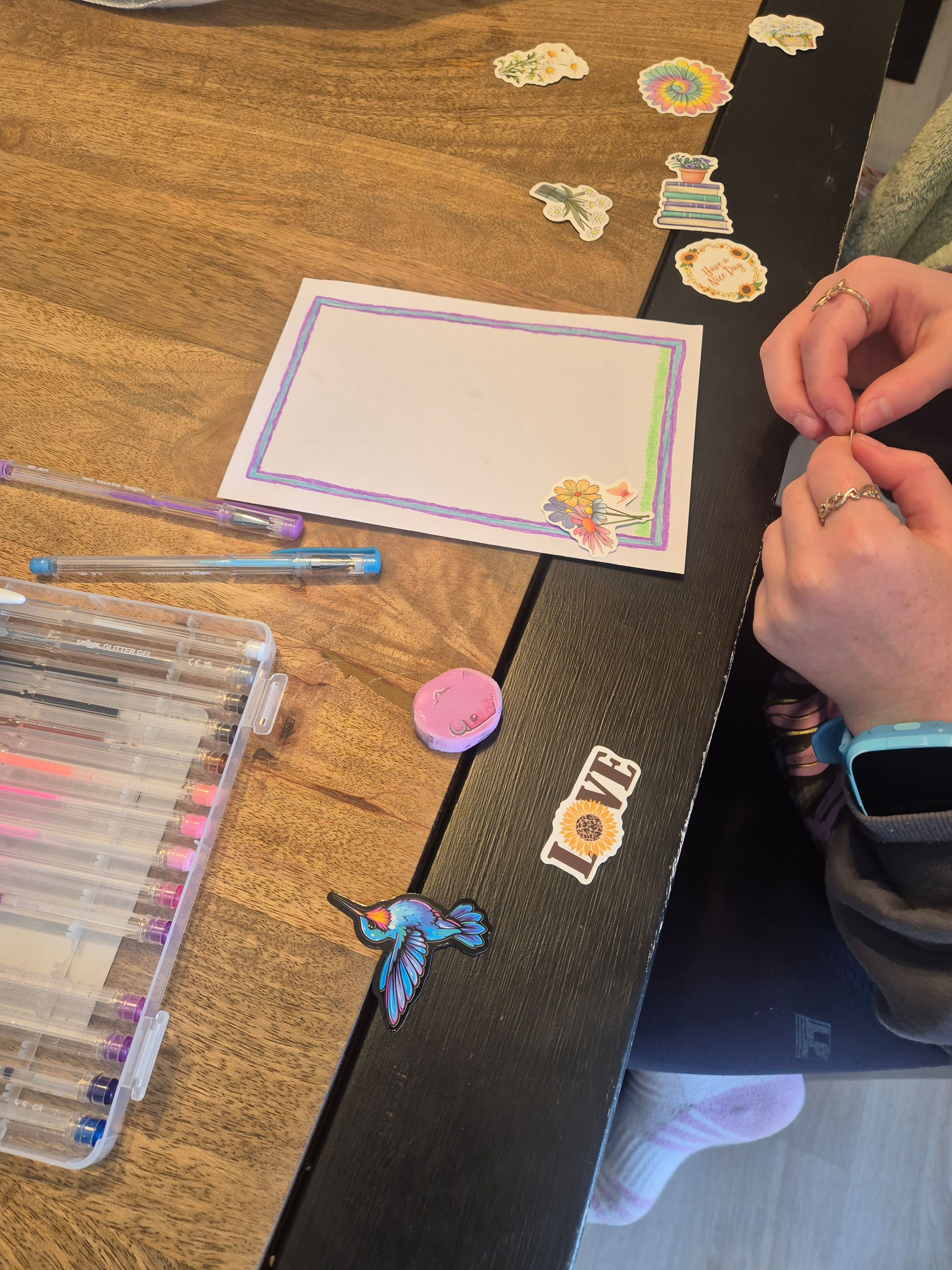
- Practiced the purpose and format of personal correspondence by preparing a decorated sheet for a penpal letter.
- Developed awareness that writing can communicate information, feelings, questions, and experiences to a specific audience.
- Worked on written communication skills through planning space for a message, selecting writing tools, and preparing a visually organized page.
- Engaged with the conventions of letter writing, such as a greeting, message, closing, and possibly a recipient’s name or address.
Art and Design
- Used colorful pens to create a multi-line border, demonstrating control of pattern, repetition, and visual balance.
- Selected flower, butterfly, book, and celebratory stickers to create a personalized theme around the letter.
- Explored how color choices and decorative images can communicate mood and make a written message inviting to its reader.
- Combined drawing materials and stickers to practice composition—placing visual elements around the page while leaving a clear central writing area.
Fine-Motor Development
- Strengthened hand control through detailed pen work along the paper’s edges.
- Practiced precision and coordination while handling small stickers and positioning them on the page.
- Built endurance for handwriting-related tasks by preparing a page that will support an extended writing activity.
- Used different writing instruments from an organized pen collection, encouraging purposeful tool selection and controlled grip.
Social-Emotional Learning
- Participated in a relationship-building activity centered on reaching out to another person through written communication.
- Practiced considering a reader’s experience by making the letter attractive, personal, and welcoming.
- Had an opportunity to express thoughts, interests, or feelings in a private and meaningful format.
- The careful decoration suggests engagement, creativity, and positive anticipation surrounding communication with a penpal.
Tips
Tips: Turn the finished page into a complete letter-writing lesson by first brainstorming three topics the writer would like to share and three questions to ask the penpal. Model the parts of a friendly letter—date, greeting, body, closing, and signature—then invite the writer to draft on scrap paper before copying a final version onto the decorated sheet. Add an authentic communication experience by discussing how letters travel, addressing an envelope together, and comparing handwritten letters with email or text messages. After a reply arrives, create a simple correspondence journal to record the date sent, date received, new facts learned, and one thoughtful follow-up question.
Book Recommendations
- The Jolly Postman (or Other People's Letters) by Janet Ahlberg and Allan Ahlberg: An interactive story featuring letters, postcards, and messages that introduces correspondence, audience, and the excitement of mail.
- Dear Mr. Blueberry by Simon James: A charming exchange of letters between a child and a teacher that models curiosity, questions, and written conversation.
- The Day the Crayons Quit by Drew Daywalt: A humorous collection of letters from crayons that demonstrates how written messages can express different perspectives and feelings.
Try This Next
- Friendly-letter worksheet: label the date, greeting, body, closing, and signature, then write one example for each part.
- Penpal planning card: list three things to share, three questions to ask, and one kind closing sentence.
- Design challenge: create a repeating border using two colors and one nature-themed symbol, such as a flower or butterfly.
- Reading-response prompt: after reading a letter-themed book, write a short reply from one character to another.