Core Skills Analysis
Language Arts
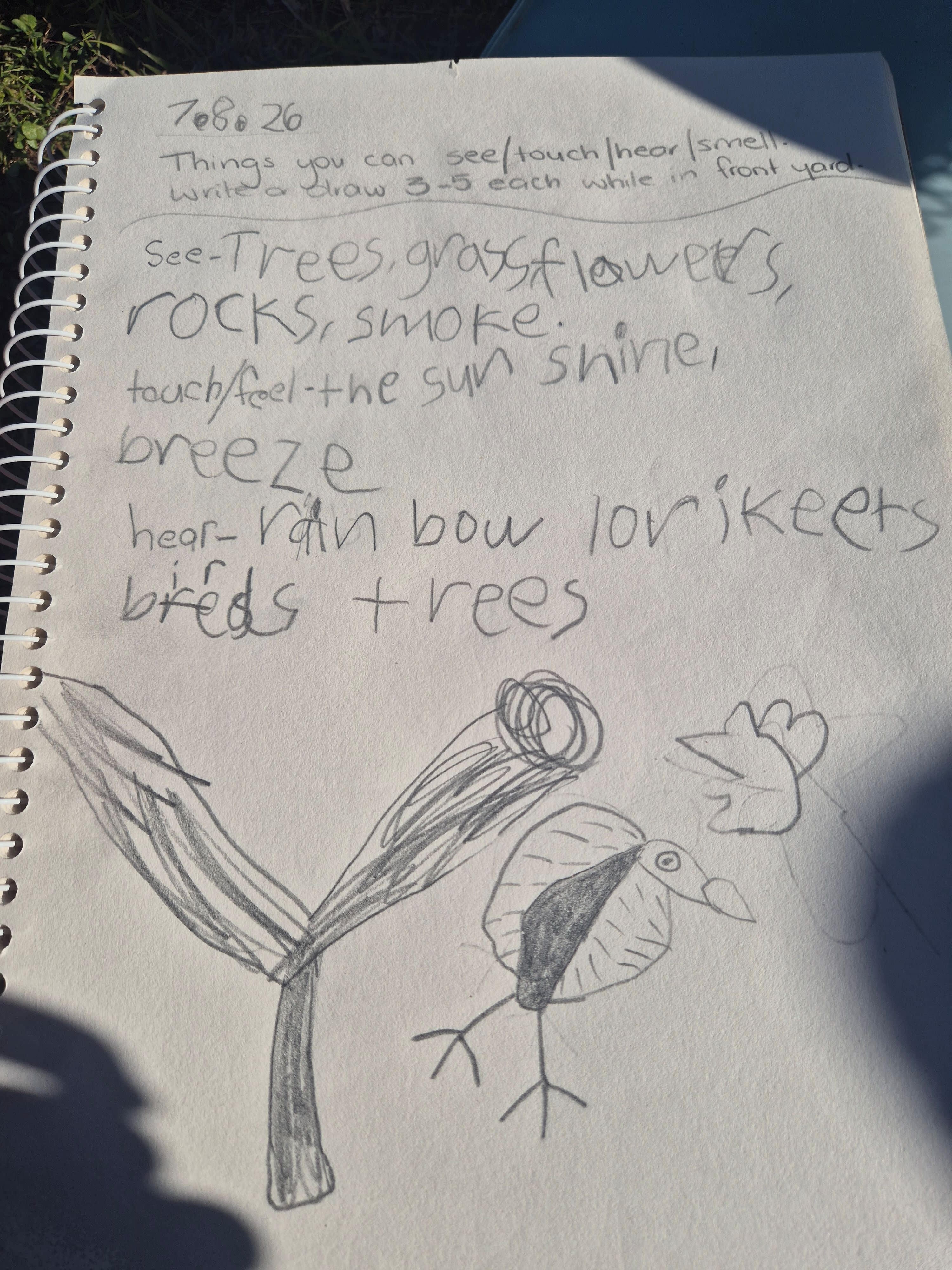
- The student practiced observational writing by recording things noticed outdoors through sight, sound, and touch.
- The activity encouraged precise sensory vocabulary, such as describing what something looks, sounds, or feels like.
- Writing a list of observations supported organizing ideas into categories based on the senses.
- The student connected words and illustrations by choosing a favorite observation to draw and label.
Science
- The student used direct observation, an important scientific skill, to study the outdoor environment.
- The nature journal included multiple forms of sensory evidence rather than relying only on visual information.
- The student noticed living things and natural objects, including plants, animals, and other features of the front yard.
- The activity introduced the practice of documenting findings so observations can be remembered, compared, and discussed later.
Art
- The student transformed a real outdoor observation into a personal drawing of a favorite subject.
- Sketching natural subjects supported attention to shape, line, texture, and distinctive details.
- The use of pencil shading and repeated lines showed an attempt to represent texture and form.
- Combining written notes with drawings created a visual nature journal rather than a standalone artwork.
Social-Emotional Learning
- The quiet observation period encouraged mindfulness by focusing attention on immediate sensory experiences.
- Choosing a favorite thing gave the student an opportunity to express personal interest and preference.
- Spending time outdoors and recording discoveries supported curiosity and appreciation for the nearby environment.
- The journal format encouraged patience, careful attention, and pride in documenting personal discoveries.
Tips
Tips: Continue the journal on another day and compare what changes with the weather, time of day, or season. Invite the student to add one question beside each observation—for example, “Why is this leaf shaped this way?”—and then look for an answer through careful observation or a child-friendly reference book. Try a sound map by marking where different sounds come from, or make a texture collection using drawings rather than removing natural objects. To extend language arts, choose one favorite observation and write three sentences describing it with sensory details, then read the entry aloud while pointing to the matching drawing.
Book Recommendations
- Outside In by Deborah Underwood: A gentle picture book that encourages children to notice the natural world and reconnect with outdoor sensory experiences.
- Up in the Garden and Down in the Dirt by Kate Messner: A richly illustrated exploration of what can be observed above and below the soil in a garden.
- The Curious Garden by Peter Brown: A story about curiosity, careful observation, and caring for nature in an urban environment.
Try This Next
- Create a four-column journal page labeled “I see,” “I hear,” “I feel,” and “I wonder,” then add at least two observations in each column.
- Draw one observed plant, animal, or natural object from two different viewpoints and label its shapes, textures, and parts.
- Make a simple backyard sound map by drawing the observation spot and adding symbols or words showing where each sound came from.
- Write a five-senses description of the favorite journal subject without naming it; have someone guess the subject.