Core Skills Analysis
Science: Animal Biology
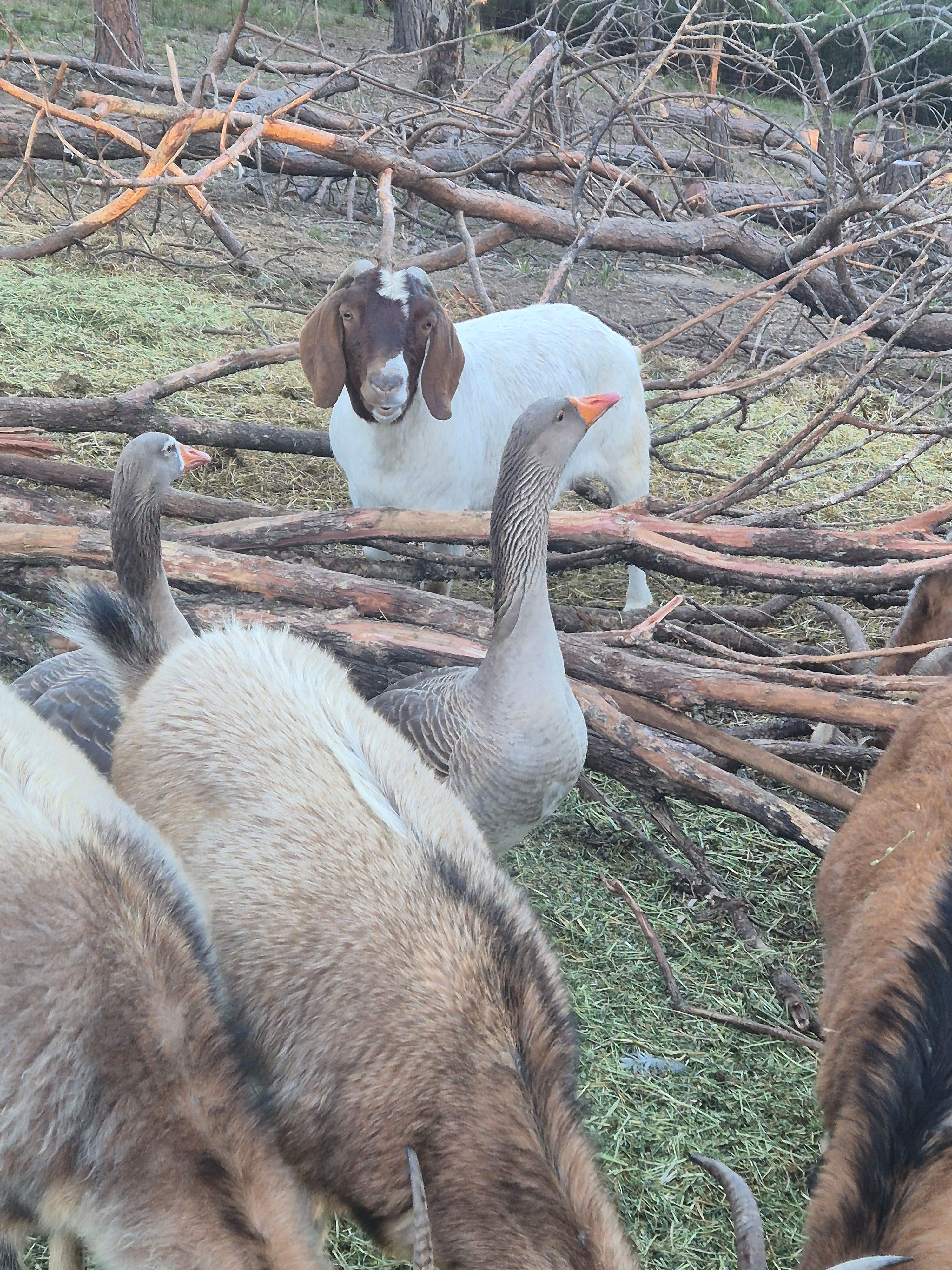
- The girls were introduced to several animal groups, including goats, ferrets, chickens, geese, and a cockatoo, helping them compare mammals and birds.
- They learned that different animals have different food requirements and living-environment needs.
- Observing the animals together encouraged attention to visible features such as fur, feathers, beaks, body size, and overall shape.
- The experience supported early scientific observation by connecting real animals with questions about how they live, eat, and interact with their surroundings.
Environmental Studies
- The girls explored how a property can provide spaces for multiple kinds of animals, each with its own environmental needs.
- They began considering the relationship between animals and their surroundings, including available ground, shelter, vegetation, and space to move.
- Seeing goats and geese among fallen branches and grassy areas provided a concrete setting for discussing how animals use outdoor environments.
- The visit encouraged awareness that caring for animals involves maintaining suitable food, shelter, and safe living conditions.
Language Arts
- The variety of animals created opportunities to build and use specific vocabulary, including goat, ferret, chicken, goose, and cockatoo.
- The girls could practice descriptive language by comparing animals according to appearance, sounds, movement, food, and habitat.
- The visit provided rich material for sequencing and retelling: arriving at the property, meeting the animals, and learning about their care.
- Real-life observation gives meaning to informational writing, such as creating a short animal profile based on one animal they encountered.
Social-Emotional Learning
- Spending time around live animals can encourage curiosity, attentiveness, and respect for living creatures.
- Learning about food and environments helps develop empathy by highlighting that animals depend on people for appropriate care and protection.
- Encountering several different species offers a gentle opportunity to notice that animals have different needs rather than expecting every animal to behave or live in the same way.
- The close, real-world experience appears to have been engaging and memorable, giving the girls a positive context for asking questions and extending their learning.
Tips
Tips: Turn the visit into a mini animal-study project by choosing one goat, ferret, chicken, goose, or cockatoo and making an observation page with its name, body covering, foods it may need, and features noticed during the visit. Create a simple comparison chart for mammals and birds, then invite the girls to draw an ideal living space for one animal and explain how it provides food, shelter, and room to move. For a mathematics connection, count or sort the animals by type, number of legs, feathers, or fur, using only observations that can be confirmed. Finish with a short oral or written retelling of the afternoon and a discussion about how to behave safely and respectfully around animals.
Book Recommendations
- Big Red Barn by Margaret Wise Brown: A gentle picture book featuring farm animals and the sights, sounds, and routines of a rural property.
- Charlotte's Web by E. B. White: A classic story about friendship and life among animals on a farm, offering opportunities to discuss animal behavior and care.
- Click, Clack, Moo: Cows That Type by Doreen Cronin: A humorous farm story that encourages discussion about animal needs, communication, and perspective-taking.
Try This Next
- Animal comparison worksheet: sort the animals into mammals and birds, then record fur, feathers, beaks, food, and habitat observations.
- Observation drawing task: draw one animal from the visit and label its body features and surrounding environment.
- Quiz prompts: Which animals had feathers? Which animals were mammals? What kinds of food or shelter might each animal need?
- Writing prompt: “If I could spend one more afternoon with one of the animals, I would choose ___ because ___.”