Core Skills Analysis
Science: Zoology and Animal Habitats
- The girls learned that different animals—including goats, ferrets, chickens, geese, and cockatoos—have different food and environmental needs.
- They practiced comparing animals from different groups, including mammals, birds, and poultry, by observing their bodies, behaviors, and surroundings.
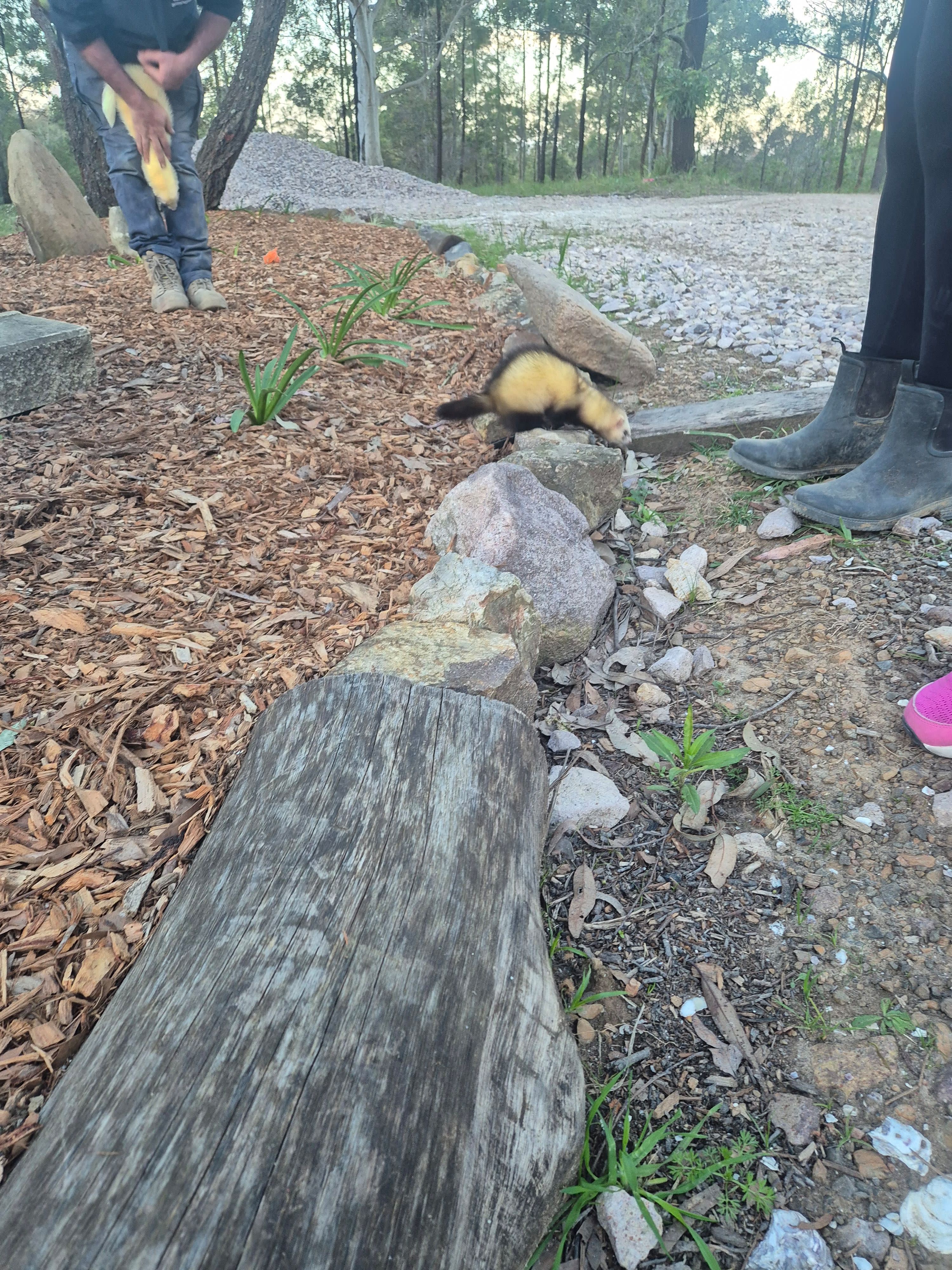
- The outdoor setting shown in the photograph highlighted how living things depend on suitable shelter, ground cover, plants, rocks, and space.
- Direct contact with multiple animals encouraged observation-based learning about how animals move, eat, and respond to their environment.
Language Arts
- The experience created meaningful opportunities to build animal-related vocabulary, such as habitat, shelter, diet, feathers, fur, flock, and enclosure.
- The girls could practice sequencing and descriptive language by explaining which animals they saw, what each animal ate, and where it lived.
- Asking questions about the animals would develop listening comprehension, curiosity, and the ability to gather information from an experienced animal owner.
- Retelling the afternoon in speech or writing would strengthen personal narrative skills by organizing observations into a clear beginning, middle, and end.
Mathematics
- Seeing multiple kinds of animals supported classification and sorting by observable features, such as number of legs, feathers versus fur, or domestic bird versus mammal.
- The girls could use one-to-one counting by recording how many goats, ferrets, chickens, geese, and cockatoos they encountered.
- Comparing the animals encouraged mathematical language such as more, fewer, larger, smaller, taller, shorter, and heavier-looking.
- The animal visit could introduce simple data representation through a picture graph showing the number of animals in each group.
Environmental Studies and Responsibility
- The girls began connecting animal well-being with daily care, including appropriate food, a suitable environment, and safe spaces.
- They observed that a property supporting several species must provide different conditions rather than treating every animal’s needs as identical.
- The experience encouraged respectful behavior around animals, including watching carefully, listening to guidance, and considering the animals’ comfort.
- The visit helped connect classroom ideas about living things to a real-world setting with plants, soil, mulch, rocks, and animal habitats.
Tips
Tips: Turn the visit into a short nature-study lesson by having the girls make an observation journal with one page for each animal: what it looks like, what it eats, where it stays, and one question they still have. Create a sorting mat for mammals and birds, then discuss which features helped them decide where each animal belongs. For math practice, make a simple tally chart of the animals seen and convert it into a picture graph. Finally, invite the girls to design an ideal habitat for one animal using drawings or recyclable materials, explaining how each part meets that animal’s food, shelter, space, or safety needs.
Book Recommendations
- National Geographic Kids Animal Encyclopedia by National Geographic Kids: A colorful reference book introducing children to animal groups, behaviors, habitats, and fascinating facts.
- DK First Animal Encyclopedia by DK: An accessible illustrated encyclopedia that connects familiar animals with their bodies, homes, food, and ways of living.
- Charlotte's Web by E. B. White: A classic story about friendship and life on a farm that supports discussion about animal care, empathy, and observation.
Try This Next
- Animal observation worksheet: draw each animal and record its body covering, movement, food, and habitat.
- Create a tally chart and picture graph showing how many of each animal the girls saw.
- Sorting quiz: place goats, ferrets, chickens, geese, and cockatoos into mammal or bird groups and explain one clue for each choice.
- Design-an-enclosure drawing: label the food, shelter, water, space, and safety features one chosen animal would need.