Core Skills Analysis
Science
- The lesson introduced Audrey to two different organisms encountered outdoors—a leech and a tick—and encouraged comparison of their appearance, behavior, and relationship to animals or people.
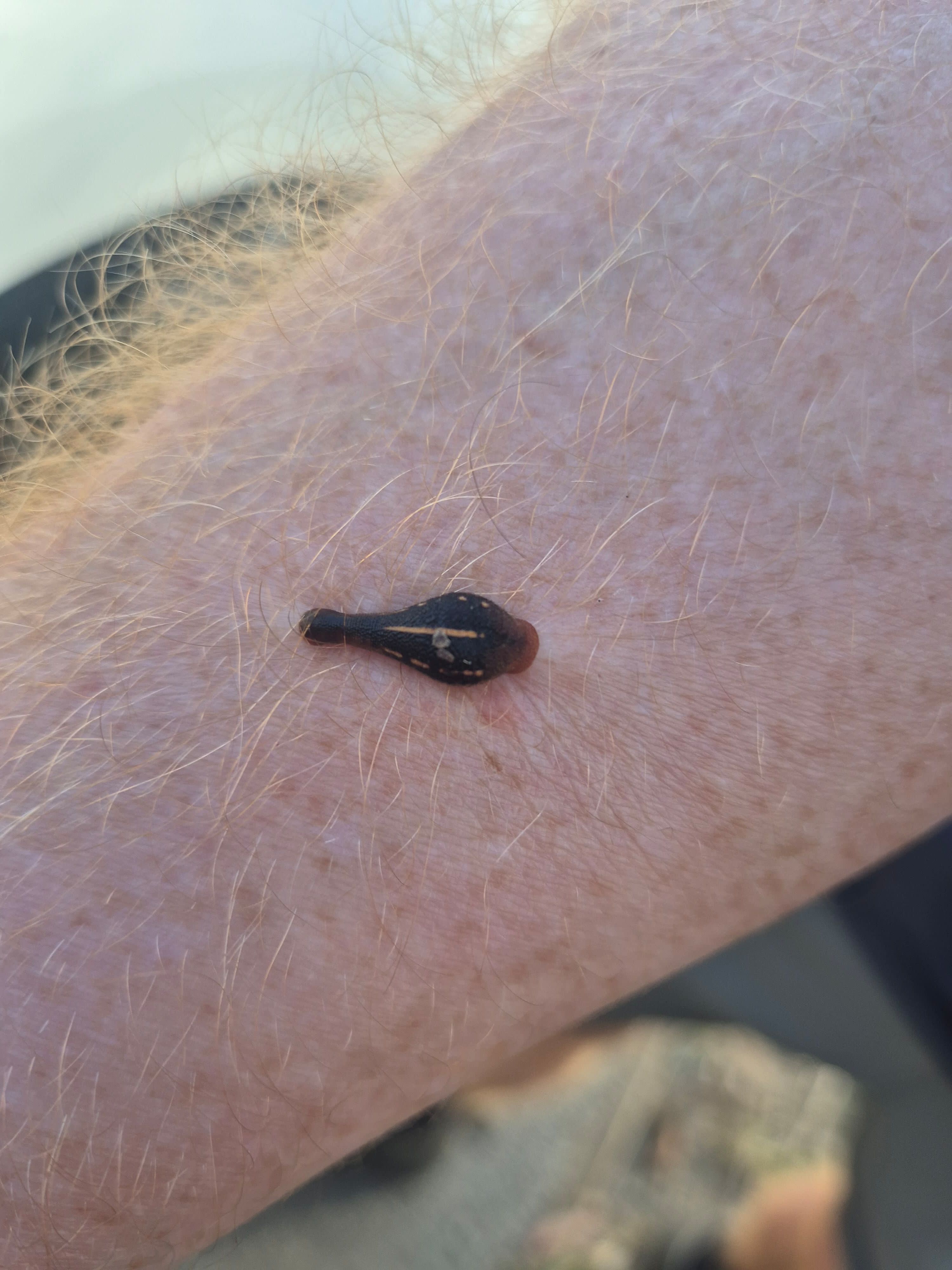
- She connected a real-life outdoor encounter with scientific observation, using the attached photograph as a close-up visual record of the tick-related experience.
- The activity supported understanding that some small organisms can attach to the body and that their removal requires different, careful procedures.
- Discussing what leeches and ticks are helped build practical knowledge about living things in a bush or hobby-farm environment.
Health and Safety
- Audrey learned that an unexpected bite or attachment outdoors should be handled calmly and followed by appropriate first aid after-care.
- The lesson emphasized safe removal rather than pulling, scratching, or reacting impulsively, reinforcing careful decision-making during a health concern.
- Learning about after-care helped connect the immediate removal process with monitoring and caring for the affected area afterward.
- The experience introduced an important personal-safety routine: identify the problem, use the correct removal method, clean or care for the area, and seek adult help when needed.
Language Arts
- Retelling the walk and the discovery of the leech and tick gives Audrey practice sequencing events from beginning to end.
- Learning and using subject-specific vocabulary such as "leech," "tick," "remove," and "first aid" strengthens precise oral communication.
- Explaining how the two organisms differ encourages compare-and-contrast language, including words such as "both," "unlike," and "whereas."
- Talking about a frightening experience in a supported setting can help her describe observations, actions, and feelings clearly.
Personal Development
- The girls' fear provided an opportunity to recognize that feeling scared during an unfamiliar outdoor event is understandable.
- The follow-up lesson modeled how information and preparation can make a worrying situation feel more manageable.
- Participating in the discussion encouraged confidence in asking questions and seeking help when something unusual happens to the body.
- The activity supported responsible outdoor behavior by turning a startling experience into a useful safety lesson.
Tips
Tips: Turn this experience into a short inquiry lesson by making a two-column chart comparing leeches and ticks, using only facts the children can confirm from a reliable child-friendly source. Next, invite the girls to create a simple outdoor-safety checklist with steps for wearing protective clothing, checking the body after a bush walk, telling an adult, and following first-aid guidance. For language practice, have Audrey draw or dictate a four-part sequence showing what happened, what the children noticed, what the adult did, and how the lesson helped. Finish with a calm role-play in which one child describes finding an attached organism and the other practices staying still, informing an adult, and following the agreed safety procedure; an adult should supervise any real first-aid discussion and follow local medical guidance.
Book Recommendations
- Ticks by Larry Dane Brimner: A child-friendly nonfiction introduction to ticks, including their body features, life cycle, and importance of avoiding tick-related risks.
- Leeches by Robin Nelson: An accessible nonfiction book that helps young readers learn about leeches, their habitats, bodies, and behavior.
- The Magic School Bus Explores the World of Bugs by Judy K formato? (author: Joanna Cole; illustrator: Bruce Degen): A lively, widely available introduction to insect and small-animal science that can broaden the discussion from one outdoor encounter to observing and classifying tiny creatures.
Try This Next
- Create a leech-and-tick comparison worksheet with spaces for habitat, body features, how each was encountered, safe-response steps, and one question to investigate.
- Make a four-panel comic titled "What to Do After Finding a Tick or Leech" using speech bubbles for observations, feelings, asking for help, and first-aid after-care.
- Write a three-question oral quiz: How were the leech and tick alike? Why should an adult be told? What happens after removal?
- Design a supervised bushwalk checklist that includes wearing suitable clothing, checking for attached organisms afterward, and recording observations without touching wildlife.