Core Skills Analysis
Science
- The learner was introduced to leeches and ticks as different types of small organisms that can attach to people while walking through bushland.
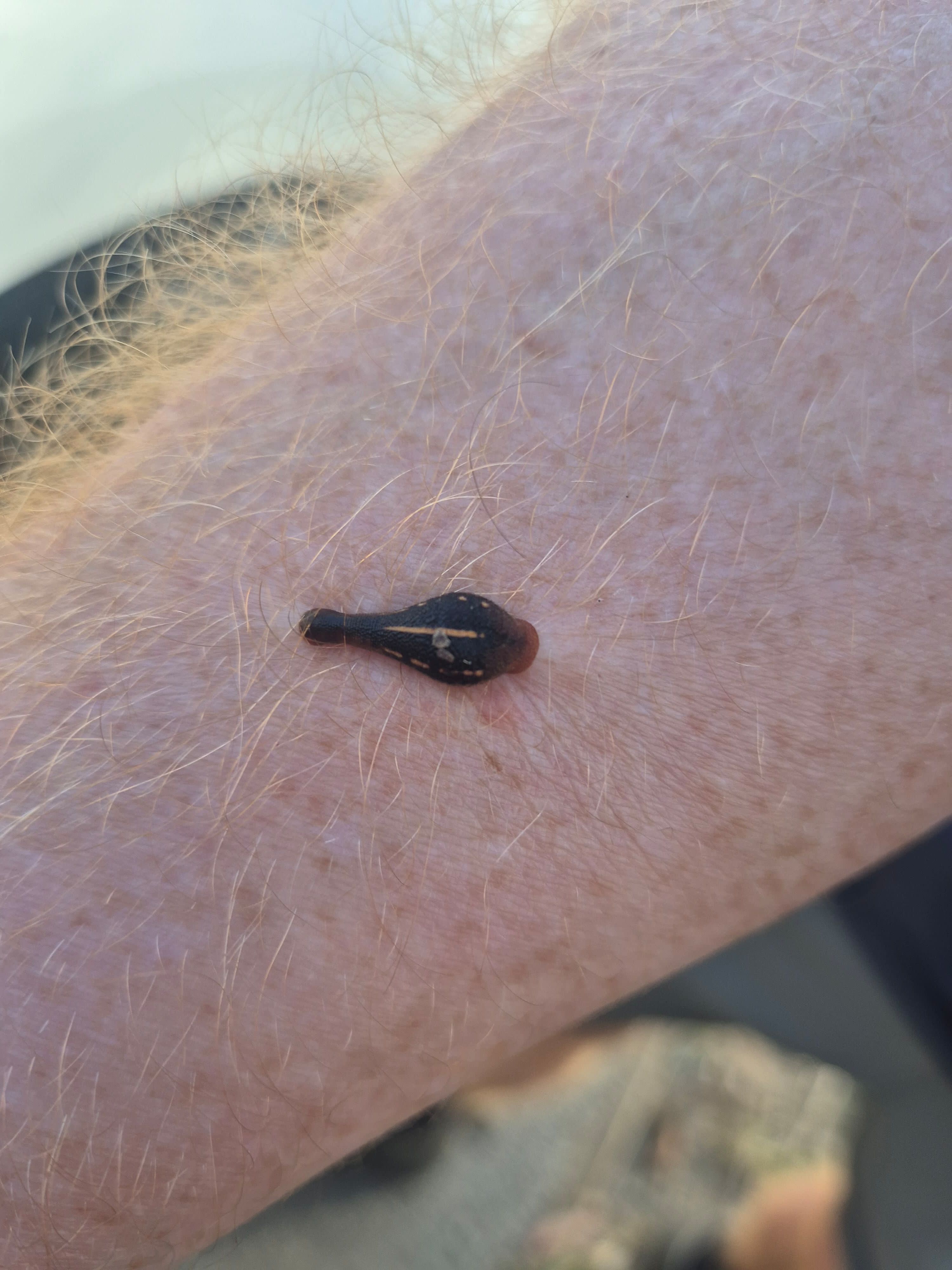
- The close-up image provided an opportunity to observe an attached dark-colored organism on skin and connect firsthand experience with scientific investigation.
- The learner explored how living things interact with their environments, including how contact with vegetation or animals can lead to encounters with biting or attaching organisms.
- The lesson encouraged careful observation and comparison by considering how a leech and a tick differ in appearance, attachment, and removal.
Health and Safety
- The learner was introduced to basic first-aid awareness for an outdoor encounter involving a leech and a tick.
- The girls learned that remaining calm and seeking help from a responsible adult are important responses when an unfamiliar organism is attached to the body.
- The discussion of removal and aftercare connected outdoor experiences with hygiene, wound observation, and preventing further irritation or infection.
- The activity strengthened practical risk-awareness by showing why people should check their skin after walking through bush areas.
Language Arts
- The learner practiced using subject-specific vocabulary such as “leech,” “tick,” “remove,” “first aid,” “aftercare,” and “attached.”
- Retelling what happened during the walk supports sequencing skills: encountering the organism, asking for help, learning about it, removing it, and completing aftercare.
- The experience provides a meaningful context for explaining similarities and differences between a leech and a tick using descriptive language.
- Discussing the event supports oral communication as the learner shares observations, questions, and feelings about the experience.
Social-Emotional Learning
- The activity acknowledged that the girls felt very scared, helping them connect emotions with an unexpected outdoor event.
- Learning what the organisms were and how adults could respond provided reassurance through knowledge and a clear safety plan.
- The girls practiced coping with uncertainty by listening, asking questions, and taking part in a calm educational discussion.
- The experience may help build confidence for future outdoor exploration while reinforcing the importance of working together and seeking support.
Tips
Tips: Turn the experience into a short inquiry lesson by creating a two-column comparison chart for leeches and ticks, using only reliable child-friendly sources and clearly marking any facts that still need checking. Invite the learner to draw a simple “before, during, and after” sequence of the outdoor encounter, then dictate or write one sentence for each picture. For a practical extension, make an outdoor-walk safety checklist that includes wearing suitable clothing, staying with an adult, checking clothing and skin afterward, and reporting anything unusual. Revisit the first-aid discussion with a trusted health professional’s guidance so the learner can distinguish between what children can do safely themselves and when an adult or medical professional should help. Throughout, validate the fear they experienced and emphasize that learning about a frightening event can make future decision-making calmer and more confident.
Book Recommendations
- National Geographic Readers: Bugs by Elizabeth Carney: A highly accessible nonfiction introduction to bugs and other small creatures, useful for comparing body features, habitats, and behaviors while clarifying that ticks are arachnids rather than insects.
- The Big Book of Bugs by Yuval Zommer: An engaging illustrated exploration of the small-animal world that encourages close observation and discussion about how different creatures live and interact with their environments.
- The Magic School Bus Explores the World of Bugs by Joanna Cole: A lively science adventure that introduces children to insect structures, life cycles, and habitats, providing a springboard for comparing insects with leeches and ticks.
Try This Next
- Create a leech-and-tick comparison worksheet with spaces for habitat, appearance, attachment, safe adult response, and aftercare.
- Write or draw a five-step outdoor encounter sequence: notice, stay calm, tell an adult, follow the removal guidance, and complete aftercare.
- Make a bushwalk safety checklist and role-play how to respond when a friend discovers an unfamiliar organism on their skin.
- Use a magnifying glass or photographs to sketch the visible features of a leech and a tick, labeling only features confirmed by a reliable reference.