Core Skills Analysis
Engineering and Design
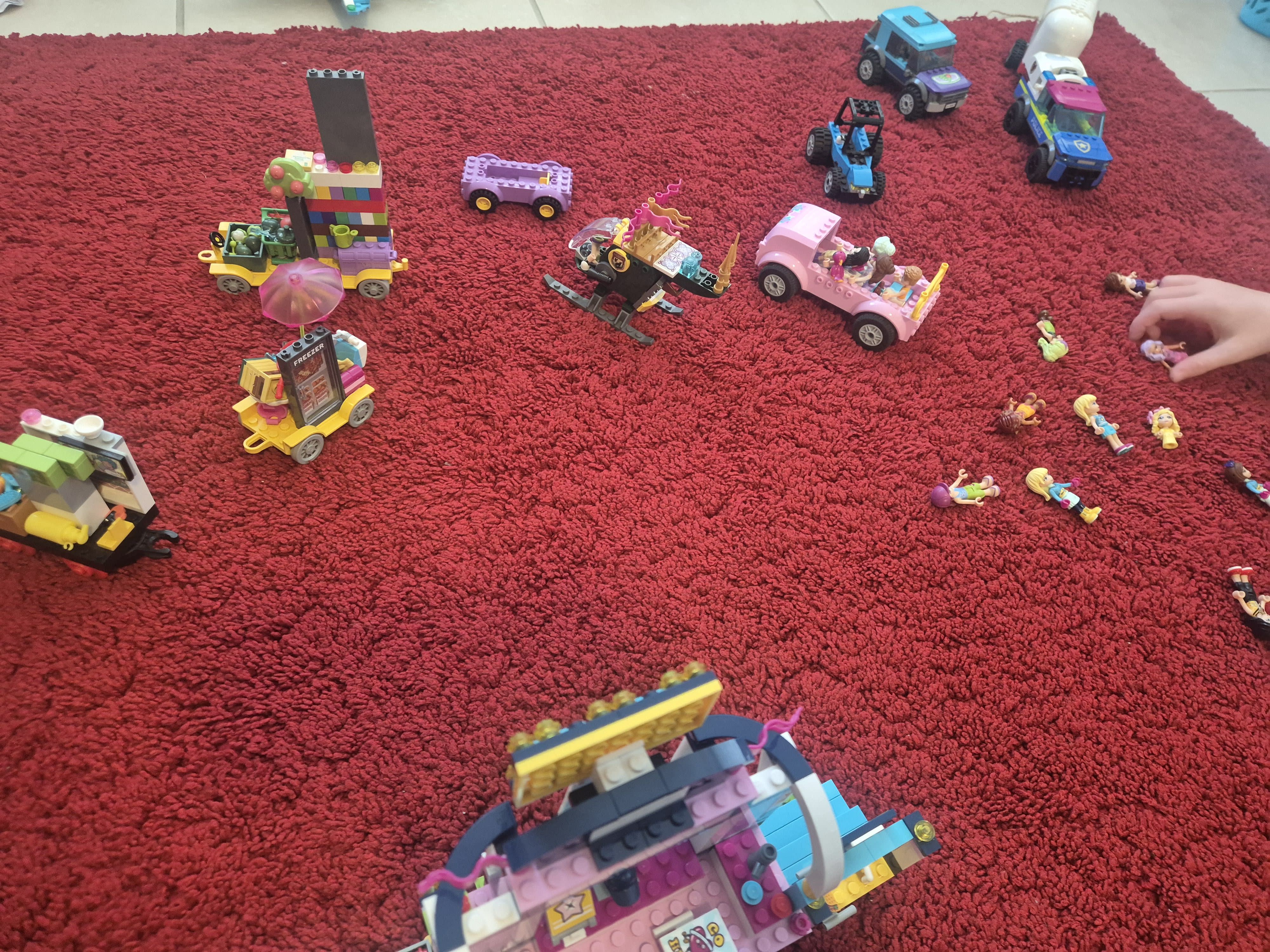
- Georgia used LEGO pieces to design a large fair-like environment with multiple vehicles, structures, and decorated areas.
- The tall central structure shows experimentation with vertical building, balance, and connecting pieces securely.
- The different vehicles and carts demonstrate an understanding that objects can be designed for particular purposes, such as carrying people or providing transportation.
- The scene reflects an iterative design process: LEGO construction allows Georgia to build, adjust, and expand ideas as the fair develops.
Mathematics
- Building with LEGO provides hands-on practice with counting studs, comparing lengths, and noticing which pieces are larger or smaller.
- The repeated wheels, stacked bricks, and colorful rows create opportunities to explore patterns, symmetry, and repetition.
- Georgia can reason about spatial relationships by placing vehicles, people, and structures near, far, beside, or in front of one another.
- The arrangement of the fair-like scene supports informal learning about position, direction, grouping, and classification.
Language Arts
- Creating an entire fair-like setting gives Georgia a concrete place, characters, and objects to use in imaginative storytelling.
- The vehicles and figures can become story elements with different roles, destinations, problems, and solutions.
- Explaining what each LEGO creation is or does encourages descriptive vocabulary, including words for color, size, movement, location, and function.
- Naming the fair and narrating what happens there would support oral storytelling, sequencing, and beginning narrative structure.
Art and Visual Expression
- Georgia made deliberate color choices, including bright vehicles, pastel structures, and contrasting LEGO details.
- The varied shapes, figures, wheels, and decorative pieces show visual experimentation and attention to recognizable features.
- The wide layout creates a miniature environment rather than a single object, demonstrating planning of space and composition.
- Using familiar LEGO elements in unusual combinations encourages creative representation and flexible thinking.
Social-Emotional Learning
- The completed scene suggests sustained engagement with a complex, open-ended project.
- Designing a shared-looking fair environment can provide opportunities to think about how people gather, travel, play, and interact.
- The many separate creations allow Georgia to make choices independently and express personal interests through construction.
- Explaining the scene to another person could build confidence, communication, and pride in a finished creation.
Tips
Tips: Turn Georgia's LEGO fair into a mini project by first inviting her to give the fair a name and identify its main areas, such as rides, vehicles, shops, or gathering places. Create simple admission tickets or price tags to practice counting and addition, then make a hand-drawn map using labels such as next to, behind, between, and across from. Encourage Georgia to choose one character and tell or dictate a beginning, middle, and ending for that character's visit. For a design challenge, ask her to build one new fair feature that must stand securely, include a moving part, or use a repeating color pattern; test it, revise it, and discuss what changed.
Book Recommendations
- The LEGO Ideas Book: Unlock Your Imagination by Daniel Lipkowitz: A widely available LEGO creativity book filled with building ideas that can inspire new fair attractions, vehicles, and structures.
- Rosie Revere, Engineer by Andrea Beaty: A story about designing, building, testing, and learning from mistakes—excellent connections to open-ended LEGO construction.
- Last Stop on Market Street by Matt de la Peña: A picture book about a child traveling through a busy community, offering ideas for discussing vehicles, people, places, and what happens in a lively public setting.
Try This Next
- Fair Map Worksheet: Draw the LEGO fair and label five objects using location words such as beside, behind, between, and near.
- Design Challenge Card: Build a new fair attraction using at least three colors, one repeated pattern, and one moving or rotating part.
- Story Prompt: Choose one LEGO figure and complete the sentence, “When the character arrived at the fair, the first thing that happened was…”
- Math Ticket Booth: Assign simple prices to three LEGO attractions and create addition problems for visitors choosing different combinations.