Core Skills Analysis
Visual Arts
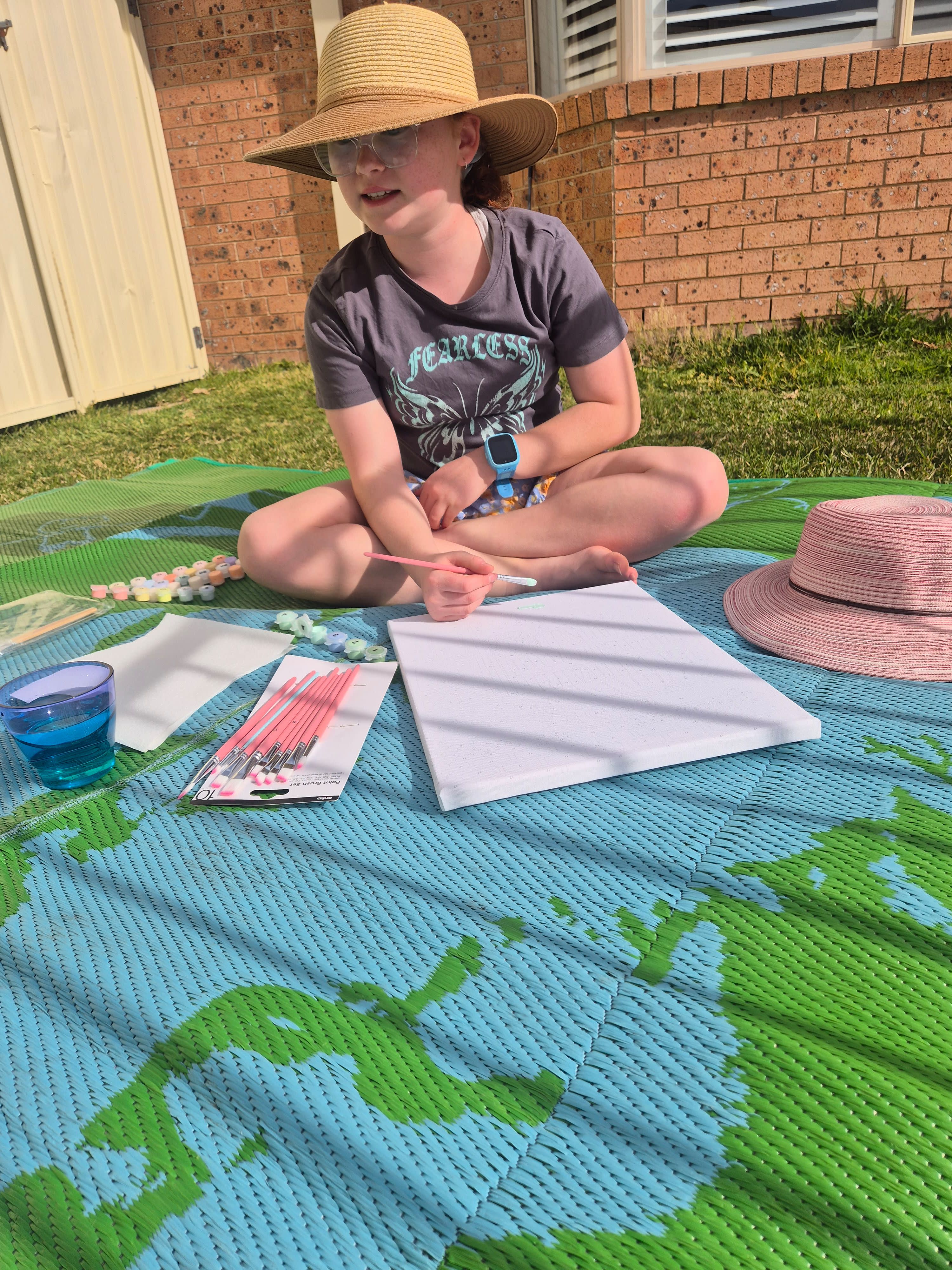
- The learner practiced applying paint to a numbered canvas, using color as the main tool for creating an image.
- The activity introduced a structured art process in which separate painted sections gradually contribute to a larger composition.
- Working with a paintbrush encouraged attention to brush control, coverage, edges, and the visual effect of different colors.
- Painting outdoors provided an enjoyable setting for making art while noticing natural light and the surrounding environment.
Mathematics
- A paint-by-numbers canvas connects numerals with corresponding colors, providing practical practice in recognizing and matching numbers.
- The learner used visual information and followed a coded system to decide which color belonged in each section.
- The numbered areas encouraged careful one-to-one attention: each section needed to be identified and filled appropriately.
- The canvas offered an informal introduction to organization and sequencing as the learner chose which numbered areas to complete.
Fine-Motor Development
- Holding and guiding a small paintbrush supported controlled hand and finger movements.
- Painting within outlined sections encouraged visual-motor coordination between what the learner saw and how the brush moved.
- Moving among the canvas, paint containers, and water cup involved purposeful tool handling and hand control.
- The activity created opportunities to strengthen precision, patience, and steady movement during a hands-on task.
Science and Observation
- The learner could observe how paint changes the appearance of a white canvas as color is added.
- Using a water cup alongside paint created an opportunity to notice how water can clean or dilute paint and affect brush use.
- The outdoor setting encouraged observation of how sunlight makes colors, shadows, and textures appear on the canvas and nearby objects.
- The activity supported simple investigation through noticing paint thickness, drying, color coverage, and brush marks.
Social-Emotional Learning
- The focused posture and active brushwork suggest the learner was engaged in a sustained creative activity.
- Following the numbered design required attention, persistence, and willingness to work through a task one section at a time.
- Painting offered a calm way to make choices within clear boundaries while still producing a personal creative result.
- Completing individual sections can provide visible progress and encouragement as the larger artwork develops.
Tips
Tips: Turn the painting into a mini lesson by first asking the learner to locate several numbers and predict which colors they represent, then count how many sections use each color. Invite the learner to compare a freshly painted area with a dry area and describe any changes in texture or appearance. Experiment on scrap paper with a clean brush, a damp brush, and a dry brush to see how each technique changes the paint. When the session ends, encourage the learner to give the artwork a title and dictate or write two sentences describing the process, favorite color, and part that required the most care.
Book Recommendations
- The Art Book for Children by Editors of Phaidon Press: An accessible introduction to famous artworks with creative activities that encourage children to look closely, think, and make art.
- Beautiful Oops! by Barney Saltzberg: A playful picture book that shows how unexpected marks and mistakes can become imaginative parts of an artwork.
- Harold and the Purple Crayon by Crockett Johnson: A classic story about using one drawing tool to create places, objects, and adventures, inspiring imaginative artistic thinking.
Try This Next
- Create a number-and-color worksheet: match each canvas number to its paint color and count the sections for each color.
- Paint three test squares using a dry brush, a damp brush, and a heavily loaded brush; compare and label the textures.
- Write or dictate an artwork label with the painting's title, colors used, and one favorite section.
- Make a color-mixing chart on scrap paper by combining two available paints and recording the new colors.