Core Skills Analysis
Visual Arts
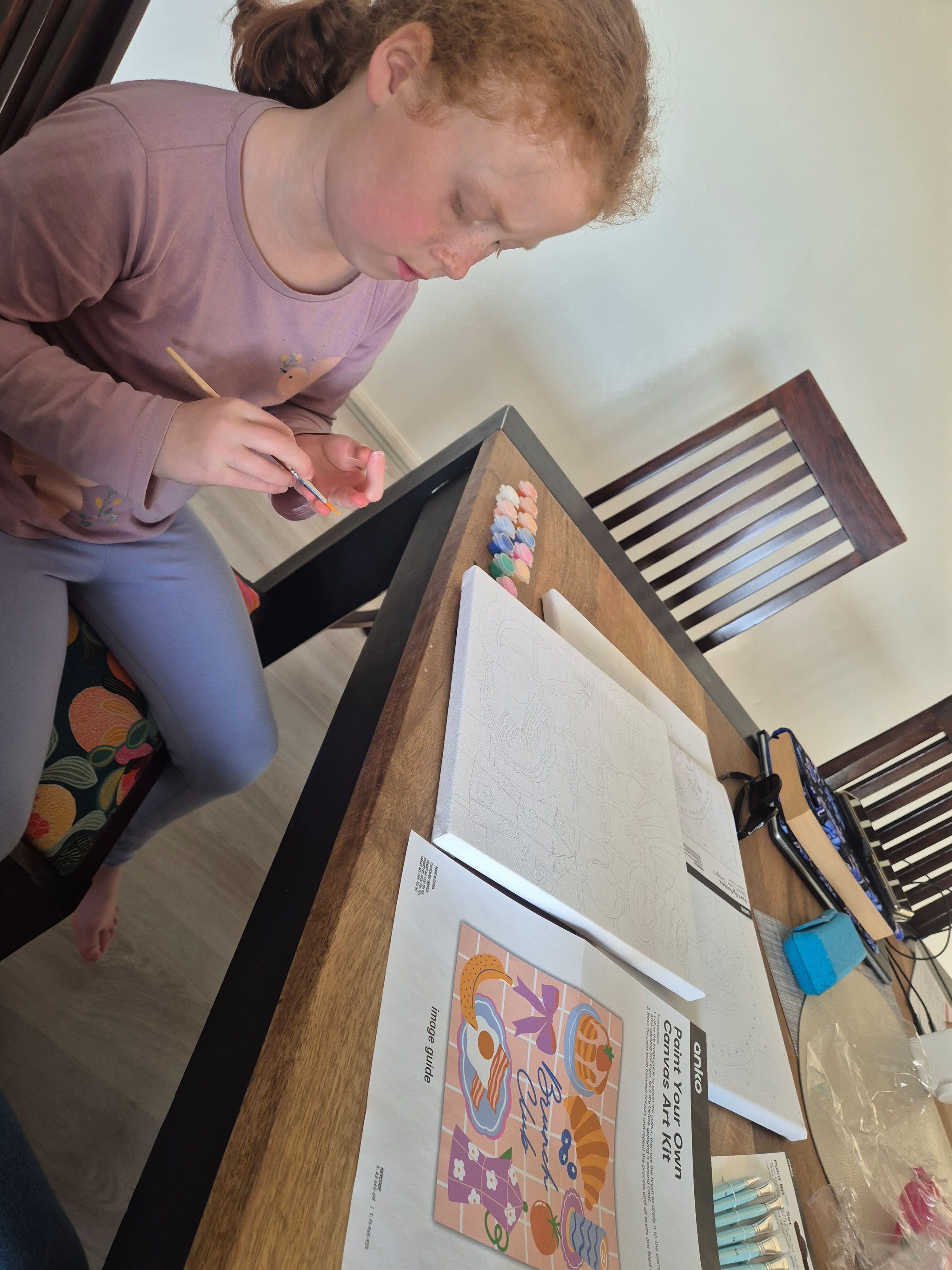
- The student practiced applying paint to a pre-drawn canvas, building experience with color, coverage, and controlled brushwork.
- A paint-by-numbers format introduced the idea that separate colored sections can combine to create a complete artwork.
- The activity supported visual attention as the student looked closely at the canvas and selected paint for specific areas.
- Working on a prepared design allowed the student to focus on the painting process while still making choices about careful application.
Mathematics
- The numbered-canvas format provided an informal opportunity to match numerals with their corresponding paint colors.
- Painting individual sections encouraged awareness of boundaries, shapes, and spatial relationships on a two-dimensional surface.
- The student encountered part-to-whole thinking by completing small areas that contribute to one larger picture.
- The activity could reinforce sequencing if the student chose to work through numbered areas systematically.
Fine-Motor Development
- Holding a small paintbrush and guiding it across the canvas supported hand strength, grip control, and wrist stability.
- Filling narrow or detailed sections required coordinated movements between the eyes and hands.
- The student practiced adjusting pressure and brush direction to place paint more precisely.
- Sustained brush use offered practice with physical control and gradual completion of a hands-on task.
Executive Function
- The structured canvas gave the student a clear goal and visual steps for progressing through the activity.
- Painting within designated areas encouraged sustained attention and monitoring of one’s own work.
- The student practiced task persistence by continuing a multi-step project rather than completing a single quick mark.
- Managing the brush and several paint colors involved basic planning, organization, and decision-making.
Tips
Tips: Turn the finished canvas into a short mini-lesson by first asking the student to identify how the numbers and colors work together, then invite them to predict which section should be painted next. Create a simple color-and-number matching worksheet using symbols from the canvas, or have the student count how many areas use each color. For a creative extension, offer a blank sheet and ask the student to design a small paint-by-number picture for someone else, including a numbered key. Finish with a brief reflection in which the student names one area that required careful control, one color they enjoyed using, and one thing they would try differently next time.
Book Recommendations
- The Dot by Peter H. Reynolds: A reassuring story about beginning with one small mark and discovering confidence through art.
- Ish by Peter H. Reynolds: A story that encourages children to value creative attempts instead of worrying about perfect results.
- Beautiful Oops! by Barney Saltzberg: An interactive art book showing how unexpected marks and mistakes can become creative opportunities.
Try This Next
- Color-and-number matching worksheet: copy 6–10 numbers from the canvas and have the student match each one to its paint color.
- Design-your-own paint-by-number page: draw a simple picture, divide it into sections, number the sections, and create a color key.
- Art reflection prompt: “The section that required the most care was ___ because ___.”
- Observation challenge: find and count the different shapes or sections visible on the canvas.