Core Skills Analysis
Science
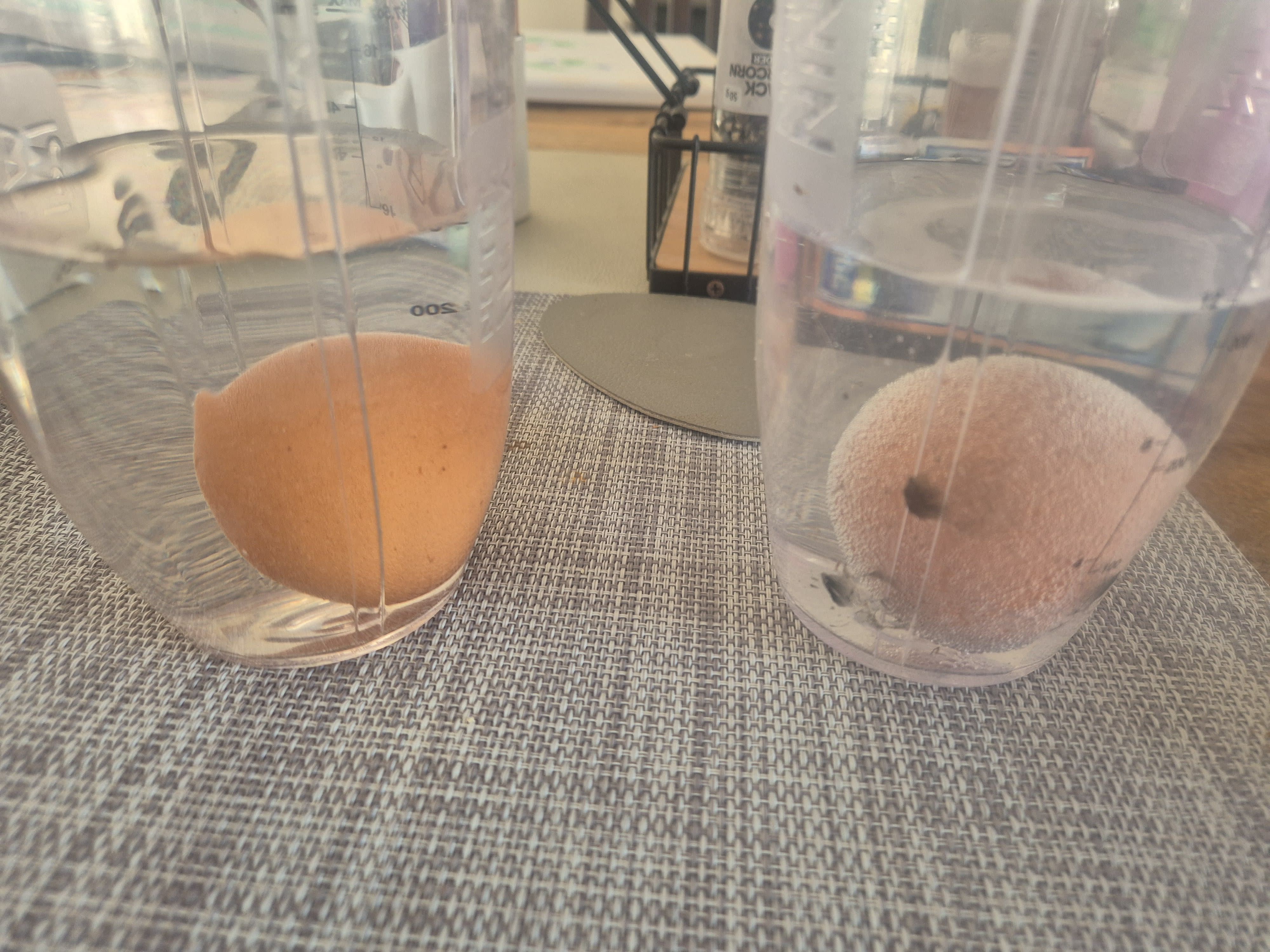
- The learner designed a comparative investigation by placing eggs in two different liquids: vinegar and water.
- The learner practiced identifying variables: the liquid is the factor being changed, while observing the eggs over the same seven-day period supports a fair comparison.
- Writing an aim, method, and prediction introduced key parts of the scientific inquiry process before the results were known.
- The planned seven-day observation period supports patience, careful observation, and recording changes over time rather than relying on a single observation.
Language Arts
- The learner used scientific writing structures by recording an aim, explaining a method, and making predictions.
- Writing a prediction encourages the learner to express an idea clearly and give a reason for what they think may happen.
- Describing observations across several days will develop precise vocabulary for appearance, texture, size, and other visible changes.
- The experiment creates an authentic opportunity to organize information in chronological order and later write a conclusion supported by observations.
Mathematics
- The learner established a seven-day timeline, creating a natural opportunity to count, sequence, and label daily observations.
- Recording observations each day could support simple data collection, such as noting changes in appearance or comparing the two eggs.
- The learner can practice comparing results using language such as more, less, similar, different, increased, or decreased.
- A table or chart would help the learner organize observations and identify patterns across the vinegar and water conditions.
Personal and Social Development
- Preparing the aim, method, and predictions before seeing the outcome encourages planning and purposeful work.
- Waiting seven days gives the learner practice with delayed results and sustained attention to an investigation.
- Using two conditions encourages fair-minded comparison: the learner can examine evidence rather than deciding that a prediction is automatically correct.
- The activity may build curiosity and ownership because the learner is actively setting up and monitoring a question of their own.
Tips
Tips: Turn the seven-day investigation into a simple science journal with one dated entry for each day, encouraging the learner to draw the eggs and write one or two precise observations. Before checking the containers, ask the learner to revisit the prediction and explain whether the evidence supports or challenges it; emphasize that an unexpected result is still valuable scientific information. Create a comparison table for the vinegar egg and water egg, using consistent observation categories such as color, shell appearance, and size. At the end, help the learner share the investigation as a short report with the headings aim, method, prediction, observations, and conclusion, while discussing safe handling and adult supervision when working with liquids and eggs.
Book Recommendations
- What Is the World Made Of? All About Solids, Liquids, and Gases by Kathleen Weidner Zoehfeld: A clear, accessible introduction to how solids and liquids differ, connecting well with an investigation involving eggs placed in liquids.
- Ada Twist, Scientist by Andrea Beaty: An engaging picture book about asking questions, making predictions, investigating, and learning from results.
- The Curious Kid's Science Book: 100+ Creative Hands-On Activities for Ages 4-8 by Caitlin Barker: A hands-on collection that encourages young learners to explore questions, make observations, and record evidence through simple experiments.
Try This Next
- Create a seven-day observation chart with columns for date, vinegar egg, water egg, drawing, and new vocabulary.
- Write three prediction prompts: What might change first? Which egg may look different? What evidence will you look for?
- Draw a labeled diagram of each container and identify the liquid, egg, and observation conditions.
- Complete a conclusion sentence frame: My prediction was ____. I observed ____. This shows ____.