Core Skills Analysis
Science
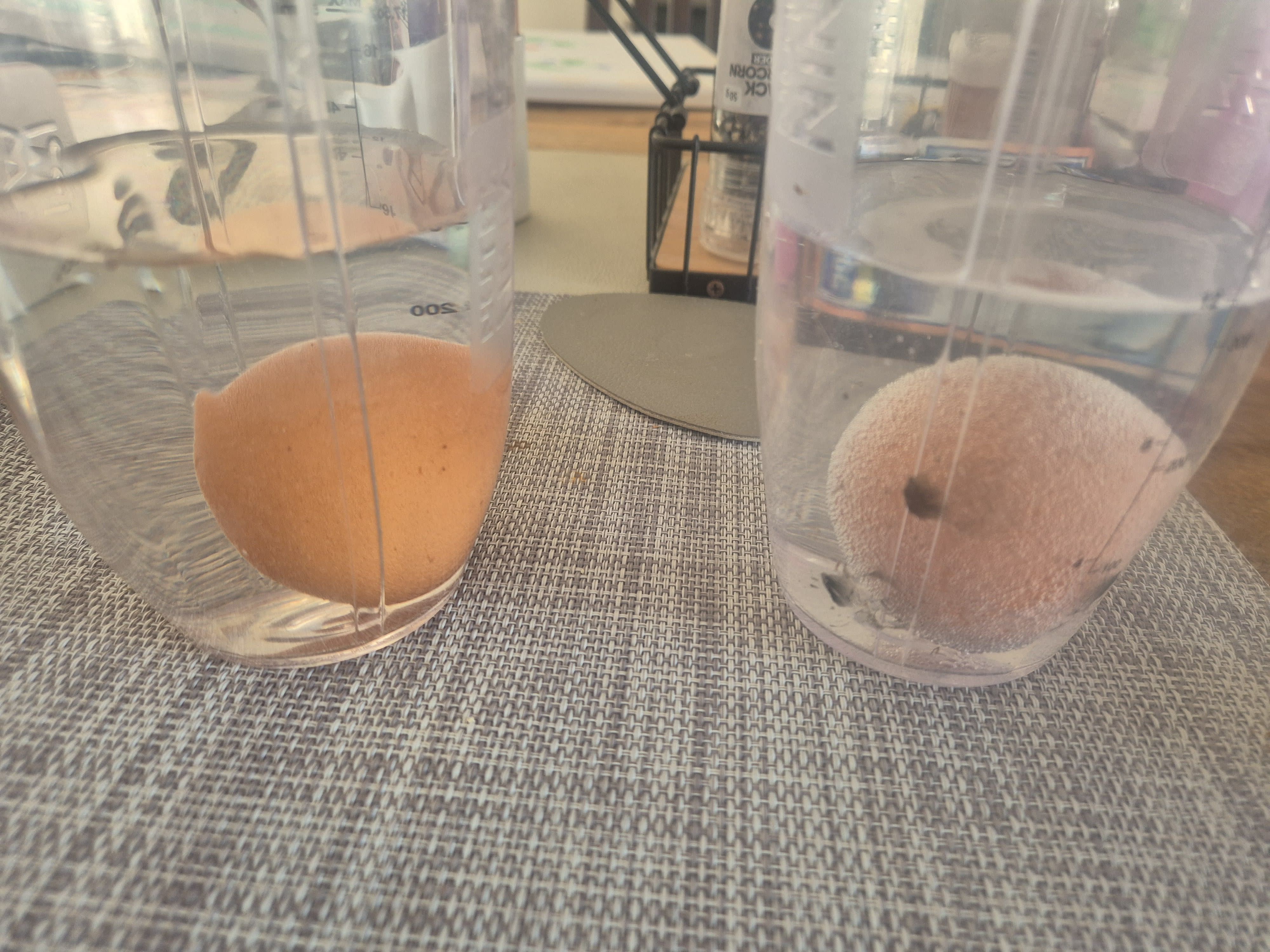
- The learner explored how an egg may change when placed in vinegar compared with an egg placed in water.
- The learner practiced identifying the parts of an investigation: aim, method, predictions, and observations.
- The learner began a fair comparison by using two liquids and planning to observe the eggs over seven days.
- The learner recognized that some scientific changes take time and require repeated observation rather than a single check.
Language Arts
- The learner used scientific vocabulary such as "experiment," "aim," "method," "predictions," and "observe."
- Writing the aim and method encouraged the learner to communicate instructions in a clear, organized sequence.
- Recording predictions gave the learner practice expressing ideas before knowing the final result.
- The planned seven-day observation record will support chronological writing using dates, details, and complete sentences.
Math and Data Skills
- The seven-day observation period introduced the idea of measuring time through a repeated daily schedule.
- Comparing two eggs creates an opportunity to organize findings in a table with separate columns for vinegar and water.
- The learner can track changes such as appearance, texture, size, or other observable features without relying only on memory.
- The investigation supports basic comparison language, including same, different, more, less, before, and after.
Tips
Tips: Help the learner create a seven-day observation chart with space for the date, a drawing, written notes, and a comparison between the two eggs. Encourage careful descriptions before touching or moving the eggs, and remind the learner to use the same observation routine each day. At the end, revisit the original predictions and discuss which observations supported or challenged them. The learner could then present the results as a simple poster or short science report containing the aim, method, prediction, observations, and conclusion. Handle the containers carefully, avoid tasting any materials, and wash hands after the experiment.
Book Recommendations
- The Curious Kid's Science Book: 100+ Creative Hands-On Activities for Ages 4-8 by Asia Citro: A hands-on science activity book that encourages children to ask questions, make predictions, observe results, and record what they discover.
- Ada Twist, Scientist by Andrea Beaty: A lively picture book about a child whose curiosity leads her to investigate the world by asking questions and testing ideas.
- Science Experiments You Can Eat by Vicki Cobb: A child-friendly collection of experiments that connects everyday materials with scientific observation and explanation.
Try This Next
- Seven-day observation worksheet: add columns for date, appearance, texture, drawing, and comparison.
- Prediction quiz: Which egg will change more, and what evidence would show that a change occurred?
- Create a before-and-after labeled drawing of both eggs.
- Write a conclusion using the sentence frame: "My prediction was ____. I observed ____. This shows ____."