Core Skills Analysis
Mathematics
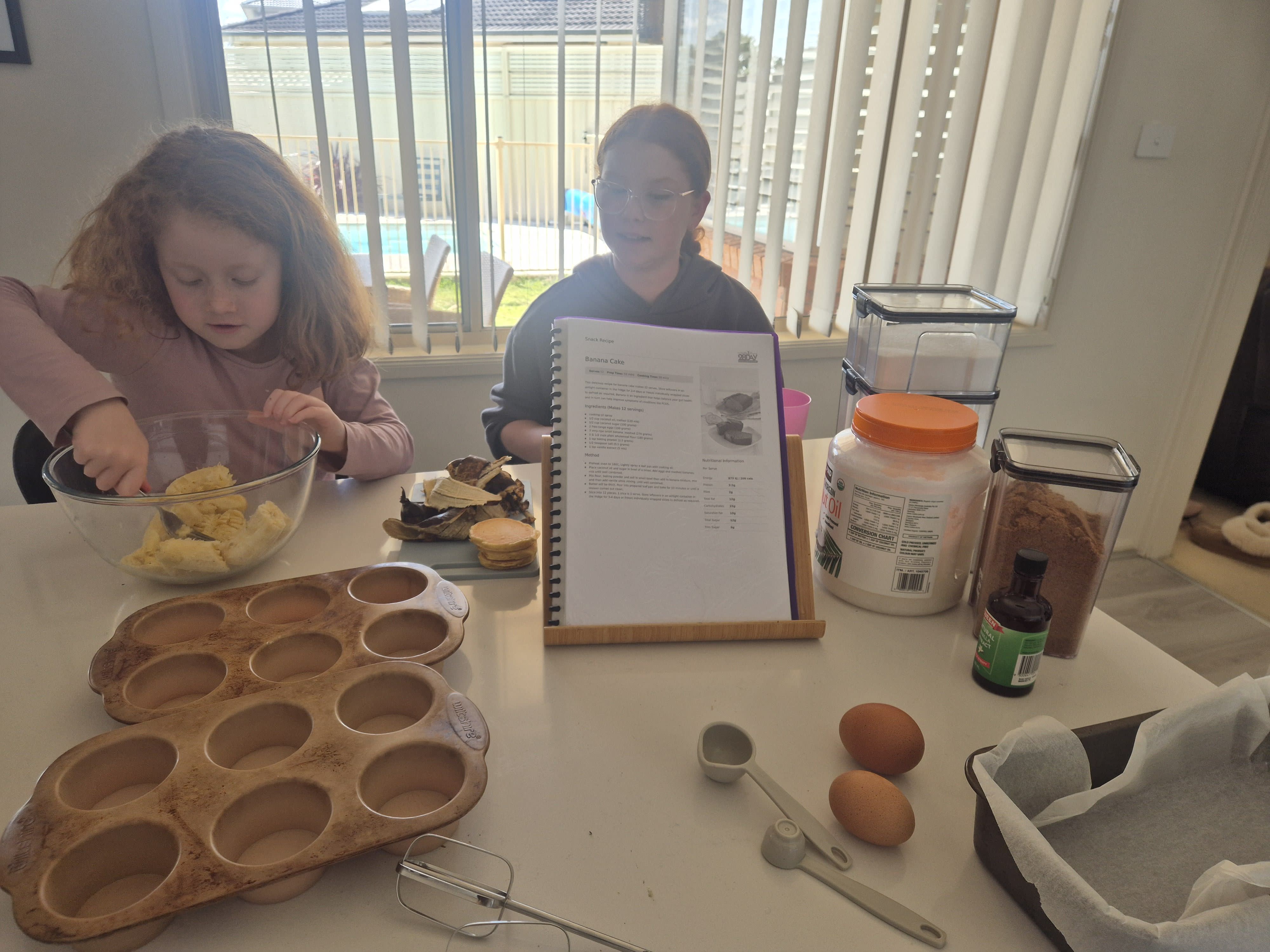
- They practiced measuring ingredients with cups and spoons while following the banana-cake recipe.
- They encountered fractions and quantities shown in the written recipe, such as portions of a cup and the number of servings.
- They developed sequencing and time-awareness by moving through preparation steps in the order provided.
- They explored practical geometry and capacity by using mixing bowls, measuring tools, and a multi-cup baking pan.
Science
- They observed how mashed bananas, eggs, flour, sugar, and other ingredients combine to form a batter.
- They practiced recognizing physical changes, including bananas changing from whole fruit to a soft mixture during mashing.
- They were introduced to the role of heat in baking, as uncooked batter changes into a firm cake when placed in the oven.
- They used simple kitchen tools to investigate texture and mixing, including a bowl, masher, whisk or beater, and baking pans.
Language Arts
- They read and interpreted a recipe, using headings such as ingredients and method to locate information.
- They practiced understanding procedural language and action verbs, such as mash, mix, pour, and bake.
- They connected written directions with real-world actions by carrying out the steps described on the recipe page.
- They could build oral communication skills by discussing the ingredients, explaining what they were doing, and sharing the finished food.
Practical Life and Social-Emotional Learning
- They demonstrated growing independence by preparing the cake mostly without adult help.
- They practiced planning and responsibility by gathering ingredients, organizing equipment, and contributing to a shared cooking task.
- They developed fine-motor coordination through mashing, measuring, stirring, cracking or handling ingredients, and using kitchen utensils.
- Their participation suggests engagement and confidence in completing a meaningful hands-on task, while adult supervision would still be important around hot ovens and sharp tools.
Tips
Tips: Turn the baking experience into a mini inquiry lesson by inviting the girls to predict how the batter will change before baking, then compare their predictions with the finished cake. Have them double or halve the recipe using a simple conversion chart, and ask them to create a picture-based method card that shows each step in order. They might also compare bananas at different stages of ripeness and describe differences in color, smell, texture, and sweetness. Finish with a short reflection about which steps they completed independently, which tools they used, and what they would change next time, while reviewing safe procedures for ovens, raw eggs, and kitchen equipment.
Book Recommendations
- Pancakes, Pancakes! by Eric Carle: A child gathers ingredients and works through the process of making pancakes, making it a strong connection to following a recipe and understanding where food comes from.
- The Little Red Hen by Jerry Pinkney: This traditional story explores cooperation, responsibility, and the many steps involved in preparing food.
- The Popcorn Book by Tomie dePaola: A lively nonfiction picture book that introduces children to food science and the changes that happen when ingredients are heated.
Try This Next
- Recipe Math Worksheet: double or halve selected ingredient amounts and complete the missing measurements.
- Baking Science Prediction Chart: draw or describe the batter before baking and the cake afterward, then record what changed.
- Recipe Sequencing Cards: illustrate the main preparation steps and place them in the correct order.
- Reflection Prompt: write or dictate three steps completed independently and one kitchen skill to practice next time.