Core Skills Analysis
Science
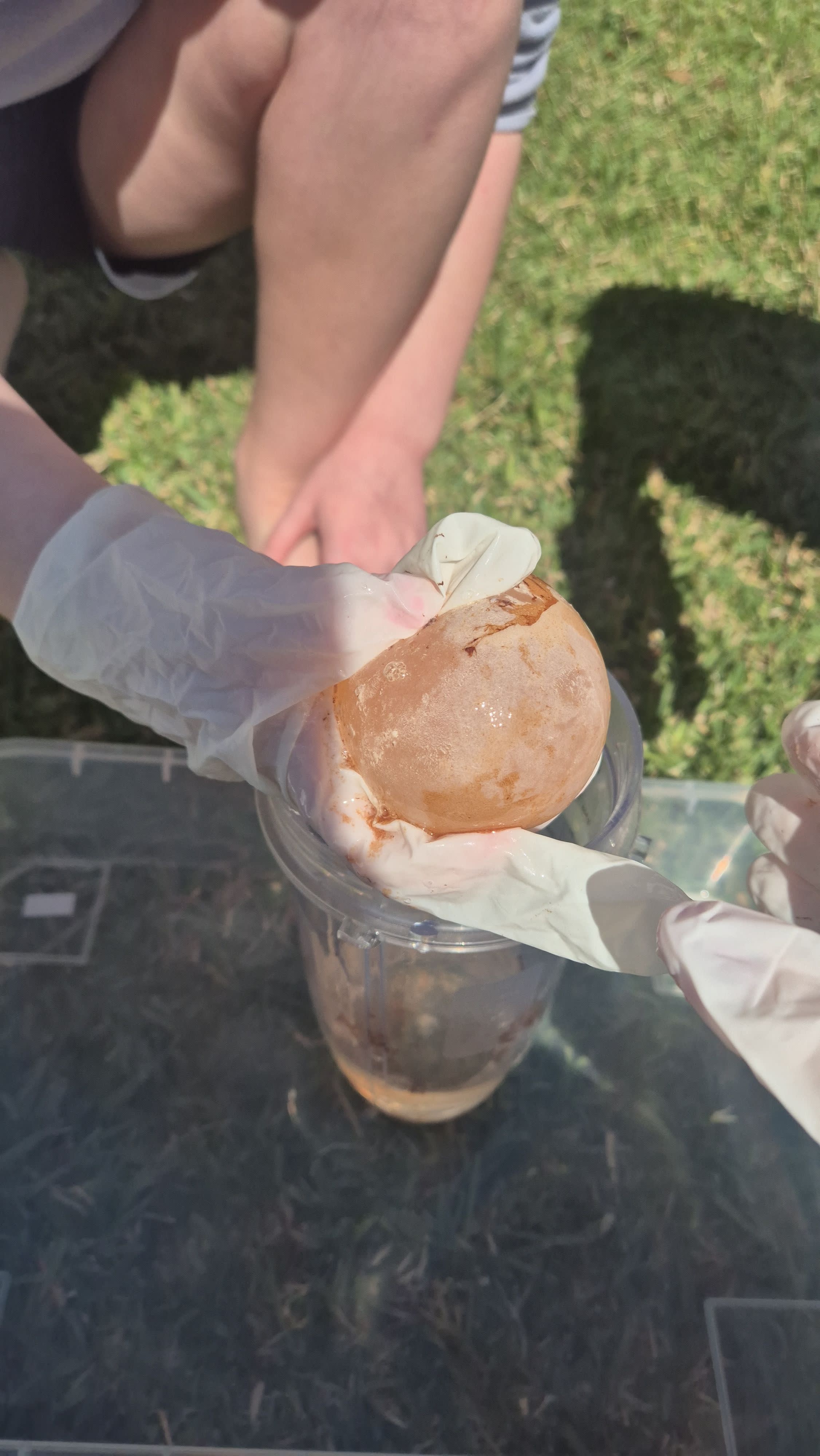
- Georgia investigated whether an egg changes after being placed in vinegar and whether it can bounce afterward.
- She observed the experiment over a seven-day period, practicing the scientific habit of monitoring change over time rather than relying on a single observation.
- The activity encouraged careful observation of the egg’s appearance and texture, including documenting it with a drawing and labels.
- By recording an investigation centered on a question, Georgia practiced the basic structure of an inquiry: question, observation, documentation, and conclusion.
Math and Time
- Tracking the experiment for seven days supported counting and understanding elapsed time.
- Georgia could compare observations from different days and identify how the egg changed across the sequence.
- The activity provided an authentic opportunity to organize information chronologically, from the beginning of the experiment through Day 7.
Language Arts
- Georgia communicated scientific information through a labeled drawing, connecting visual details with precise vocabulary.
- Documenting the experiment supported procedural writing skills because the activity followed an order across multiple days.
- The question about whether the egg bounces creates a clear purpose for writing: to explain observations and report evidence-based findings.
- Labeling encouraged Georgia to distinguish between naming what she observed and describing what happened to it.
Visual Arts
- Georgia used a drawing to represent the egg and the experiment, strengthening observation-based illustration skills.
- Adding labels required her to place words and visual details together so another person could understand the experiment.
- The activity supported scientific diagram conventions, such as showing a subject clearly and identifying important features.
Tips
Tips: Turn Georgia’s seven-day record into a simple science journal by giving each day a space for a drawing, one sentence, and a description of how the egg looks or feels; an adult should handle the vinegar and supervise all testing. At the end, invite her to answer the original bouncing question using evidence from her notes rather than guessing. She can make a before-and-after diagram, create a day-by-day timeline, and explain the experiment orally to a family member. To extend the investigation, compare the vinegar egg with an untreated egg only through careful observation and safe adult-led handling, emphasizing that experiments should be gentle and that eggs should not be eaten after contact with vinegar or outdoor surfaces.
Book Recommendations
- The Curious Kid's Science Book: 100+ Creative Hands-On Activities for Ages 4-8 by Asia Citro: A hands-on science activity book that encourages children to ask questions, make observations, and test ideas.
- Janice VanCleave's Science Around the Year by Janice VanCleave: A collection of accessible experiments that connect science learning with observation and seasonal activities.
- What Is the World Made Of? All About Solids, Liquids, and Gases by Kathleen Weidner Zoehfeld: A clear introduction to materials and their properties, providing useful background for discussing vinegar and changes in an egg.
Try This Next
- Create a seven-box observation worksheet labeled Day 1 through Day 7 with spaces for a drawing, texture words, and one sentence per day.
- Write a conclusion prompt: “Did the egg bounce? My evidence is…”
- Draw and label a before-and-after diagram of the egg, using observable details only.
- Make a sequencing quiz: Put the question, setup, seven-day observations, drawing, and conclusion in the correct order.