Core Skills Analysis
Science
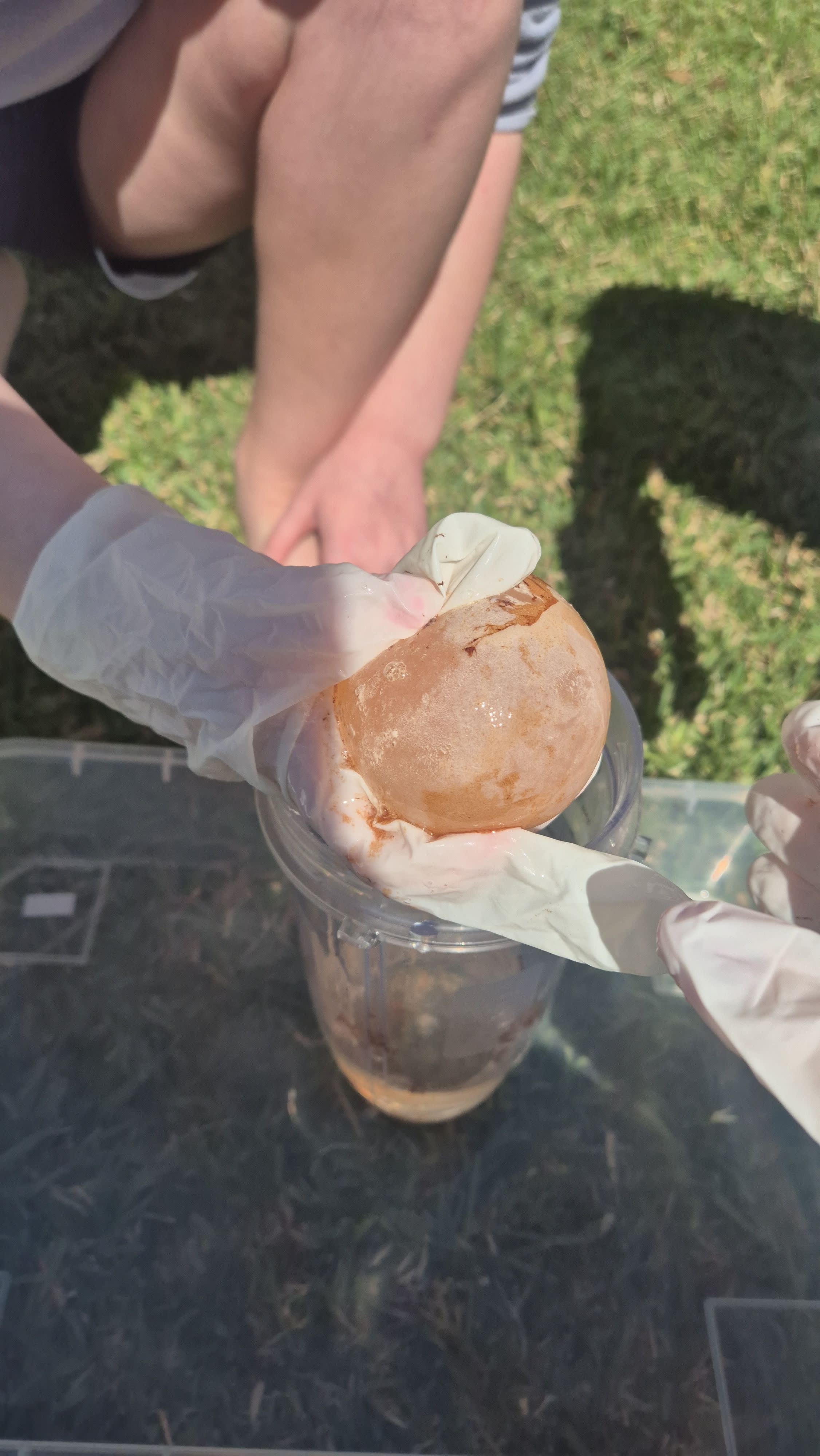
- Georgia investigated a testable question: whether an egg placed in vinegar would become bouncy.
- She observed the egg over a seven-day period, practicing patience and repeated observation rather than relying on a single result.
- The experiment introduced changes in materials and properties, including the visible transformation of the eggshell during the vinegar experiment.
- By documenting the experiment, she practiced communicating evidence from a hands-on investigation.
Language Arts
- Georgia used labels to identify important parts of her experiment, strengthening vocabulary and the connection between words and scientific observations.
- Creating a record of changes over seven days supported chronological thinking and sequencing.
- Her documentation gave her practice explaining what happened in an organized, understandable way.
- The activity encouraged precise descriptive language about how the egg looked and changed.
Mathematics
- Tracking the experiment for seven days provided practice recognizing elapsed time and organizing observations by day.
- Georgia could compare the egg’s condition at the beginning and end of the investigation, using informal comparison language such as same, different, more, or less.
- The experiment created an opportunity to represent observations in a simple table or timeline.
Visual Arts
- Georgia drew a picture to represent the experiment, using visual communication alongside written labels.
- Labeling the drawing encouraged attention to relevant details rather than creating only a decorative picture.
- The illustration helped preserve a visual record of the egg and the materials used in the investigation.
Tips
Tips: Turn Georgia’s seven-day record into a simple science journal with one dated observation, drawing, or sentence for each day. After reviewing the final result, invite her to compare her original prediction with what actually happened and explain why the evidence supports or does not support her prediction. She can create a before-and-after chart using words, sketches, or measurements such as circumference if an adult can do so safely. For an additional experiential connection, compare the vinegar egg with a raw egg in water and discuss how the two setups are alike and different; an adult should supervise all handling, keep the egg away from mouths, and wash hands and surfaces afterward.
Book Recommendations
Try This Next
- Create a seven-row observation worksheet with spaces for the day, drawing, color or texture notes, and one sentence.
- Write a prediction question: “I think the egg will ___ because ___.” Compare the prediction with the final result.
- Make a before-and-after labeled diagram of the egg and the vinegar container.
- Create a three-question review quiz: What was the egg placed in? How long was it observed? What question was the experiment testing?