Core Skills Analysis
Language Arts
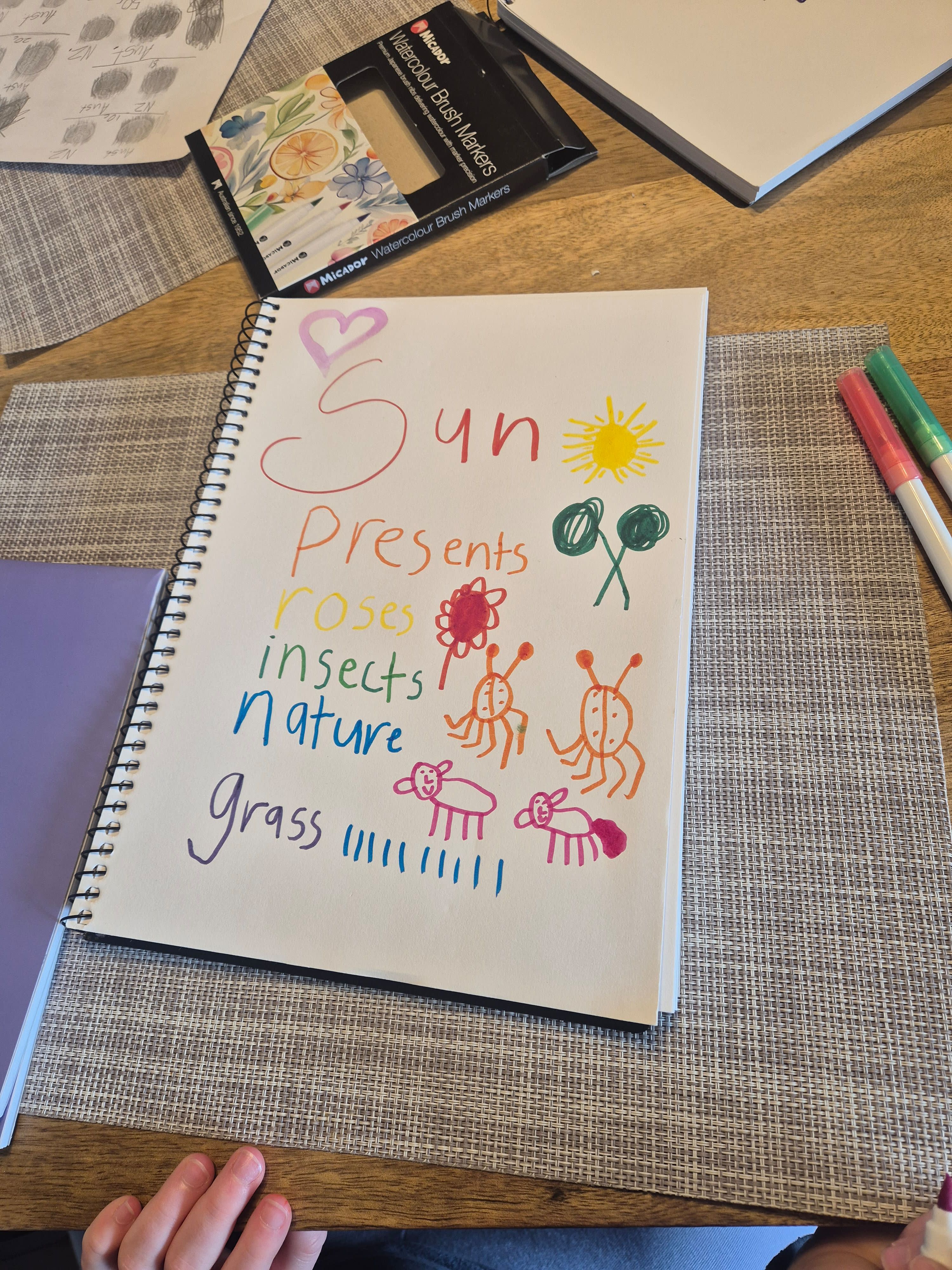
- Georgia practiced acrostic-poem structure by organizing words around the letters in “SPRING.”
- She selected spring-related vocabulary, including visible words such as “Insects” and “Grass,” connecting individual words to a central seasonal theme.
- Writing the large word “Spring” and adding descriptive words gave her practice with purposeful word choice and communicating an idea through text.
- The decorated page combines written language with illustrations, helping her present her poem as a cohesive creative composition.
Science
- The page shows awareness of observable spring features, including insects, grass, flowers, sunshine, and other nature imagery.
- Drawing insects and plants creates an opportunity to notice characteristics such as legs, wings, stems, leaves, and petals.
- The activity connects seasonal changes with living things and outdoor observations rather than treating spring as only a calendar label.
- Using nature vocabulary supports early classification skills as Georgia represents plants, animals, and weather-related features on one page.
Visual Arts
- Georgia explored color deliberately, using bright yellow, green, red, orange, pink, purple, and blue markers to create a cheerful spring palette.
- She combined lettering, borders, hearts, a sun, flowers, grass, insects, and other drawings to build a themed cover design.
- The large lettering and varied illustrations show practice with composition, visual emphasis, and arranging elements across a page.
- Decorating a program cover allowed her to make a personal artistic choice about how the season should look and feel.
Fine-Motor and Learning Skills
- Marker work required controlled hand movements for forming letters, outlining shapes, coloring details, and drawing repeated lines such as grass or insect legs.
- Creating a multi-part page involved planning where words and pictures would fit, supporting organization and visual-spatial awareness.
- Completing a personalized cover provided a concrete way to mark the beginning of a learning unit or season.
- The bright imagery and affectionate symbols, including hearts and smiling figures, suggest that Georgia engaged with the project in a cheerful, personally meaningful way.
Tips
Tips: Turn the finished cover into the starting point for a short spring study. Invite Georgia to read her acrostic aloud, explain why each word belongs with spring, and revise or add one descriptive phrase to any line she chooses. Take a brief nature walk to look for evidence of spring—such as new leaves, grass, flowers, insects, or sunshine—and record observations with words, sketches, or a simple tally. Compare the colors in her artwork with colors found outdoors, then create a second page using only observed colors and shapes. Finally, bind the cover to a small seasonal journal so she can add one drawing, sentence, or observation each week.
Book Recommendations
- The Curious Garden by Peter Brown: A richly illustrated story about gardening, environmental change, and how living things can transform a community.
- From Seed to Plant by Gail Gibbons: A clear nonfiction introduction to how plants grow, making it a useful connection to spring grass, flowers, and outdoor observations.
- Planting a Rainbow by Lois Ehlert: A colorful picture book about planting and growing flowers, connecting naturally with Georgia’s spring artwork and use of color.
Try This Next
- Create an acrostic worksheet with the letters S-P-R-I-N-G and three blank lines beside each letter for seasonal words or phrases.
- Take a spring nature-walk tally: count visible flowers, insects, grass patches, and sunny areas, then draw or label the results.
- Design a “Spring Colors” page by matching marker swatches to colors found in outdoor plants, animals, or the sky.
- Write a five-sentence observation journal entry beginning with: “I noticed…,” “It looked…,” and “I wonder…”