Core Skills Analysis
Language Arts
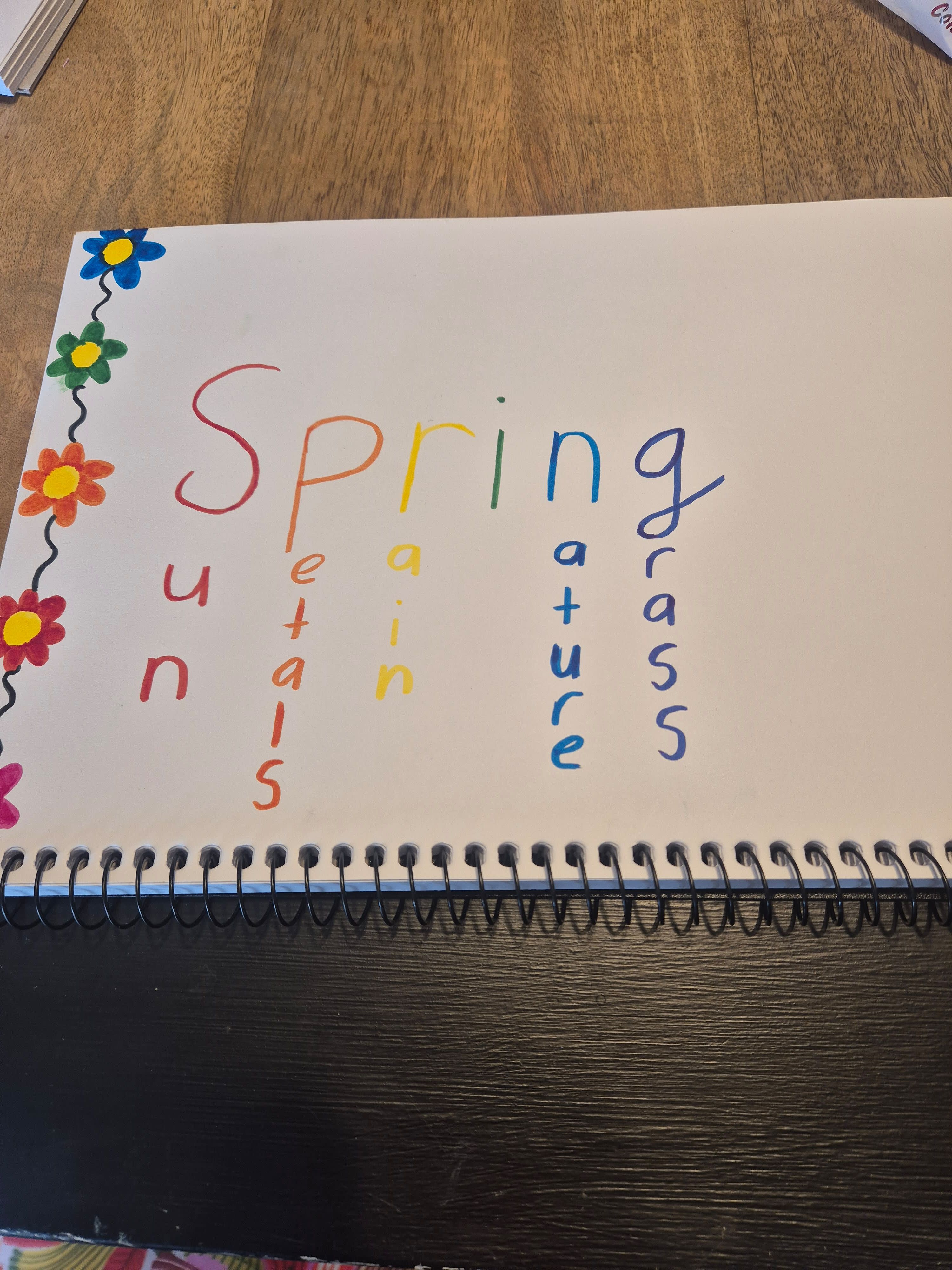
- Audrey practiced acrostic poetry by organizing writing around the letters in the word “SPRING.”
- She connected individual letters with words or ideas, building awareness of word structure and vocabulary.
- Writing the poem required attention to letter order, spelling, and the relationship between a theme and the words selected.
- The large, colorful lettering shows an effort to make written language visually appealing and meaningful.
Art
- Audrey used bright colors and repeated flower images to communicate the visual theme of spring.
- She combined handwritten words, decorative borders, and illustrations to design a personalized program cover.
- The flowers show experimentation with color choices, including contrasting petals and centers.
- Her artwork demonstrates planning and composition by placing decorations along the side of the page while leaving space for the poem.
Science
- The flower drawings show that Audrey represented a recognizable feature associated with spring.
- The activity created an opportunity to notice seasonal changes and connect spring with blooming plants.
- Decorating with flowers can support early observation skills as Audrey considers shapes, colors, petals, stems, and leaves.
- The spring theme provides a concrete starting point for exploring how plants change across seasons.
Handwriting and Fine-Motor Development
- Writing large letters with art materials required controlled hand movements and coordination.
- Drawing curved petals, stems, and letter forms provided practice with lines, shapes, and directional control.
- Using several colors required tool management and careful placement within the page.
- Completing a full cover page encouraged sustained attention and persistence during a multi-step creative task.
Tips
Tips: Turn the finished cover into a short spring study by inviting Audrey to read her acrostic aloud and explain one word or idea for each letter. Take a nature walk to look for real signs of spring, such as new leaves or flowers, and record observations with simple drawings or labels. Create a second acrostic using a spring-related word such as “FLOWER,” “RAIN,” or “GARDEN,” encouraging Audrey to brainstorm words before writing. Finally, compare the drawn flowers with real flowers or photographs and discuss similarities in petals, colors, stems, and leaves, while celebrating her original artistic choices.
Book Recommendations
- Planting a Rainbow by Lois Ehlert: A colorful picture book about planting and growing a garden, connecting naturally with Audrey’s spring flower decorations.
- The Curious Garden by Peter Brown: An engaging story about a garden’s growth and transformation that can inspire discussion about plants, care, and seasonal change.
- And Then It's Spring by Julie Fogliano: A gentle, poetic story about waiting for spring and noticing the gradual changes that happen as nature begins to grow.
Try This Next
- Acrostic worksheet: write SPRING vertically and brainstorm three possible words for each letter before choosing one.
- Nature observation page: draw a spring flower and label its petals, center, stem, and leaves.
- Spring vocabulary sort: categorize words from the poem into colors, weather, plants, animals, and actions.
- Art extension: design a second seasonal cover using a different color palette and a new acrostic word.