Core Skills Analysis
Science
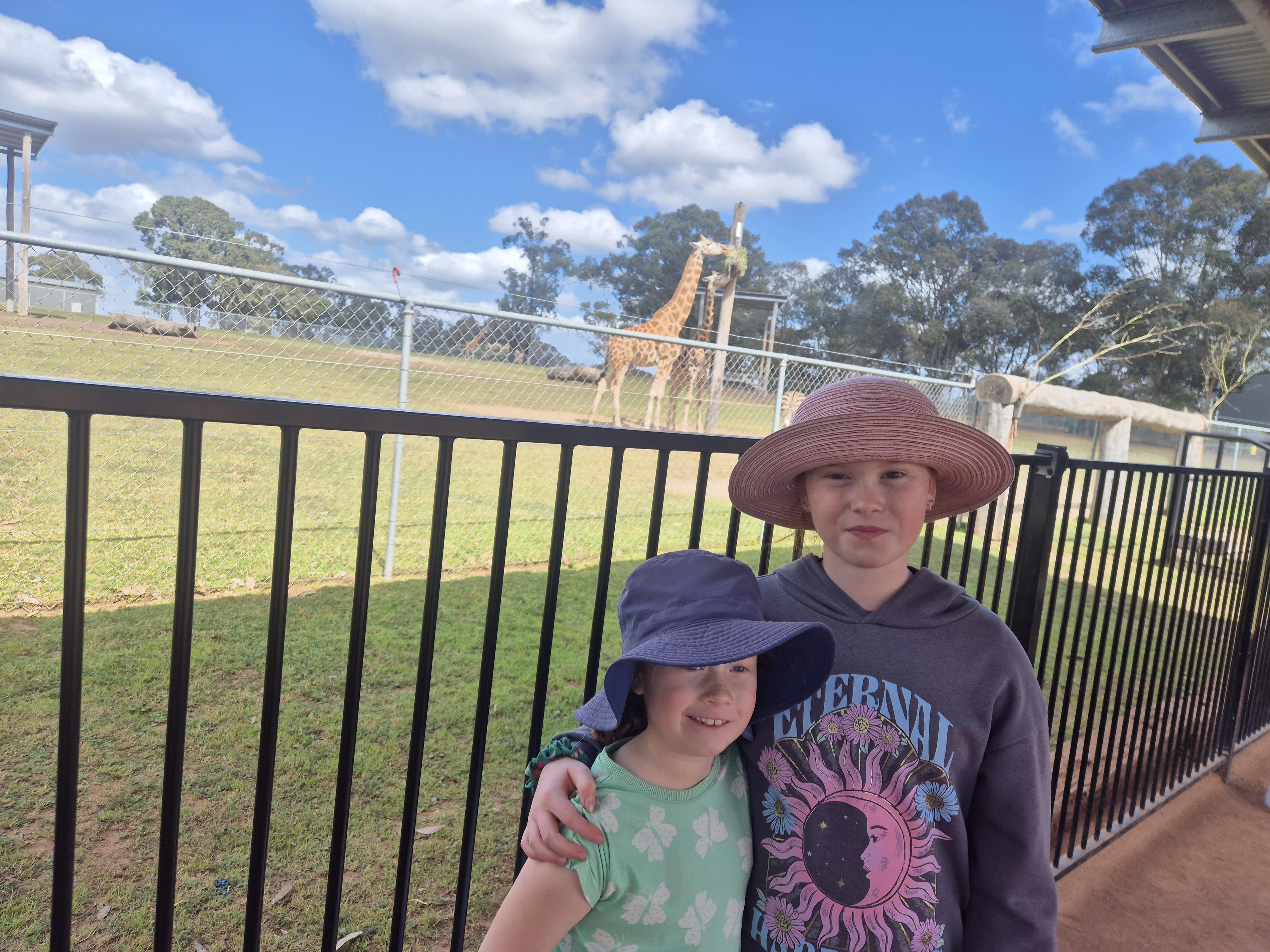
- The excursion provided a direct opportunity to observe giraffes in a zoo habitat, including their distinctive long necks, patterned coats, long legs, and upright body shape.
- The child could compare the giraffes with the surrounding trees and grass, noticing how an animal’s body features relate to its environment and feeding needs.
- Seeing animals behind fencing introduced the idea that zoos create managed habitats designed to provide safety for both animals and visitors.
- The visit encouraged firsthand observation, an important scientific skill that can lead to questions about giraffe diets, behavior, communication, and natural habitats.
Language Arts
- The child had a meaningful real-world experience that could be described using sensory and observation vocabulary such as tall, spotted, gentle, grassy, fenced, and cloudy.
- The visible giraffes provide a strong prompt for oral storytelling, such as imagining a day in the life of one giraffe at the zoo.
- The family photograph can support sequencing language by discussing what happened before, during, and after the zoo excursion.
- New topic-specific words—including giraffe, habitat, enclosure, keeper, herbivore, and savanna—could be introduced and used in sentences.
Mathematics
- The child could practice counting the visible giraffes, people, fence sections, trees, or other animals in the scene.
- The giraffe’s height creates a natural opportunity to explore informal measurement by comparing it with the height of a child, an adult, a doorway, or a tree.
- The spotted coat supports sorting and pattern activities, such as grouping spots by color or creating a repeating giraffe-inspired pattern.
- A zoo map or visit record could introduce simple positional and spatial language, including near, far, behind, beside, above, and below.
Geography and Environmental Studies
- The excursion connected the child with the idea that animals live in different places around the world, even when they are being observed locally at a zoo.
- The contrast between the zoo enclosure and a wild African grassland can prompt discussion about natural versus human-managed environments.
- The visible grass, trees, sky, fencing, and shelter encourage identification of living and nonliving parts of an environment.
- The visit can build early awareness that people have responsibilities for caring for animals, protecting habitats, and making thoughtful choices about wildlife.
Social-Emotional Learning
- The photograph shows the child participating in a shared family experience, supporting connection, belonging, and positive memory-making.
- Observing animals from behind a barrier reinforces respectful behavior around wildlife, including watching quietly and maintaining a safe distance.
- The child’s visible smile suggests enjoyment and engagement with the outing, although a single photograph cannot establish the child’s feelings throughout the entire visit.
- A family zoo visit can encourage curiosity, patience, and empathy by inviting children to think about what animals need to feel safe and healthy.
Tips
Tips: Turn the excursion into a mini inquiry project by asking the child to choose one animal and record what it looks like, eats, where it lives, and how it moves. Use household objects or a measuring tape to compare the giraffe’s approximate height with people and furniture, clearly labeling any estimates. Invite the child to draw the giraffe’s enclosure and redesign it with food, water, shade, shelter, and space for movement. Finish with a short “zoo reporter” presentation or dictated journal entry describing the most memorable observation and one question the child still has.
Book Recommendations
- Giraffes Can't Dance by Giles Andreae: A lively, rhyming picture book about Gerald the giraffe, encouraging confidence, self-expression, and appreciation of individual strengths.
- National Geographic Readers: Giraffes by Laura Marsh: An accessible nonfiction reader introducing giraffe bodies, behavior, habitats, and adaptations through engaging facts and photographs.
- The Great Kapok Tree: A Tale of the Amazon Rain Forest by Lynne Cherry: A richly illustrated environmental story that encourages children to consider animal habitats, biodiversity, and the importance of protecting forests.
Try This Next
- Create a giraffe observation worksheet with boxes for appearance, movement, food, habitat, and one question.
- Measure family members and household objects, then make a simple bar graph comparing them with an estimated giraffe height.
- Draw a zoo enclosure and label the animal’s food, water, shelter, shade, and safety features.
- Write or dictate a postcard from the giraffe explaining what it saw during the zoo visit.