Core Skills Analysis
Science: Zoology and Animal Observation
- The zoo visit provided a direct opportunity to observe giraffes in a managed habitat rather than only seeing them in pictures or videos.
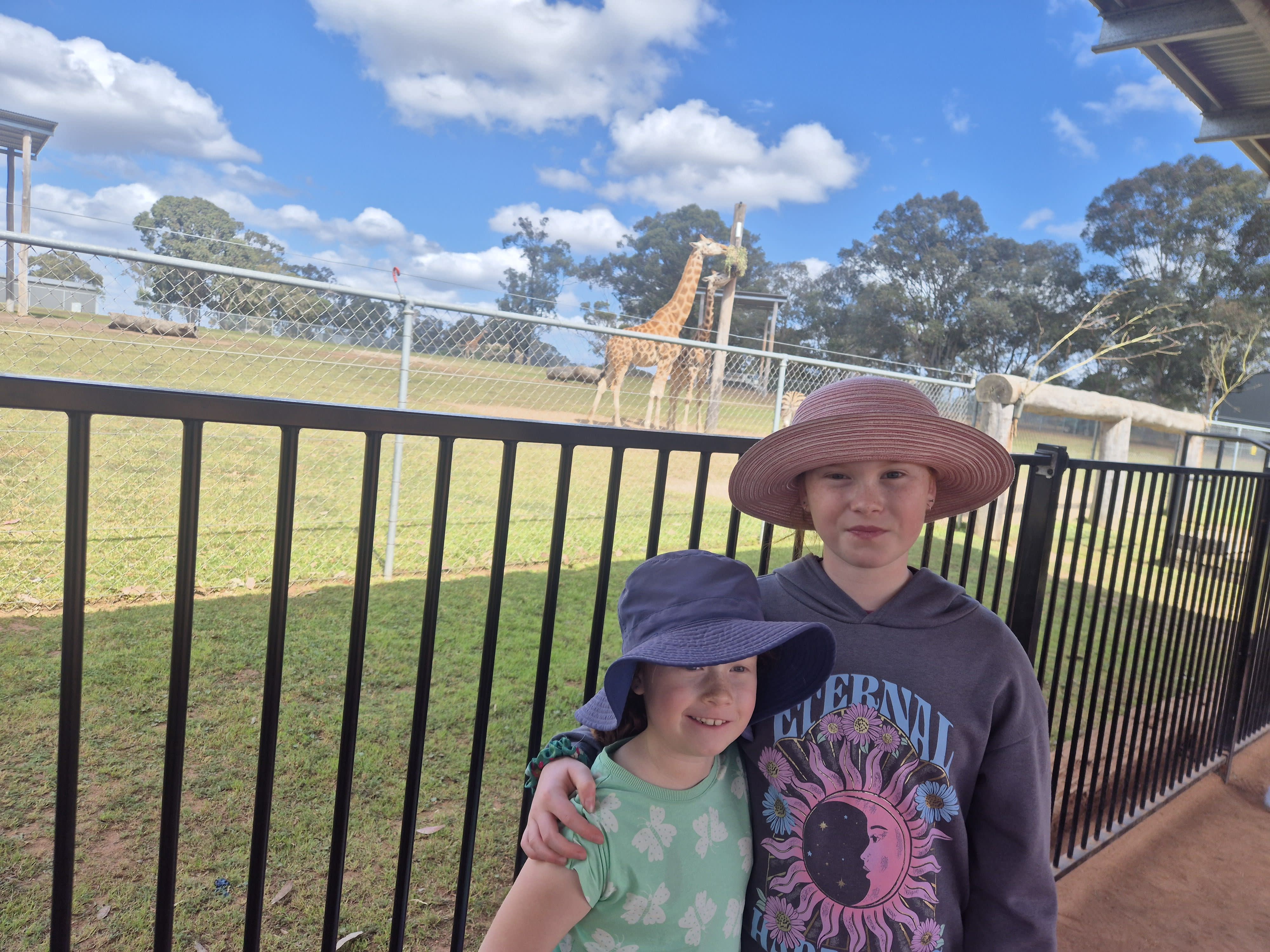
- The visible giraffe’s long neck, patterned coat, tall legs, and browsing posture support discussion of physical adaptations and how body features help an animal survive.
- The enclosure, fencing, shelter structures, grass, trees, and feeding area invite comparison between a zoo habitat and a giraffe’s natural African grassland or savanna environment.
- Observing more than one giraffe can introduce scientific questions about similarities, differences, behavior, and how animals interact with their surroundings.
Language Arts
- The excursion offers meaningful experiences for building descriptive vocabulary such as tall, spotted, patterned, enclosure, browse, habitat, and observe.
- The children can practice making careful observations by describing what the giraffe looks like, where it is standing, and what it appears to be doing.
- The photograph can serve as a prompt for an oral retelling or short narrative about a family day at the zoo.
- Children can develop question-forming skills by generating prompts such as “What does a giraffe eat?” or “Why is its neck so long?”
Mathematics
- The visible giraffes create a natural opportunity for counting animals and identifying one-to-one correspondence.
- Children can compare measurable attributes, including the giraffe’s height with the height of people, the fence, or nearby structures.
- The enclosure supports spatial-language practice using words such as behind, inside, beside, above, near, and far away.
- A zoo map or exhibit route can extend the experience into sequencing, positional reasoning, and simple distance or time comparisons.
Geography and Social Studies
- The excursion introduces the idea that zoos are places where people learn about animals from different parts of the world.
- A follow-up map activity can connect giraffes with Africa while distinguishing the animal’s geographic origin from its current zoo location.
- The visible fencing and habitat structures support discussion of how communities create safe spaces for people and animals to share an environment.
- The family setting highlights learning through shared community experiences, observation, and respectful behavior in a public place.
Social-Emotional Learning
- The photograph shows the family together during an outdoor experience, supporting connection, shared attention, and family participation.
- The children’s visible smiles and close interaction suggest enjoyment and positive engagement with the outing, although emotions should be confirmed through conversation.
- Watching an animal from behind a barrier can reinforce patience, gentle observation, and respect for an animal’s space.
- A shared zoo memory can encourage children to express preferences, curiosity, excitement, or questions about what they saw.
Tips
Tips: Turn the excursion into a short investigation by inviting the children to draw the giraffe and label its visible body parts, then compare those features with their own bodies. Together, locate Africa and the zoo’s location on a map, and discuss why the giraffe’s enclosure includes grass, trees, shelter, fencing, and feeding areas. Read one giraffe or zoo book and ask the children to identify facts they remember from the visit versus new information from the book. Finish with a family “zoo scientist” journal in which each child records one observation, one question, and one respectful action they practiced during the outing.
Book Recommendations
- Giraffes Can't Dance by Giles Andreae: A lively picture book that encourages children to notice giraffe features while exploring confidence, movement, and individuality.
- National Geographic Readers: Giraffes by Laura Marsh: An accessible nonfiction introduction to giraffe bodies, behavior, habitats, and everyday life.
- Dear Zoo by Rod Campbell: An interactive lift-the-flap story about animals sent from a zoo, ideal for connecting a young child’s zoo experience with animal vocabulary and prediction.
Try This Next
- Create a giraffe observation worksheet with boxes for body parts, colors or patterns, behavior, habitat features, and one child-generated question.
- Make a height-comparison chart using yarn or paper strips to compare a child, an adult, a fence, and an estimated giraffe height.
- Draw a zoo map showing the giraffe enclosure, viewing area, shelter, grass, trees, and walking route.
- Write or dictate a five-sentence “Dear Giraffe” letter containing three observations and two questions.