Core Skills Analysis
Physical Education
- Observed rugby league as a live physical activity, providing a real-world example of running, passing, tackling, positioning, and teamwork.
- Could begin recognizing how athletes use body control, speed, balance, and coordination during a competitive game.
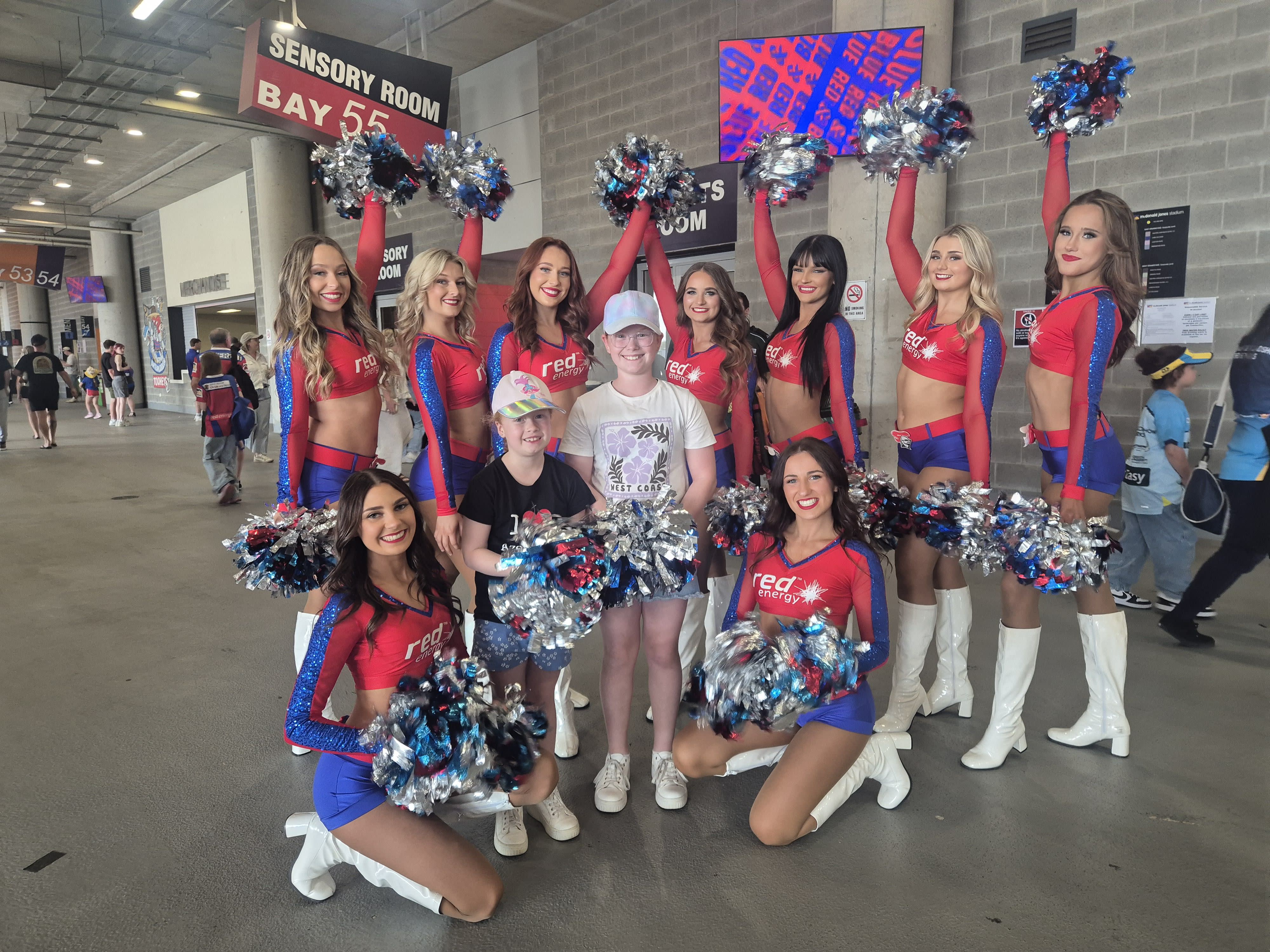
- The cheerleaders’ poses, movement, and pom-pom routines offered another example of rhythm, flexibility, choreography, and physical performance.
- Seeing players and performers in person can make sports rules, roles, and movement patterns more meaningful than learning about them only from a screen.
Mathematics
- The stadium environment provided opportunities to notice numbers and labels, including bay and seating signs visible in the photograph.
- A live game can support counting practice through players, teams, scoring events, game periods, or the number of performers present.
- The child could explore comparison questions such as which team has more points, how many minutes remain, or how far spectators traveled to attend.
- The event creates a practical context for learning about time, sequencing, measurement, data collection, and simple graphs.
Language Arts
- Attending the game supplied material for a first-person recount describing what happened before, during, and after the match.
- The child could practice precise sensory vocabulary for the stadium setting, including sights, sounds, movement, clothing, signs, and crowd activity.
- Reading signs such as 'Sensory Room' and 'Bay 55' connects environmental print with functional reading and understanding information in a public place.
- The experience supports speaking and listening as the child explains favorite moments, asks questions about the game, or retells an event in the correct order.
Social Studies and Community
- A live WNRL game demonstrates how sporting events bring athletes, families, staff, performers, and spectators together as a community.
- The photograph shows shared public-space behaviors, including following venue signs and gathering respectfully around the event.
- The event can introduce discussion of the roles involved in professional sport, such as players, coaches, officials, entertainers, security staff, and venue workers.
- The visible sensory room provides an opportunity to notice how public venues can include spaces intended to support different visitor needs.
Arts and Media
- The cheerleaders’ coordinated red, blue, and silver costumes demonstrate how color, pattern, sparkle, and branding contribute to visual presentation.
- The group photograph encourages discussion of composition, including foreground and background, people’s poses, framing, and the use of a large indoor venue as the setting.
- The digital screen and team-themed decorations show how visual media helps create atmosphere and communicate identity at a sporting event.
- The child can compare a still photograph with a live experience and discuss what a photograph captures well and what it cannot show, such as sound, motion, and crowd energy.
Social-Emotional Learning
- The child appears engaged and comfortable posing with the performers, with a visible smile suggesting enjoyment and positive participation.
- The shared photograph reflects connection, celebration, and confidence in joining a memorable community experience.
- Watching a team and its supporters can prompt discussion of encouragement, belonging, sportsmanship, and how people respond to success or disappointment.
- The event may help the child practice navigating a busy public environment while staying with trusted adults and participating appropriately.
Tips
Tips: Turn the game into a short inquiry project by inviting the child to recount three memorable moments, draw the stadium layout, and label signs or important locations they noticed. Together, make a simple score or event timeline using numbers, times, and symbols, taking care to include only details the child remembers or can verify. Explore rugby league respectfully by looking up the official rules or asking an experienced fan to explain scoring, player roles, and sportsmanship. Finish with a creative response: design a team flag, write a thank-you note to a performer or athlete, or create a short photo caption that explains what the picture shows and how the experience felt.
Book Recommendations
- The Huddle by Matt Tavares: A beautifully illustrated picture book about teamwork, persistence, and the shared excitement of a sporting event.
- You Are a Champion by Marcus Rashford with Carl Anka: An encouraging guide for children about confidence, resilience, goal-setting, and learning from challenges in sport and everyday life.
- The Most Magnificent Thing by Ashley Spires: A humorous story about perseverance, managing frustration, and improving through practice—ideas that connect naturally with athletic teamwork and performance.
Try This Next
- Game-day observation worksheet: record five things seen, four sounds heard, three people’s roles, two numbers from signs or the event, and one favorite moment.
- Create a simple rugby league scoreboard and timeline using invented, clearly labeled practice data; add points, periods, and elapsed time.
- Draw and label a stadium map showing the sensory room, bays, seating areas, performers, and field direction based only on what was observed.
- Writing prompt: 'If I could interview one person from the game, I would ask...' Include five questions about their role, preparation, teamwork, or performance.