Core Skills Analysis
Science
- The student observed how fire behaves in a realistic kitchen-fire demonstration and saw how a fire blanket can help control flames.
- Going through the smoke tent provided a concrete experience of how smoke can affect visibility and why people need to stay low and follow an evacuation plan during a house fire.
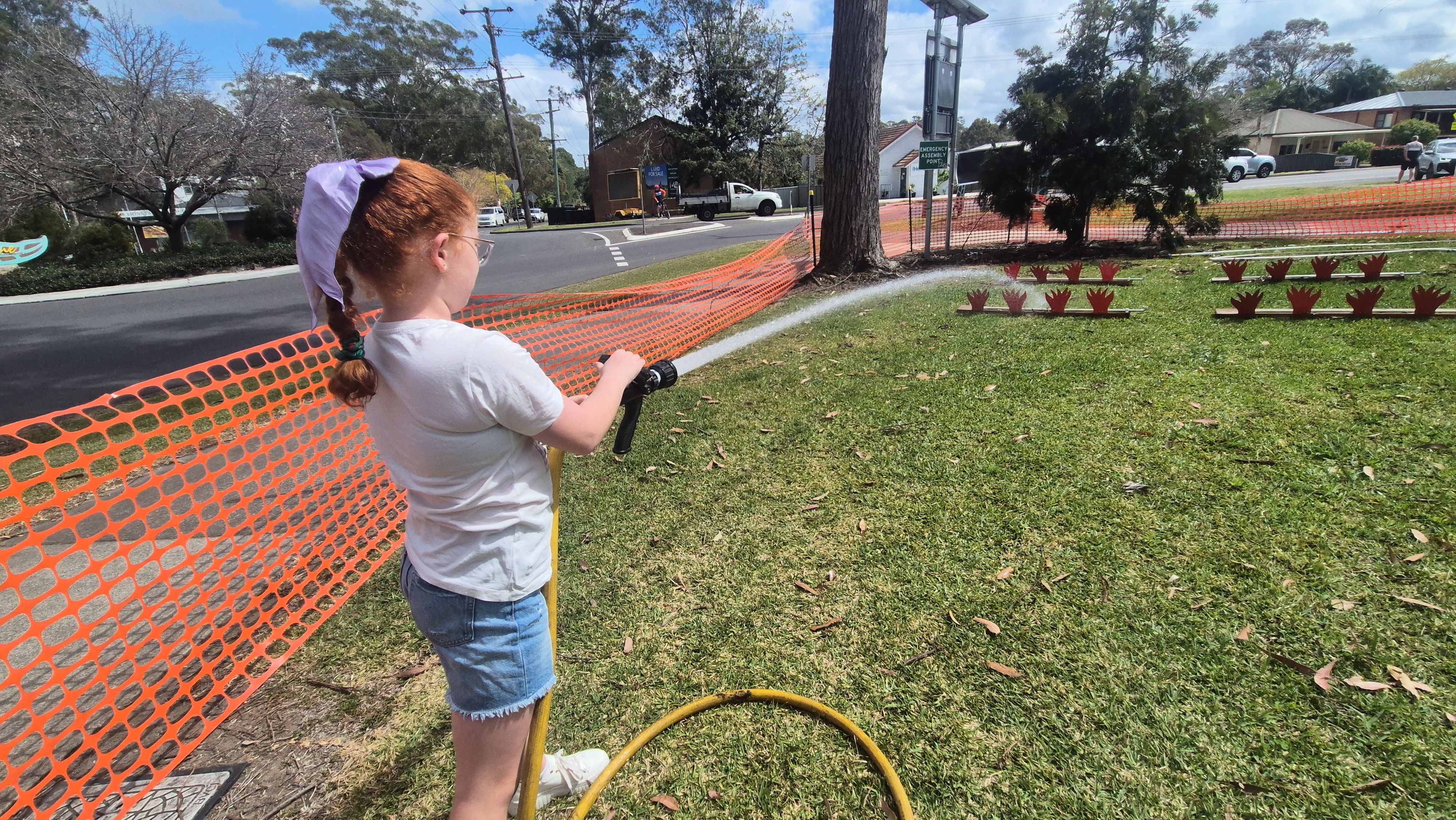
- Using a fire hose offered hands-on exploration of water as a tool for cooling and stopping a fire, while also demonstrating the force and movement of flowing water.
- The activity connected scientific ideas about heat, smoke, combustion, and fire suppression to equipment used by trained professionals.
Health and Safety Education
- The student practiced recognizing that fires in homes require a calm, immediate, and safety-focused response rather than curiosity or delay.
- The smoke-tent simulation reinforced the importance of escaping from a smoke-filled space and understanding that visibility may be limited.
- Learning about a fire blanket introduced an important household safety resource and showed how emergency tools are used correctly by trained people.
- Speaking with fire and rescue crews helped the student learn directly from safety professionals about the roles and procedures involved in emergencies.
Civics and Community Studies
- Meeting RFS and fire-and-rescue crew members showed how local emergency services contribute to the safety and wellbeing of the community.
- Climbing into a fire truck helped the student connect emergency workers’ responsibilities with the specialized vehicles and equipment they use.
- The open day demonstrated how public services educate community members, not just respond to emergencies.
- The experience encouraged respect for teamwork, preparation, and service-oriented careers.
Language Arts
- Speaking with several crew members gave the student practice listening to explanations, asking questions, and learning specialized vocabulary such as smoke tent, fire blanket, rescue, and hose.
- The student can sequence the experience by recounting the open day in order: meeting crews, exploring the truck, entering the smoke tent, watching demonstrations, and using the hose.
- The activity provides material for a detailed personal narrative using sensory observations, such as what the smoke simulation looked like and how the hose felt to operate.
- Discussing the event afterward supports clear oral communication and the ability to explain safety procedures to another person.
Physical Development and Emotional Learning
- Climbing into the fire truck and handling the hose involved coordination, balance, grip strength, and controlled movement.
- Participating in a simulated emergency environment required the student to manage unfamiliar sights and sensations while following adult guidance.
- The student’s participation suggests curiosity and willingness to engage with practical, community-based learning experiences.
- The activity may also strengthen confidence by allowing the student to try real equipment in a supervised setting and interact directly with emergency professionals.
Tips
Tips: Turn the visit into a mini fire-safety study by having the student draw or describe the safest way to leave a smoke-filled room, then compare the idea with guidance from a trusted local fire service. Create a simple emergency vocabulary wall using words heard during the open day, and ask the student to explain each term in their own words. For a science extension, demonstrate how water changes the temperature of a warm object using safe household materials rather than any flame, and discuss why only trained adults should handle fire blankets, hoses, or fires. Finally, invite the student to write a thank-you note to the RFS or fire-and-rescue crew, including one new fact learned and one question they still have.
Book Recommendations
- Firefighters A to Z by Chris L. Demarest: An alphabet picture book introducing children to firefighters, their equipment, emergency work, and the vocabulary connected with fire stations.
- The Fire Cat by Esther Averill: A classic story about a cat who finds purpose at a fire station, offering a gentle connection to firehouse routines, teamwork, and helping others.
- Fireboat: The Heroic Adventures of the John J. Harvey by Maira Kalman: A true-inspired picture book about a fireboat and the people who used it to help during a major emergency, highlighting community service and courageous teamwork.
Try This Next
- Create a fire-safety sequencing worksheet with pictures or prompts for meeting the crew, entering the smoke tent, observing the fire-blanket demonstration, and using the hose.
- Write five quiz questions: What was the smoke tent designed to simulate? What did the fire blanket do? Who operates fire trucks? Why is smoke dangerous? What equipment did the student use?
- Draw and label a fire truck, including any equipment the student remembers seeing or using.
- Write a thank-you letter to the RFS or fire-and-rescue crew describing one memorable demonstration and one safety lesson.