Core Skills Analysis
Science
- Observed how a kitchen fire can behave and how a fire blanket can help control it.
- Explored the role of smoke in a house-fire simulation by moving through a smoke tent.
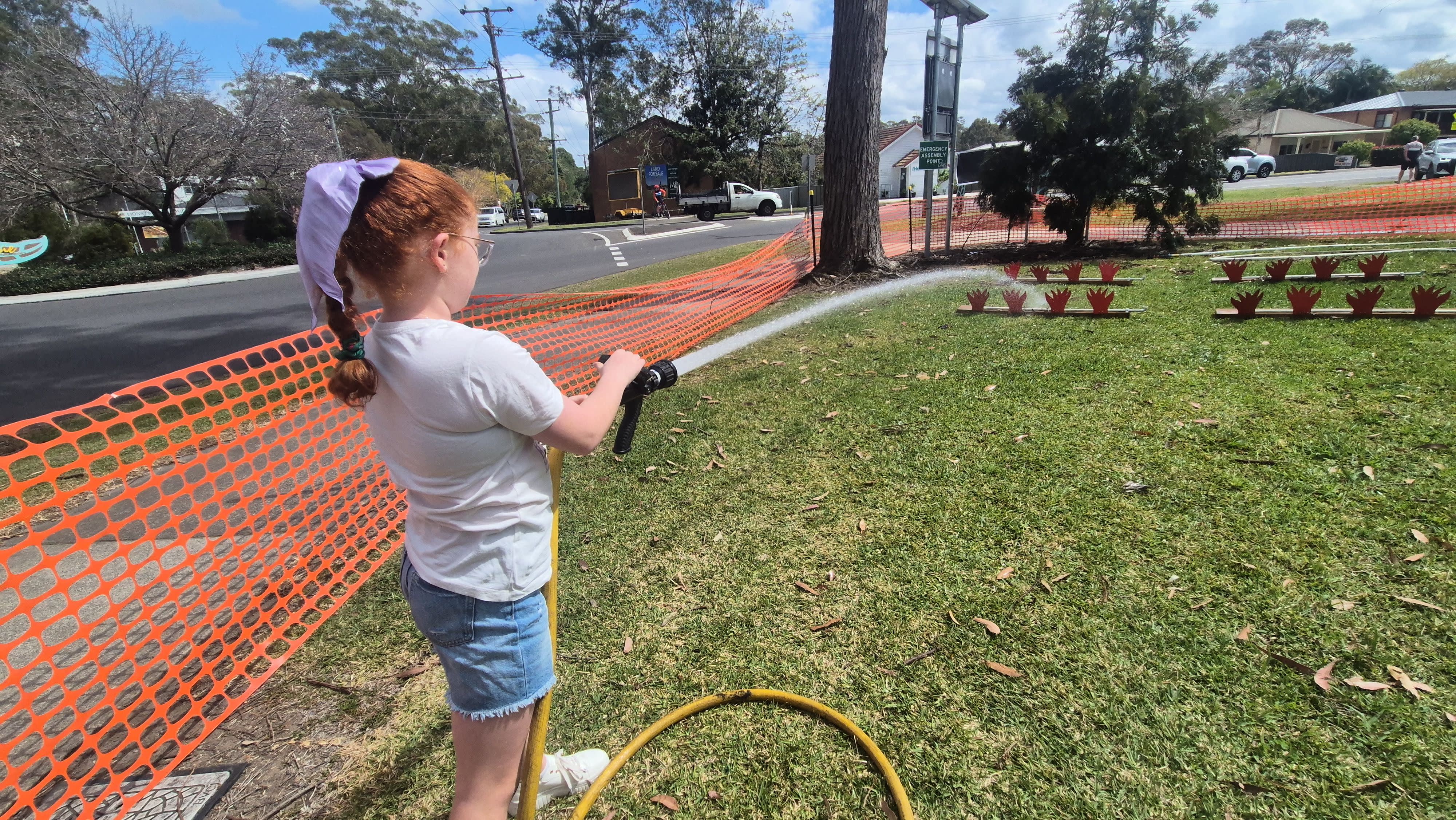
- Investigated how water is delivered through a fire hose and experienced the force and direction needed to aim it.
- Connected fire science to real-world emergency equipment, including fire trucks, hoses, smoke-simulation materials, and fire blankets.
Health and Fire Safety
- Practiced responding to a simulated house fire in a controlled environment rather than simply hearing about fire emergencies.
- Learned that different fire situations require specific safety tools and procedures, such as a fire blanket for a kitchen fire.
- Built familiarity with emergency workers and fire-rescue equipment, which can make safety instructions feel more understandable and approachable.
- The child’s attentive participation and willingness to enter the smoke tent and use the hose suggest growing confidence with supervised safety-learning experiences.
Civics and Community Studies
- Learned about the responsibilities of RFS crew members and fire-and-rescue personnel through direct conversation.
- Recognized the fire station as an important community service that helps protect people and property.
- Saw how emergency services rely on teamwork, specialist equipment, demonstrations, and public education.
- Connected classroom ideas about community helpers with real people performing public-safety roles during an open day.
Language Arts and Communication
- Strengthened listening and speaking skills by talking with RFS and fire-and-rescue crew members.
- Encountered topic-specific vocabulary such as smoke tent, fire blanket, fire hose, rescue, and emergency response.
- Practiced asking questions, observing demonstrations, and communicating with adults in a community setting.
- Can develop sequencing skills by retelling the experience in order: meeting the crew, exploring the truck, entering the smoke tent, watching the kitchen-fire demonstration, and using the hose.
Personal and Social Development
- Practiced following adult guidance during potentially unfamiliar activities, including the smoke-tent simulation and hose use.
- Developed confidence through hands-on participation in an organized public event.
- Experienced how calm preparation, teamwork, and trusted helpers can support people during emergencies.
- The child appears engaged and curious, focusing closely on the hose activity while participating within the marked safety area shown in the photograph.
Tips
Tips: Turn the visit into a short “fire-safety investigation” by having the child draw and label the equipment they saw, then retell the day in five ordered steps. Together, discuss what the smoke-tent simulation was designed to demonstrate and compare the roles of a fire hose and a fire blanket without recreating any fire at home. Invite the child to write or dictate three questions they would ask a firefighter, and look for answers using the station’s educational materials or a library book. For a creative extension, design a community fire station on paper, including labeled rooms, vehicles, safety equipment, and the people who work there.
Book Recommendations
- The Fire Cat by Esther Averill: A classic story about a cat who finds purpose and belonging by becoming a firehouse cat, offering an accessible connection to fire stations, teamwork, and helping others.
- Firefighters A to Z by Chris L. Demarest: An alphabet picture book introducing children to firefighter tools, actions, and responsibilities through engaging illustrations and simple text.
- Fire Truck Dreams by Sherri Duskey Rinker: A gentle picture book centered on fire trucks and the people who operate them, connecting naturally with climbing into a fire truck and learning about emergency vehicles.
Try This Next
- Create a sequencing worksheet with five boxes for the child to draw and label the main events of the fire-station visit.
- Make an equipment-matching quiz: connect fire hose, fire blanket, smoke tent, and fire truck to their observed purpose.
- Write or dictate a short thank-you note to the RFS and fire-rescue crew, including one new thing learned.
- Draw and label a safe community fire station showing the crew, truck, hose, and fire-safety equipment.