Core Skills Analysis
Mathematics
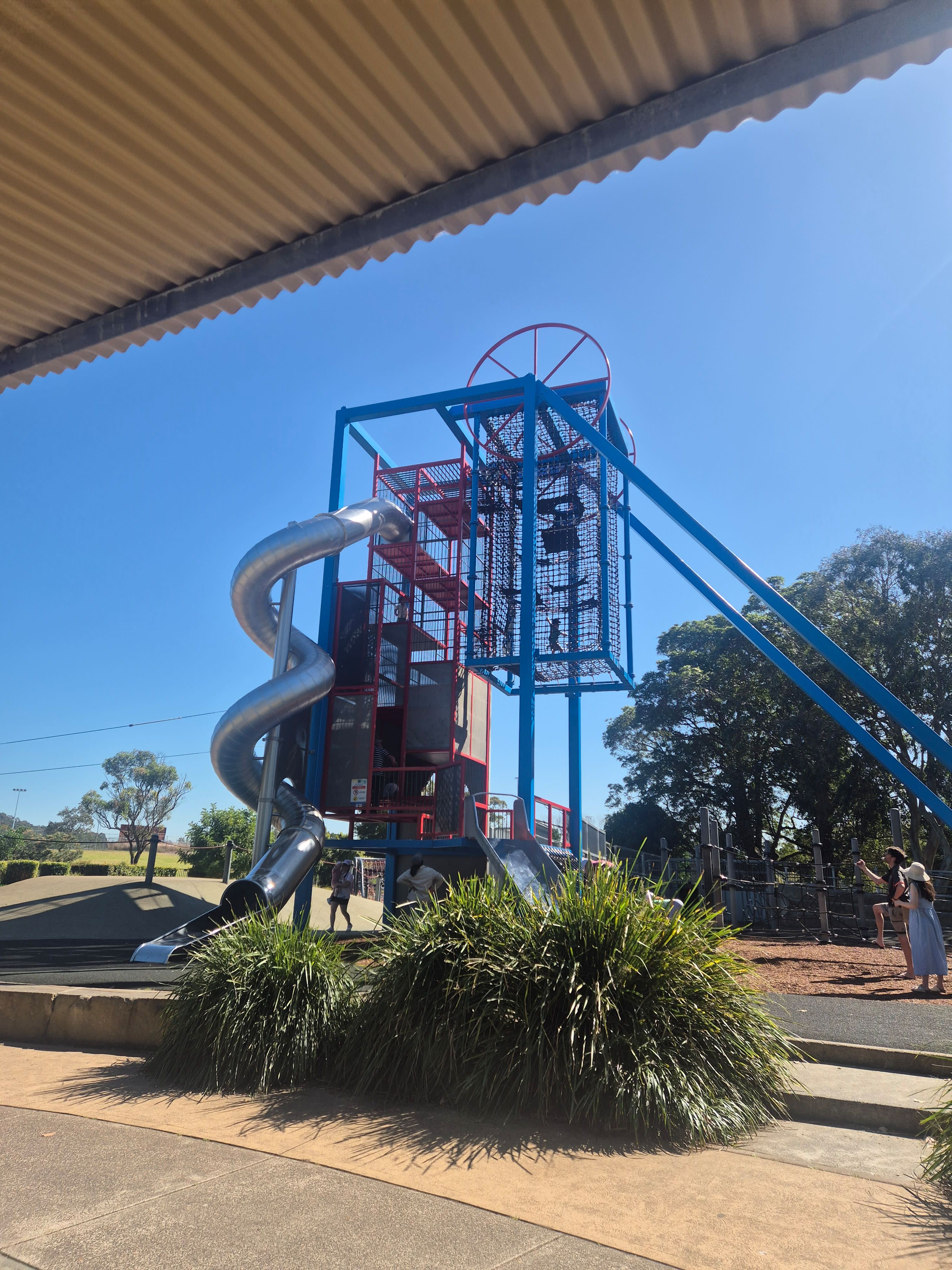
- The playground provided opportunities to notice and compare shapes, including circular equipment, straight support beams, curved slides, and rectangular climbing frames.
- The child could explore spatial concepts such as high and low, above and below, inside and outside, near and far, and around and through.
- The structure invited informal measurement questions, such as which slide is longer, which part is tallest, or how many steps lead to a platform.
- The repeated bars, ladder sections, and net patterns offered practice with counting, sequencing, and recognizing patterns.
Science and Engineering
- The playground illustrated how strong frames, beams, rails, and platforms work together to support people and equipment.
- The slides created a natural setting for discussing motion, including how height, smooth surfaces, and gravity help objects move downward.
- The child could observe how different materials—such as metal, mesh, plastic, and painted structural supports—are used for different purposes.
- The new equipment encouraged observation and questioning about how playground designers balance movement, challenge, stability, and safety.
Language Arts
- The visit created opportunities to build descriptive vocabulary with words such as tall, curved, shiny, slippery, enclosed, elevated, sturdy, and colorful.
- The child could practice sequencing language by describing how someone might approach the equipment, climb, move across, and come down.
- The activity supported oral storytelling through imaginative prompts about where a slide, climbing net, or tower might lead.
- Talking about the visit could develop observation-based communication by encouraging the child to name details visible in the photograph and explain what they noticed.
Physical Development and Personal Skills
- The playground design offered varied movement possibilities, including climbing, balancing, sliding, reaching, and navigating through enclosed spaces.
- Different routes and equipment sections could support coordination, body awareness, balance, and planning of movements.
- The visible safety rails, enclosed climbing areas, and landing zones provided a starting point for discussing responsible playground behavior.
- The statement that there was 'lots of new equipment to explore' suggests curiosity and enthusiasm about encountering an unfamiliar environment.
Tips
Tips: Turn the visit into a short outdoor investigation by choosing three pieces of equipment and asking the child to describe each one using shape, material, height, and function words. Invite the child to count visible steps, bars, or circular features, then compare which parts appear longer, higher, or wider. For a science extension, build a small model playground from cardboard tubes, craft sticks, and paper, testing which designs stay stable when gently pressed. Finish with a language activity in which the child draws the most interesting piece of equipment and dictates or writes a few sentences explaining how someone could use it safely.
Book Recommendations
- Maisy Goes to the Playground by Lucy Cousins: A colorful early-childhood story that connects naturally to exploring slides, climbing equipment, and playground routines.
- The Playground by Lizi Boyd: A visually engaging, nearly wordless picture book that encourages children to observe playground details and create their own story.
- How Do You Lift a Lion? by Robert E. Wells: A nonfiction picture book introducing simple machines and mechanical ideas that can extend questions about how playground structures work.
Try This Next
- Playground Shape Hunt: Find and draw three circles, three rectangles, and three curved lines in the equipment.
- Design-a-Playground Worksheet: Sketch a playground, label its materials, and add one safety rule.
- Motion Prediction Quiz: Ask, 'Which path would move downward?' and 'What might make a slide feel faster or slower?'
- Vocabulary Writing Prompt: Complete the sentence, 'The most interesting playground feature was ___ because ___.'