Core Skills Analysis
Math
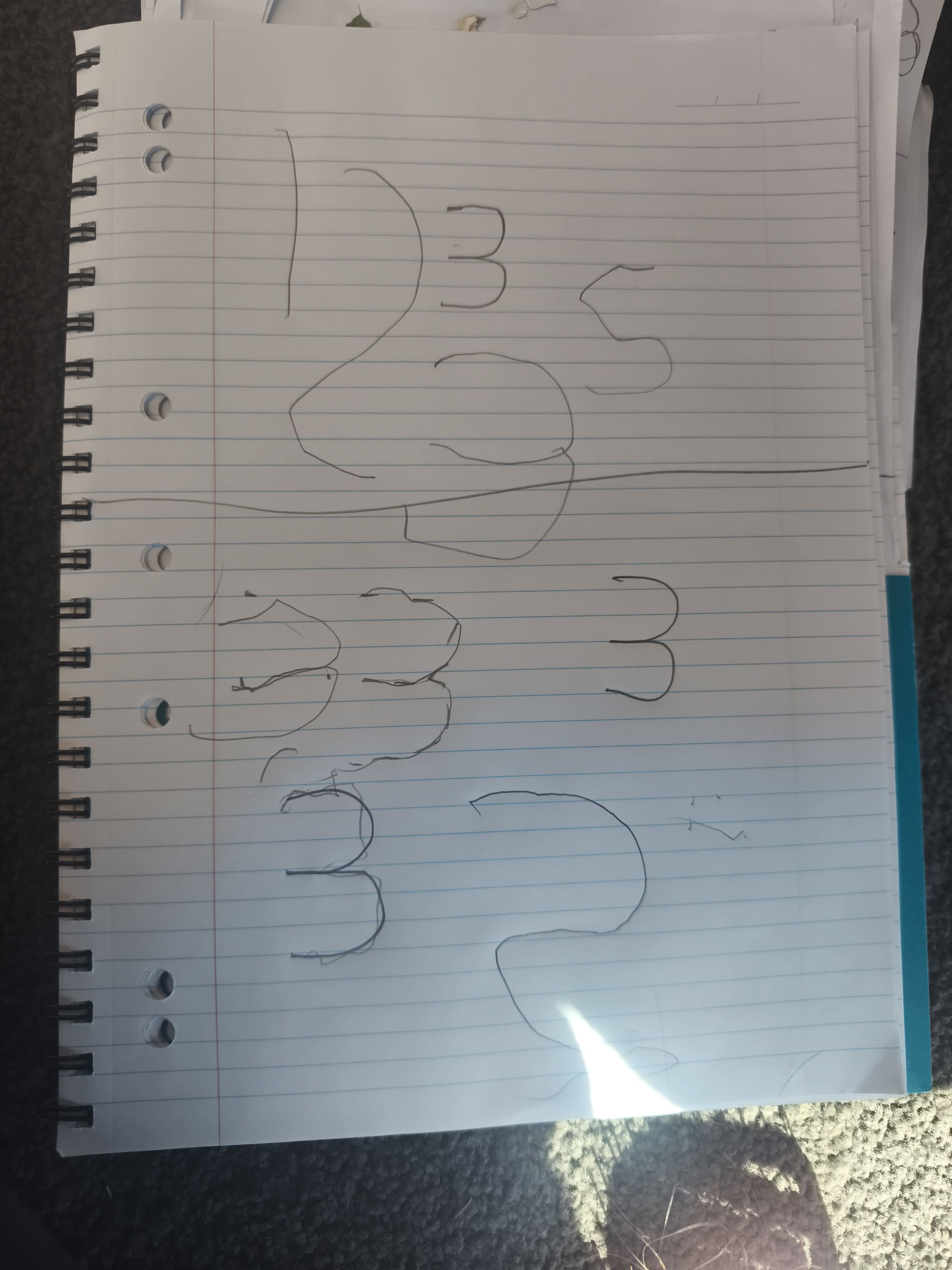
The child practiced writing numbers and spent extra time reviewing how to form 3 and 5. The lined paper provided a guide for placing and shaping the numerals as the child worked on them. This activity supported number-writing practice and familiarity with the written forms of 3 and 5. Working through the challenging numerals showed the child was continuing to engage with the task.
Tips
Tips Turn numeral practice into a short, playful routine: invite the child to trace 3 and 5 in the air, then write them on paper, in sand, or with washable paint. Look for groups of three and five everyday objects—such as three apples or five toy cars—and match each group to its numeral. Make a simple number hunt around the home, then finish by letting the child choose which numeral to practice and explain how they remember its shape.
Book Recommendations
- Ten Black Dots by Donald Crews: A playful picture book that connects quantities from one to ten with groups of dots, offering a visual way to explore counting and numbers.
- Mouse Count by Ellen Stoll Walsh: A counting story in which a snake gathers mice, giving young readers an engaging way to notice quantities and number order.
- Chicka Chicka 1, 2, 3 by Bill Martin Jr. and Michael Sampson: A lively number book that introduces counting through a rhythmic story and colorful illustrations.
Try This Next
- Make a numeral-tracing page for 3 and 5, with dotted outlines and space to write each number independently.
- Number hunt: find three objects and five objects, then write the matching numerals beside each group.
- Draw a picture containing exactly 3 stars and 5 circles, and label each group with its numeral.