Core Skills Analysis
Science
- The child took part in a conversation about pollinators alongside making a butterfly craft, connecting butterflies with the wider topic of pollination.
- The activity provided an opportunity to consider how butterflies relate to flowers and other living things.
- Discussing pollinators encouraged awareness of the role insects and other animals can play in nature.
- The butterfly theme offered a starting point for exploring how living things interact with their environment.
Visual Arts
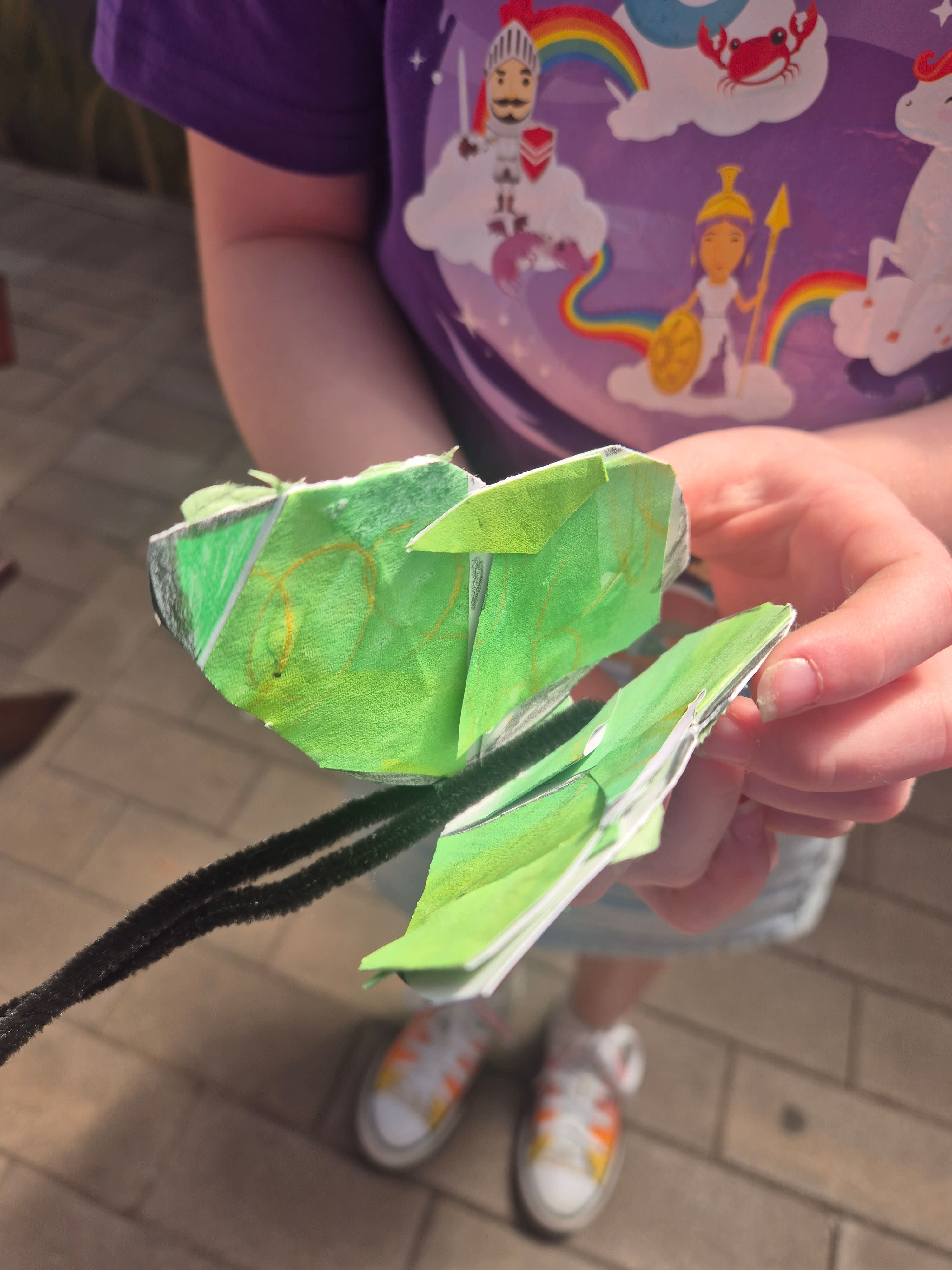
- The child made a butterfly craft, turning the workshop’s nature topic into a visual creation.
- The green, layered paper forms visible in the craft show choices about color, shape, and how pieces fit together.
- Arranging and joining craft materials supported creative decision-making and experimenting with a three-dimensional form.
- The finished craft gave the child a way to represent a butterfly through art.
Language Arts
- Talking about pollinators gave the child practice listening to and engaging with a topic through conversation.
- The workshop connected a new science-related idea with a concrete object—the butterfly craft—which can support explaining and remembering ideas.
- The child could build topic vocabulary around butterflies and pollinators through the discussion.
Tips
Tips: Extend the workshop with a short, supervised garden or park observation: invite the child to notice which visitors come to flowers and sketch or describe what they see. Then use a simple demonstration—such as transferring a little colored powder between paper flowers with a cotton swab—to model how pollen can move. Finish by helping the child create a mini “Pollinator Watch” page with a drawing, a few describing words, and one question to investigate, such as which flowers attract the most visitors.
Book Recommendations
- A Butterfly Is Patient by Dianna Hutts Aston: An illustrated nonfiction introduction to butterflies, with details that can build on the butterfly craft and nature discussion.
- The Reason for a Flower by Ruth Heller: A picture-book explanation of flowers and their roles, including how pollination connects plants and animals.
- The Very Hungry Caterpillar by Eric Carle: A much-loved illustrated story that offers a child-friendly connection to caterpillars and butterfly life cycles.
Try This Next
- Pollinator observation sheet: draw a flower visitor and note where it lands.
- Pollen-transfer mini experiment: use a cotton swab and colored powder to move “pollen” between paper flowers.
- Butterfly design prompt: create a new butterfly using layered shapes and describe the color choices.