Core Skills Analysis
Art
- The child can explore theater as a performing art and notice how a dramatized story communicates ideas through characters and action.
- The activity connects the birds and El Yunque’s natural setting with visual imagery, encouraging attention to shapes, colors, and forms found in nature.
- The child can consider how creative choices in a theatrical presentation help express themes such as belonging, cooperation, and conservation.
Music
- The activity introduces a musical theater experience that celebrates Puerto Rican birds and the Caribbean National Forest.
- The child can listen for how songs support the story and help communicate its ideas.
- The description includes dances, giving the child an opportunity to notice how movement can accompany music and help bring characters and events to life.
History
- The story is based on a tale by Don Ricardo Alegría, identified in the material as an important Puerto Rican anthropologist and protector of Puerto Rican culture.
- The child can connect the theatrical story with Puerto Rican cultural heritage through its setting, native birds, and celebration of El Yunque.
- The material presents theater as a way to share cultural stories and help audiences learn about the people and places connected to them.
Science
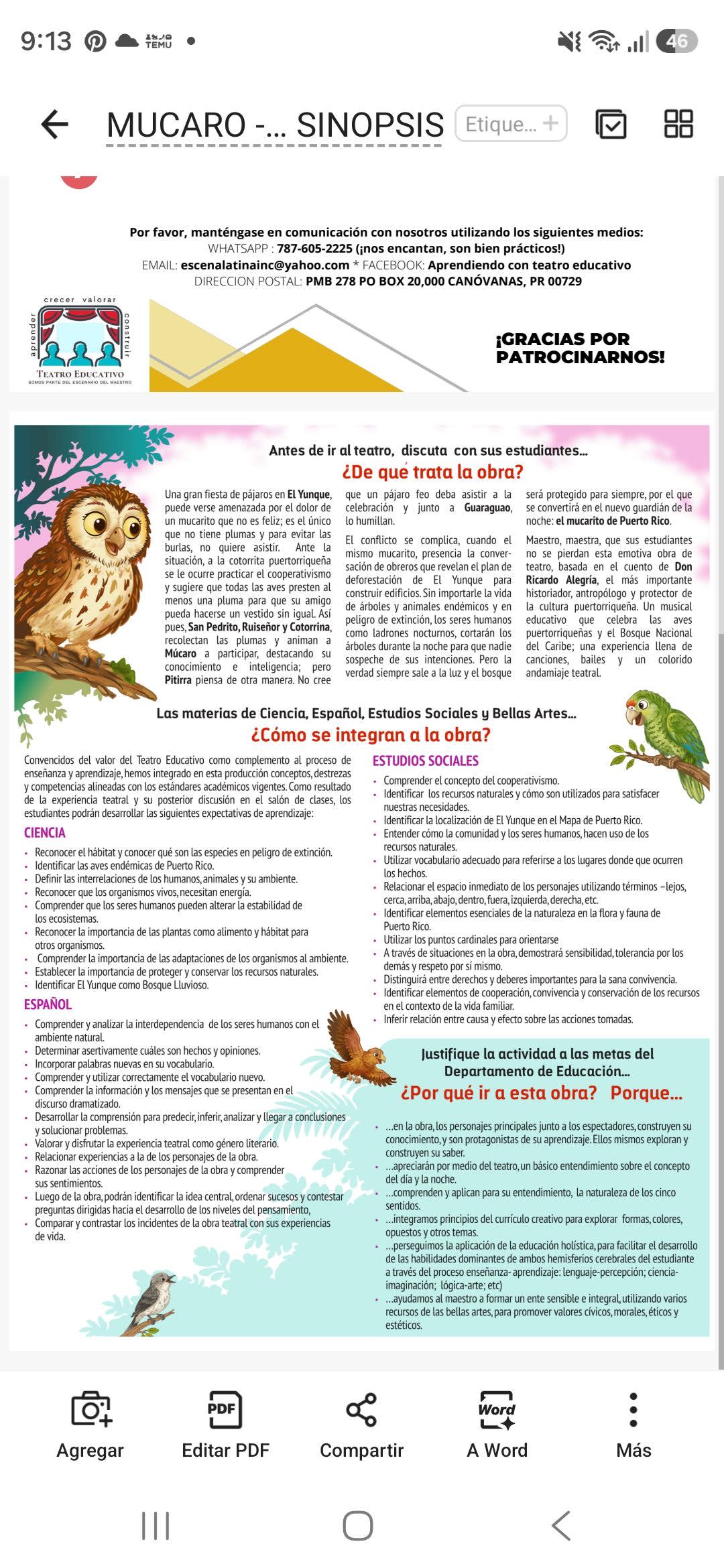
- The child can learn that El Yunque is a rainforest habitat and identify Puerto Rico’s endemic birds as part of its wildlife.
- The story highlights relationships among people, animals, plants, and their environment, including the importance of plants for food and habitat.
- The conflict about deforestation introduces how human actions can affect ecosystem stability and put organisms at risk.
- The Múcaro’s situation provides a way to discuss adaptation, animal needs, and the value of protecting natural resources.
Social Studies
- The activity introduces cooperation as the birds gather feathers to help Múcaro feel included and take part in the celebration.
- The child can locate El Yunque on a map of Puerto Rico and use cardinal directions and spatial vocabulary to describe places.
- The story connects natural resources with human needs and considers the effects of people’s choices on a community and its environment.
- The classroom discussion can address convivencia, rights and responsibilities, respect for others, and cause and effect in the characters’ decisions.
Foreign Language
- The child encounters the story and learning prompts in Spanish, using context to understand words related to birds, forests, cooperation, and theater.
- The activity supports listening and reading comprehension by asking the child to follow a dramatized narrative and understand its messages.
- The child can practice expressing an interpretation of the story and using new vocabulary when discussing characters, events, and the natural setting.
Valores
- Múcaro’s unhappiness at being different invites empathy and reflection on how exclusion and teasing can affect another person.
- The birds’ decision to cooperate models kindness, inclusion, and practical support for someone who needs help.
- The story encourages respect for oneself and others, as well as sensitivity toward the feelings of the characters.
- The deforestation conflict supports reflection on responsibility, honesty, and care for shared natural resources.
Tips
Tips Después de conversar sobre la historia, invita al niño a crear un mapa sencillo de Puerto Rico que ubique El Yunque y a investigar qué hace que un ave sea endémica. Luego, construyan un pequeño hábitat con materiales reutilizables y expliquen cómo las plantas y los animales dependen unos de otros. Para integrar arte y música, el niño puede ilustrar una escena y acompañarla con una secuencia de movimientos o sonidos inspirados en el bosque. Terminen con una conversación o breve dramatización sobre cómo ayudar a alguien que se siente excluido y cómo proteger un espacio natural.
Book Recommendations
- The Great Kapok Tree: A Tale of the Amazon Rain Forest by Lynne Cherry: An illustrated story about rainforest animals explaining why a tree and its habitat matter, connecting with the activity’s themes of interdependence and conservation.
- The Rainforest Grew All Around by Susan K. Mitchell: A rhythmic introduction to rainforest plants and animals that can extend the child’s exploration of habitats and living things.
- The Most Beautiful Roof in the World: Exploring the Rainforest Canopy by Kathryn Lasky: A richly illustrated nonfiction book about rainforest life, offering a deeper look at the kinds of habitats and relationships highlighted in the story.
Try This Next
- Create a Puerto Rico map worksheet: mark El Yunque, add a compass rose, and label nearby directions.
- Draw Múcaro’s forest habitat and add three plants or animals with a note about how each depends on the habitat.
- Write or act out a short scene in which a character helps someone feel included.
- Make a cause-and-effect card sort about the story’s deforestation conflict and its effects on the forest.