Core Skills Analysis
Visual Arts
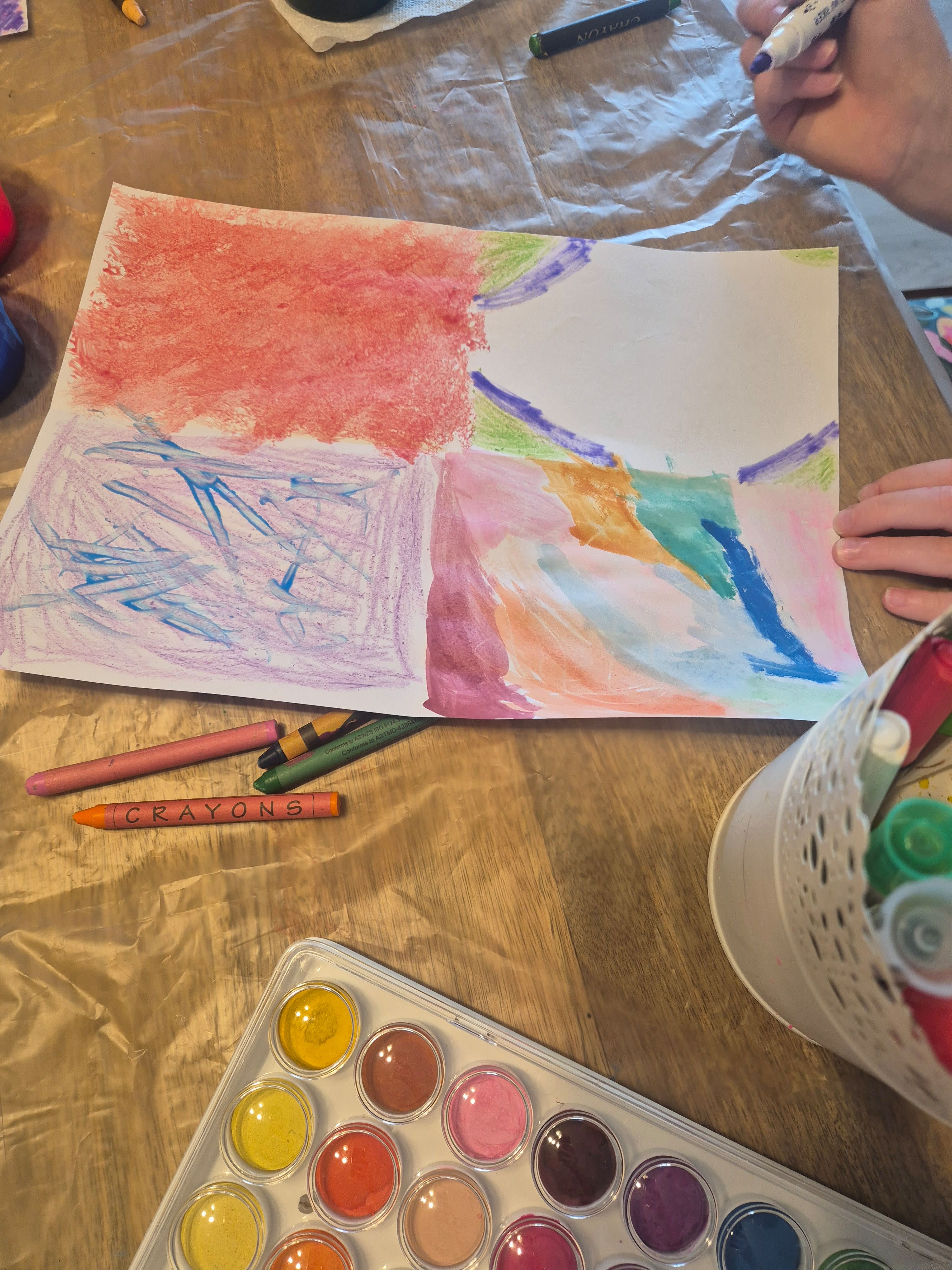
- The child explored collage-making by creating colorful paper with a range of patterns, colors, and materials.
- The artwork shows broad areas of color and varied marks, giving the paper a textured, layered appearance.
- The child used color and pattern to make visual choices while developing an original piece inspired by the reading.
- Working with crayons and other art materials offered practice in experimenting with different ways to make marks and surfaces.
Language Arts
- Reading the first 11 pages of Eric Carle’s Animals connected a shared book experience with a hands-on response.
- The activity linked the book’s animal theme with visual art, giving the child another way to engage with and respond to a story.
- The child practiced participating in a read-and-create sequence: listening to a book and then making artwork connected to the activity.
Math and Patterning
- Choosing and using many patterns gave the child a chance to notice and create visual repetition.
- Selecting among different colors and materials involved comparing visual qualities such as color, texture, and mark-making.
- Arranging colored areas across the paper offered informal practice with placement, space, and how parts relate within a larger composition.
Fine-Motor Development
- Handling drawing and art materials supported small hand and finger movements used in making marks.
- Changing between materials and working across a large sheet provided practice coordinating hand movements with visual attention.
- The activity offered opportunities to control strokes and apply color in different areas of the paper.
Tips
Tips Revisit a few pages of Animals and invite the child to describe an animal or image that caught their attention, then add a spoken or dictated caption to the artwork. Make a small color-and-pattern studio together: sort paper scraps or art materials by color or texture, predict which combinations will look striking, and test the ideas on a new page. For an experiential extension, look at animal patterns in nature—such as stripes, spots, or scales—in books or on a neighborhood walk, then create a new collage inspired by one observed pattern. Finish with a relaxed gallery walk where the child chooses a title and shares how the colors, marks, or materials help express their idea.
Book Recommendations
- The Very Hungry Caterpillar by Eric Carle: A colorful picture book that offers another opportunity to notice Eric Carle’s distinctive illustrations and connect a story about an animal with art-making.
- The Mixed-Up Chameleon by Eric Carle: A playful animal story that can inspire conversations about color, appearance, and representing an animal in a creative way.
- The Artist Who Painted a Blue Horse by Eric Carle: An energetic celebration of animals and imaginative color that pairs naturally with making expressive, colorful artwork.
Try This Next
- Pattern hunt: circle or draw repeated marks, stripes, or shapes in the child’s collage.
- Animal-art prompt: choose an animal from a book and create a new patterned-paper collage inspired by it.
- Color comparison mini-worksheet: draw two favorite color combinations and describe how they look different.
- Artist’s caption: dictate or write a title and one sentence about the artwork’s colors, patterns, or materials.